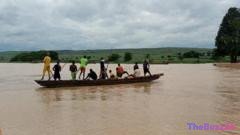
Tragic Boat Capsize in Remote Nigerian Region Leaves Dozens Dead, Mostly Children
A devastating maritime accident in north-western Nigeria has claimed the lives of at least 46 people, the majority of whom are believed to be children. The vessel, carrying more than 70 passengers, capsized near the remote community of Gorau in the Goronyo area. While emergency services and security agencies have rushed to the difficult-to-reach site, a search and rescue operation remains underway to locate approximately 15 individuals who are still missing. Currently, 16 survivors have been successfully rescued from the water.
Local reports indicate that the young passengers on board were traveling alongside farm owners and laborers, heading toward a local rice harvest. In the aftermath of the tragedy, community members gathered at a local mosque where dozens of bodies, wrapped in traditional cloths and mats, were prepared for burial. The remote nature of the Gorau region has severely hampered initial rescue efforts, requiring emergency management teams to navigate challenging terrain to reach the disaster site.
This latest tragedy highlights a persistent and deadly trend in Nigeria, where boat accidents are alarmingly frequent. Waterways serve as vital transit routes for millions of rural Nigerians due to dilapidated road networks and a lack of bridges. However, the reliance on wooden boats is fraught with danger. Overcrowding, poorly maintained vessels, and a systemic failure to enforce basic safety regulations continue to result in high death tolls, echoing similar fatal capsizes in Jigawa state and along the River Niger in recent months.
Although authorities have repeatedly proposed safety measures—including the mandatory provision of life jackets, regular dredging of waterways, the deployment of trained water guards, and stricter licensing for operators—implementation remains virtually non-existent in remote areas. Without rigorous enforcement and infrastructure investment, rural communities remain dependent on hazardous water transport, leaving them vulnerable to recurring disasters.
Key Takeaways
- At least 46 people, mostly children, died after a boat carrying over 70 passengers capsized in a remote area of north-western Nigeria.
- The victims were reportedly traveling to participate in a local rice harvest when the vessel overturned near Gorau.
- The disaster underscores Nigeria's ongoing struggle with water transport safety, driven by overcrowding, poor vessel maintenance, and weak regulatory enforcement.
Editor’s Analysis & Impact
This tragic incident underscores a critical infrastructure deficit plaguing rural Nigeria. For millions, waterways are not a leisure choice but an economic necessity due to the severe lack of motorable roads and bridges. The recurring nature of these maritime disasters—with hundreds of lives lost annually—points to a systemic failure in regulatory oversight. While safety guidelines exist on paper, the lack of enforcement mechanisms, particularly in remote regions like Gorau, renders them ineffective. Moving forward, the Nigerian government must bridge the gap between policy and practice. This requires not only subsidizing safety equipment like life jackets and modernizing wooden fleets but also investing heavily in rural road infrastructure to provide safer alternative transport. Until local governments prioritize maritime policing and infrastructure development, rural laborers and children will continue to pay the ultimate price for economic survival.
Frequently Asked Questions
Q: Why are boat accidents so common in Nigeria?
A: Boat accidents are frequent due to a combination of factors, including severe overcrowding, poorly maintained wooden vessels, a lack of safety equipment like life jackets, and weak enforcement of maritime regulations by authorities.
Q: Why do rural Nigerians rely so heavily on water transport despite the risks?
A: Many rural communities are located near major waterways where land travel is highly difficult due to poorly maintained roads, a lack of bridges, and remote geography, making boats the only viable way to transport goods and people to markets and farms.
Q: What safety measures have been proposed to prevent these tragedies?
A: Proposed measures include providing safer vessels and life jackets, dredging major waterways, deploying water guards at terminals, and enforcing strict licensing and training for boat operators. However, these measures are rarely enforced in remote areas.
AI Disclosure: This article is based on verified data and official reports. Our Team and AI have cross-referenced every financial detail with primary sources to ensure total accuracy.
More from this Category