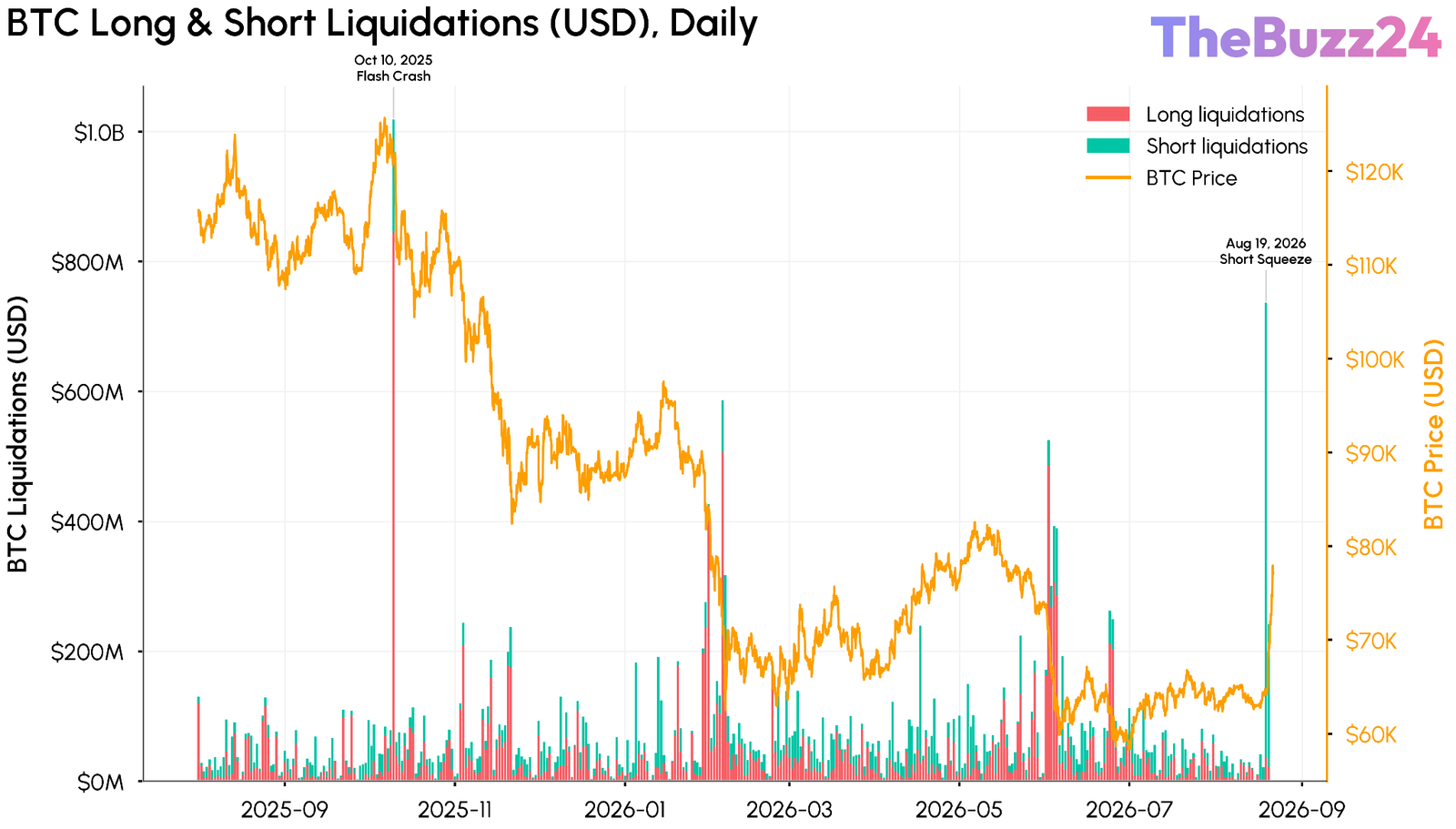
Crypto Markets Surge as Treasury Liquidity Move Triggers Massive Short Squeeze
The cryptocurrency market experienced a dramatic reversal on August 19th, as a combination of compressed volatility and a significant shift in U.S. Treasury policy ignited a massive short squeeze. The rally, which saw Bitcoin climb 23% to reach its highest valuation in three months, resulted in the liquidation of over $1.6 billion in short positions across the global market within a 24-hour window. This event marked one of the most significant liquidation episodes in recent history, effectively ending a period of stagnant price action and range-bound trading.
The catalyst for this sudden volatility was an announcement from the U.S. Treasury regarding an expansion of liquidity support buyback operations for longer-dated securities. By increasing these operations from $2 billion to at least $4 billion, the Treasury effectively lowered long-term yields, which in turn revitalized the ‘debasement trade.’ As yields fell, investors pivoted toward scarce assets, with Bitcoin decoupling from its recent role as a high-beta tech proxy and reasserting its status as a digital store of value alongside gold.
Market data indicates that the rally was not limited to Bitcoin; it broadened significantly across major tokens and crypto-equities. Spot volume surged nearly fivefold during the peak of the squeeze, while futures activity also saw a sharp increase. Analysts note that unlike previous failed breakout attempts, this surge is supported by robust structural demand, evidenced by $1.7 billion in net inflows into Bitcoin ETFs and substantial outflows from major exchanges, suggesting that investors are moving assets into long-term storage rather than immediate liquidation.
Looking ahead, the sustainability of this momentum will depend on continued spot demand and the evolving regulatory landscape. While open interest in derivatives has climbed to new highs, indicating that traders are aggressively rebuilding leveraged positions, the underlying market structure appears more resilient than in previous cycles. With Bitcoin testing the $80,000 threshold, the market is currently balancing renewed speculative appetite with a more favorable macroeconomic backdrop for non-yielding assets.
Key Takeaways
- A U.S. Treasury liquidity expansion triggered a $1.6 billion short squeeze, driving Bitcoin to a three-month high.
- The rally was supported by strong institutional demand, including $1.7 billion in net inflows to Bitcoin ETFs.
- Bitcoin's correlation with gold has strengthened, signaling a shift in investor sentiment toward scarce assets over high-beta tech stocks.
Editor’s Analysis & Impact
The August 19th market event underscores the extreme reflexivity of the cryptocurrency market when faced with macro-liquidity catalysts. By shifting from a tech-proxy correlation to a ‘digital gold’ narrative, Bitcoin has successfully tapped into the broader demand for inflation hedges as Treasury yields fluctuate. The industry impact is significant: the surge in spot volume and ETF inflows suggests that institutional participation is no longer just speculative but structural. However, the rapid rebuilding of open interest in derivatives poses a risk of future volatility. If the current trend of exchange outflows continues, it indicates a tightening of liquid supply, which could provide a solid floor for prices. Moving forward, the market will likely remain sensitive to Treasury policy and potential regulatory developments, such as the CLARITY Act, which could further institutionalize the asset class.
Frequently Asked Questions
Q: What triggered the sudden surge in cryptocurrency prices on August 19th?
A: The rally was primarily triggered by the U.S. Treasury's announcement to increase liquidity support buyback operations for longer-dated securities, which lowered long-term yields and encouraged investors to move into scarce assets like Bitcoin.
Q: Is the current crypto rally considered sustainable?
A: Analysts suggest the rally has a stronger structural foundation than previous attempts due to consistent Bitcoin ETF inflows and significant exchange outflows, though the rapid increase in leveraged derivatives positions remains a factor to monitor for potential volatility.
AI Disclosure: This article is based on verified data and official reports. Our Team and AI have cross-referenced every financial detail with primary sources to ensure total accuracy.
More from this Category