Himalayan Flash Floods Devastate Nepal and China, Leaving Over 150 Dead and Hundreds Missing
Devastating flash floods have swept through a border region shared by Nepal and China, resulting in at least 157 confirmed fatalities and leaving hundreds of people unaccounted for. The torrents inundated communities, disrupted travel, and caused widespread destruction in the Himalayan nation. The full extent of the disaster is still unfolding as rescue operations continue.
Officials in Nepal have reported 403 individuals missing, a significant number of whom are foreign nationals. Among the missing are 133 Indian citizens who were on a pilgrimage to the sacred Mount Kailash in China’s Tibet Autonomous Region. Tourists and residents from at least 26 countries were present in the affected areas, with nationalities including those from the United States, Australia, Britain, and Canada. Additionally, 62 Nepali citizens were reported missing while trekking in the Rasuwa district, near the Gosaikunda lake, coinciding with a local festival.
In China’s Tibet Autonomous Region, a mudslide in Gyirong County, near the Nepalese border, has claimed at least three lives, with an additional 265 people missing, according to preliminary reports. Nepal’s police force also confirmed that at least 28 of their officers are among the missing. Authorities have issued urgent warnings to residents in several districts, advising them to stay clear of the Bhotekoshi, Trishuli, and Narayani riverbanks due to the risk of further flooding. The Bhotekoshi river, in particular, overflowed early Wednesday, destroying villages, vital infrastructure, and hydropower projects.
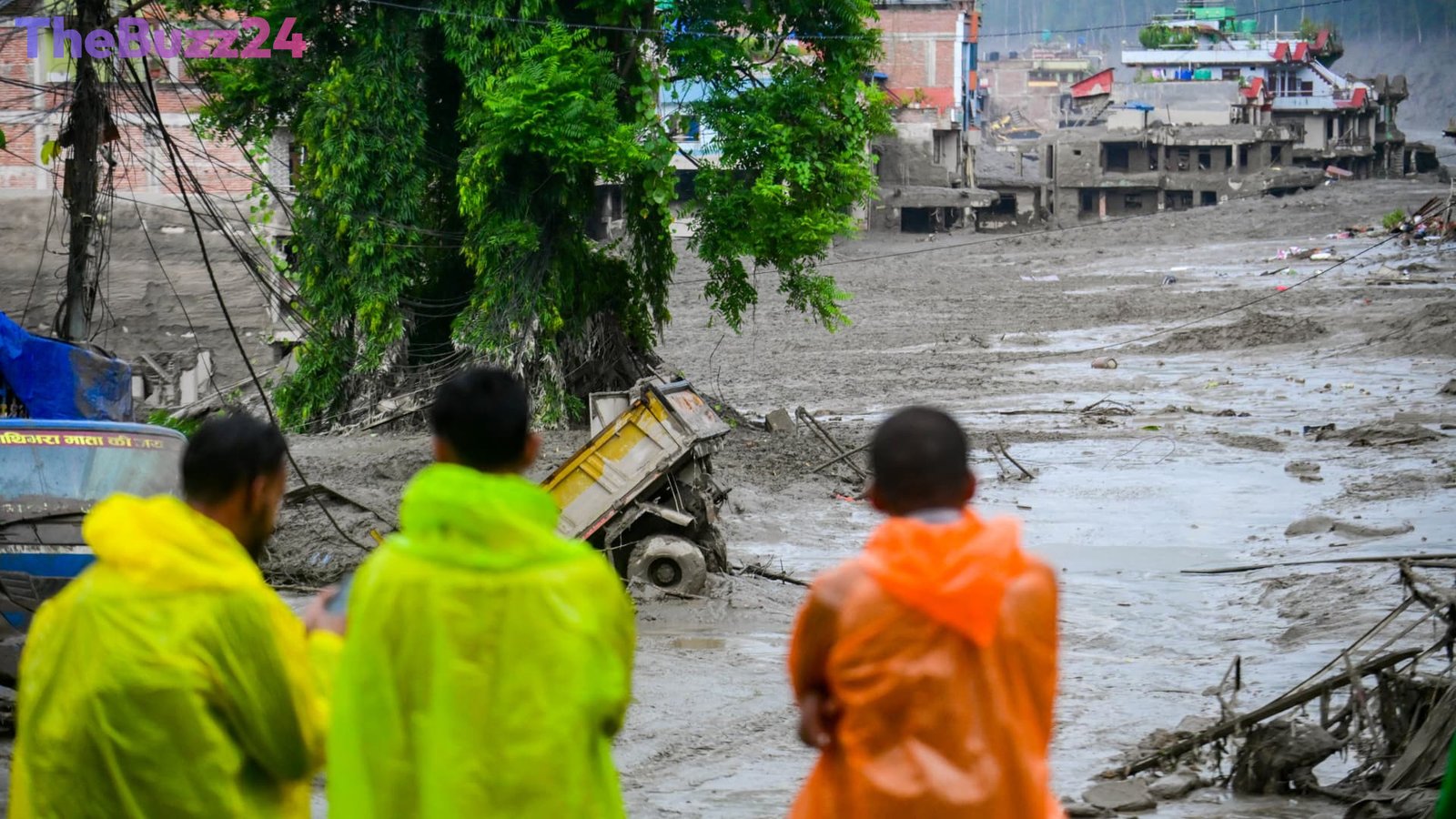
The region, known for its steep valleys that serve as crucial travel corridors, is highly susceptible to natural disasters. Images emerging from the hardest-hit areas depict buildings coated in mud, debris strewn across landscapes, and vehicles buried by the floodwaters. The U.S. Geological Survey registered a magnitude 4.4 earthquake in the vicinity of the Nepal-China border shortly before the floods, though the direct link to the flash floods is under investigation. This event underscores the vulnerability of the Himalayan region to extreme weather, exacerbated by a warming climate.
Key Takeaways
- At least 157 people have died and hundreds are missing following flash floods in Nepal and China.
- A significant number of foreign nationals, including pilgrims to Mount Kailash, are among the missing.
- The disaster highlights the vulnerability of the Himalayan region to extreme weather events, potentially linked to climate change.
Editor’s Analysis & Impact
This catastrophic event in the Himalayas underscores the escalating risks posed by climate change in vulnerable mountain regions. The confluence of heavy rainfall, potential glacial melt, and seismic activity has created a perfect storm, leading to devastating flash floods. The high number of missing foreign nationals, particularly pilgrims, will likely strain diplomatic relations and necessitate extensive international cooperation for rescue and recovery efforts. The destruction of infrastructure, including hydropower projects, will have long-term economic repercussions for Nepal. This incident serves as a stark reminder of the urgent need for enhanced early warning systems, climate adaptation strategies, and robust disaster preparedness in the face of increasingly frequent and severe extreme weather events globally.
Frequently Asked Questions
Q: What caused the flash floods in Nepal and China?
A: While investigations are ongoing, experts suggest a combination of factors, including heavy monsoon rains, potential glacial melt, and an ice-rock avalanche from a glacier, likely triggered the flash floods. A magnitude 4.4 earthquake was also recorded in the region shortly before the event.
Q: How many people are missing and from which countries?
A: Over 400 people are reported missing in Nepal, with a significant portion being foreign nationals. This includes 133 from India, 47 from the United States, 34 from Australia, 33 from Britain, and 24 from Canada, among others from at least 26 countries. China also reported 265 missing individuals in its affected border region.
Q: What is the impact on the region's infrastructure?
A: The flash floods have destroyed several villages, roads, and hydropower projects. The destruction of critical infrastructure, especially in Nepal's steep valleys which serve as vital travel corridors, will likely have significant long-term economic consequences and hinder rescue and recovery efforts.
AI Disclosure: This article is based on verified data and official reports. Our Team and AI have cross-referenced every financial detail with primary sources to ensure total accuracy.
More from this Category