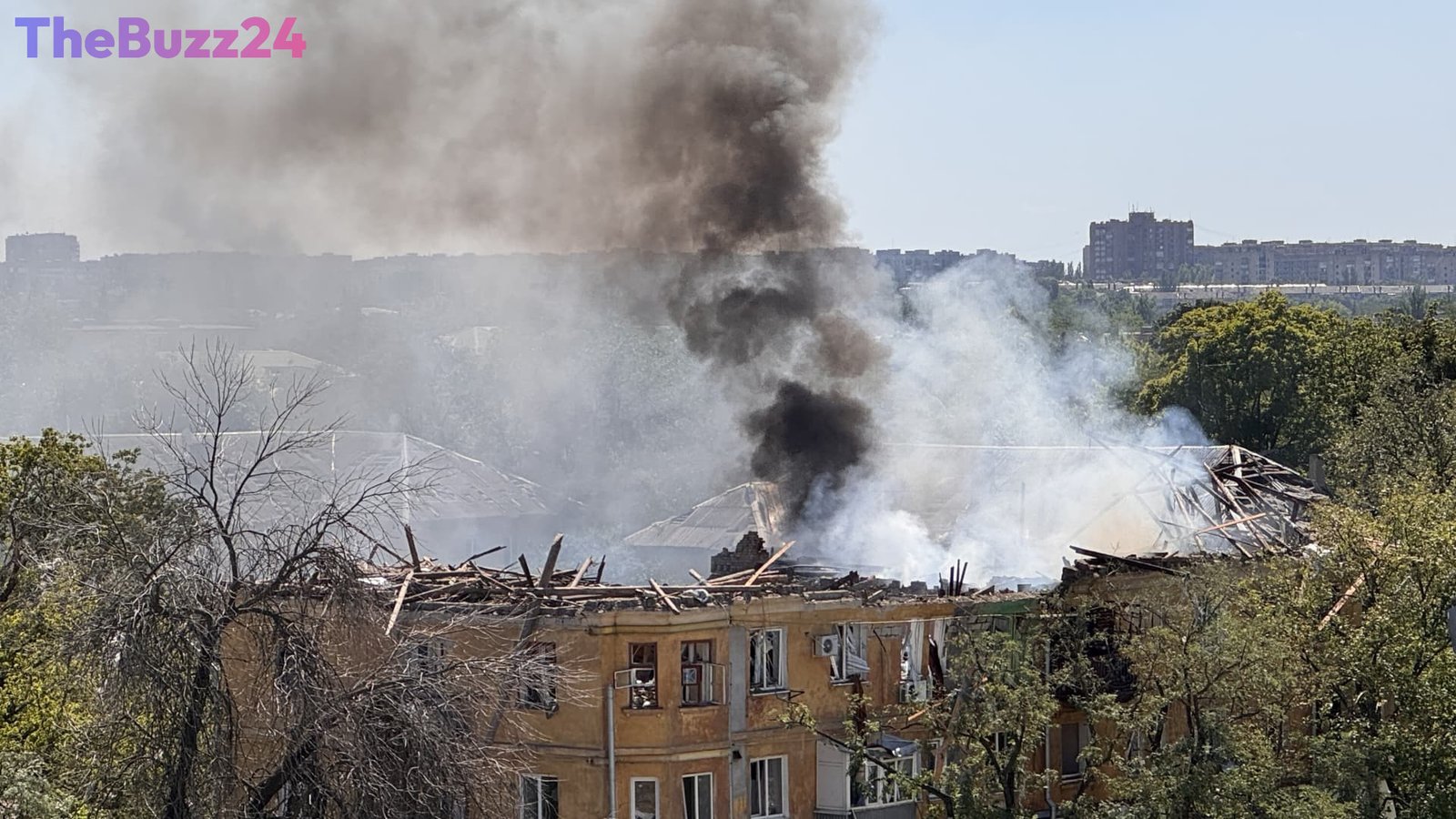
Donetsk Front Heats Up: Russia Claims Advances Amid EU Push on Frozen Assets
Russian forces have intensified their offensive operations in Ukraine’s eastern Donetsk region, targeting key industrial cities that form a crucial defensive line. Moscow claims significant advances, particularly in the direction of Sloviansk and Kramatorsk, aiming to exert greater pressure on Ukrainian strongholds. These strategic cities have been a focal point for Russian objectives to gain full control over the Donetsk Oblast.
Reports from the front lines indicate that Russian troops are reportedly nearing Sloviansk, with claims of breaching initial defensive positions along a considerable front. Data from Ukrainian open-source intelligence suggests that the area around Kostyantynivka, a vital gateway to the wider Donbas region, is experiencing the most intense combat. However, independent analysis from the Institute for the Study of War (ISW) casts doubt on the extent of these Russian claims, suggesting that battlefield realities may not align with Moscow’s narrative of pervasive success.
Meanwhile, on the diplomatic front, Ukraine has expressed strong support for a renewed European Union initiative to utilize frozen Russian assets. Four EU member states have formally urged the European Commission to reconsider plans to leverage over 200 billion euros of immobilized Russian central bank funds. Ukraine’s Foreign Minister emphasized the fairness and logic of using these assets to finance Ukraine’s defense, arguing it would alleviate the burden on European taxpayers while countering the ongoing Russian threat. This push comes after previous discussions stalled due to liability concerns, highlighting the complex legal and financial considerations involved in such a move.
Key Takeaways
- Russian forces are intensifying attacks in the Donetsk region, with claims of advances toward Sloviansk and Kramatorsk.
- Independent analysts question the scale of Russian battlefield gains, suggesting they may be exaggerated.
- Ukraine supports a renewed EU effort to use frozen Russian assets, estimated at over 200 billion euros, to fund its defense.
Editor’s Analysis & Impact
The escalating military activity in Donetsk underscores the ongoing strategic importance of this region in the protracted conflict. Russia’s reported advances, if substantiated, could signal a shift in momentum, though independent assessments suggest caution. Concurrently, the EU’s renewed consideration of utilizing frozen Russian assets represents a significant financial and political development. This move, if successful, could provide substantial resources for Ukraine’s defense and war-torn economy, while also presenting complex legal challenges and potential retaliatory measures from Russia. The interplay between battlefield developments and financial sanctions will be critical in shaping the future trajectory of the conflict.
Frequently Asked Questions
Q: What are the key cities Russia is targeting in Donetsk?
A: Russia is intensifying attacks on key industrial cities in Donetsk, including Kostyantynivka, Kramatorsk, and Sloviansk, which are considered critical strongholds and part of Russia's objective to capture the entire Donetsk Oblast.
Q: How much in Russian assets is the EU considering using?
A: The European Union is considering plans to leverage over 200 billion euros (approximately $232.9 billion) in frozen Russian central bank assets that were immobilized under EU sanctions.
Q: Why did the EU's previous plan to use frozen assets fail?
A: Previous discussions on utilizing frozen Russian assets collapsed last year, primarily due to concerns over liability raised by Belgium, which blocked the move.
AI Disclosure: This article is based on verified data and official reports. Our Team and AI have cross-referenced every financial detail with primary sources to ensure total accuracy.
More from this Category