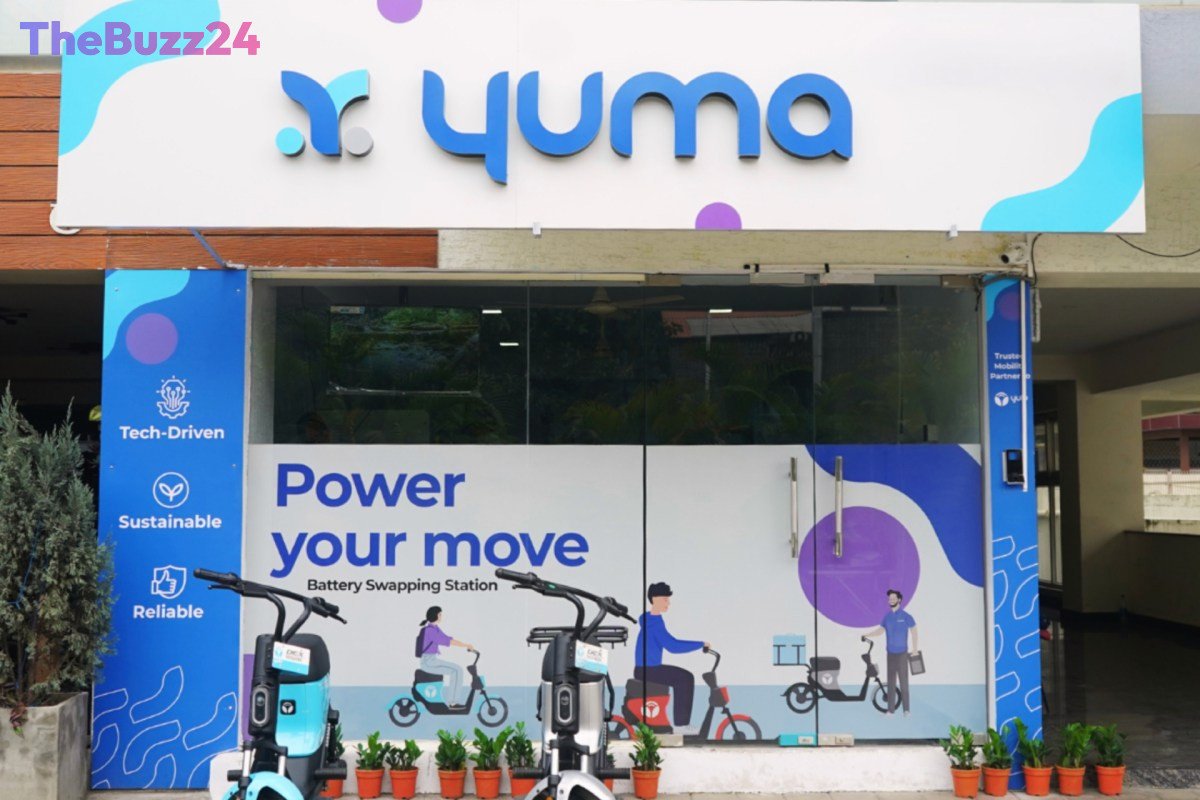
Magna Boosts Bet on India’s EV Future with $35M Investment in Battery Swapping Pioneer Yuma Energy
Canadian automotive parts giant Magna International has significantly increased its stake in Yuma Energy, a Bengaluru-based firm specializing in battery swapping for electric two- and three-wheelers in India. This latest investment of $35 million underscores Magna’s conviction that the battery-swapping model, despite global challenges, holds immense potential for scalability within India’s unique market dynamics, driven by millions of light electric vehicles and a burgeoning delivery economy.
Yuma Energy, which emerged from Indian mobility startup Yulu in early 2023, has already facilitated over 60 million battery swaps and currently manages approximately 100,000 batteries across its extensive network. This new capital injection further solidifies Magna’s position in Yuma, increasing its ownership beyond the initial 51% stake acquired when the joint venture was formed. The strategic move is largely predicated on the rapid expansion of India’s gig economy, where delivery riders and other high-mileage users stand to gain significant operational efficiencies from quick battery exchanges, minimizing downtime compared to traditional charging methods.
For gig workers, who often operate electric vehicles for extended periods daily, the cost of ownership makes EVs highly attractive, but ‘uptime’ is paramount. Yuma’s model allows for a battery swap in under two minutes, a stark contrast to the 20-30 minutes required for fast charging, which also demands more space and power infrastructure. While building out this convenient network is capital-intensive, Yuma’s managing director, Muthu Subramanian, notes that unit economics improve with scale. The company, which generated approximately $10.5 million in revenue by March 2026 and aims for EBITDA break-even within the next two quarters, plans to utilize the bulk of Magna’s investment to double its battery fleet and expand its swapping infrastructure across India over the next 12 to 18 months.
Currently operating over 400 stations with more than 2,500 charging units across 18 Indian cities, Yuma plans to expand into Chennai and Pune while strengthening its presence in existing markets. Although Yulu remains Yuma’s largest customer, the company is actively diversifying, now serving more than five fleets and integrating its batteries with over 10 vehicle platforms, including models from Kinetic Green, Motovolt, BGauss, and Quantum Energy. Looking ahead, Yuma aims to take its successful model overseas, identifying Southeast Asian markets like Vietnam and Thailand, as well as parts of Africa, as attractive long-term prospects due to their large two-wheeler markets. Uniquely, Yuma designs and manufactures its own battery packs and charging units, ensuring comprehensive control over its hardware and network operations.
Key Takeaways
- Magna International has invested an additional $35 million in Yuma Energy, significantly increasing its stake in the Indian battery-swapping network for electric two- and three-wheelers.
- The investment targets India's booming gig economy, where Yuma's rapid battery-swapping solution offers crucial efficiency advantages for EV users by minimizing vehicle downtime.
- Yuma plans to leverage the new capital to double its battery fleet and expand its infrastructure across more Indian cities, with long-term ambitions to enter international markets like Southeast Asia and Africa.
Editor’s Analysis & Impact
Magna’s increased investment in Yuma Energy signals a strong belief in the viability of battery swapping, particularly within the unique context of India’s high-usage, two- and three-wheeler EV market. This move could accelerate EV adoption in the country’s rapidly expanding gig economy, setting a precedent for other emerging markets facing similar last-mile delivery and urban mobility challenges. The strategic focus on ‘uptime’ for gig workers addresses a critical pain point, potentially unlocking significant market share for electric vehicles. For Magna, this deepens its footprint in a high-growth segment of the global automotive supply chain, positioning it at the forefront of innovative mobility solutions. The success of Yuma’s model in India could serve as a blueprint for localized EV infrastructure development worldwide.
Frequently Asked Questions
Q: What is battery swapping and why is it relevant for India?
A: Battery swapping involves quickly exchanging a depleted electric vehicle battery for a fully charged one, rather than waiting for it to recharge. In India, this model is highly relevant for the gig economy's electric two- and three-wheelers, as it significantly reduces vehicle downtime, allowing riders to maximize their operational hours and earnings.
Q: How will Yuma Energy use the new $35 million investment from Magna?
A: Yuma Energy plans to primarily use the capital to expand its battery-swapping infrastructure across India, including entering new cities like Chennai and Pune, and to double its fleet of approximately 100,000 batteries over the next 12 to 18 months to meet growing demand.
Q: What makes Yuma Energy's approach unique in the battery-swapping market?
A: Unlike many operators who only manage swapping networks, Yuma Energy designs and manufactures its own battery packs and charging units. This integrated approach gives the company comprehensive control over both the hardware and the network management, ensuring optimized performance and quality.
AI Disclosure: This article is based on verified data and official reports. Our Team and AI have cross-referenced every financial detail with primary sources to ensure total accuracy.
More from this Category