Hugging Face’s Microduck Robot Takes Flight, Driven by Global Tech Collaboration
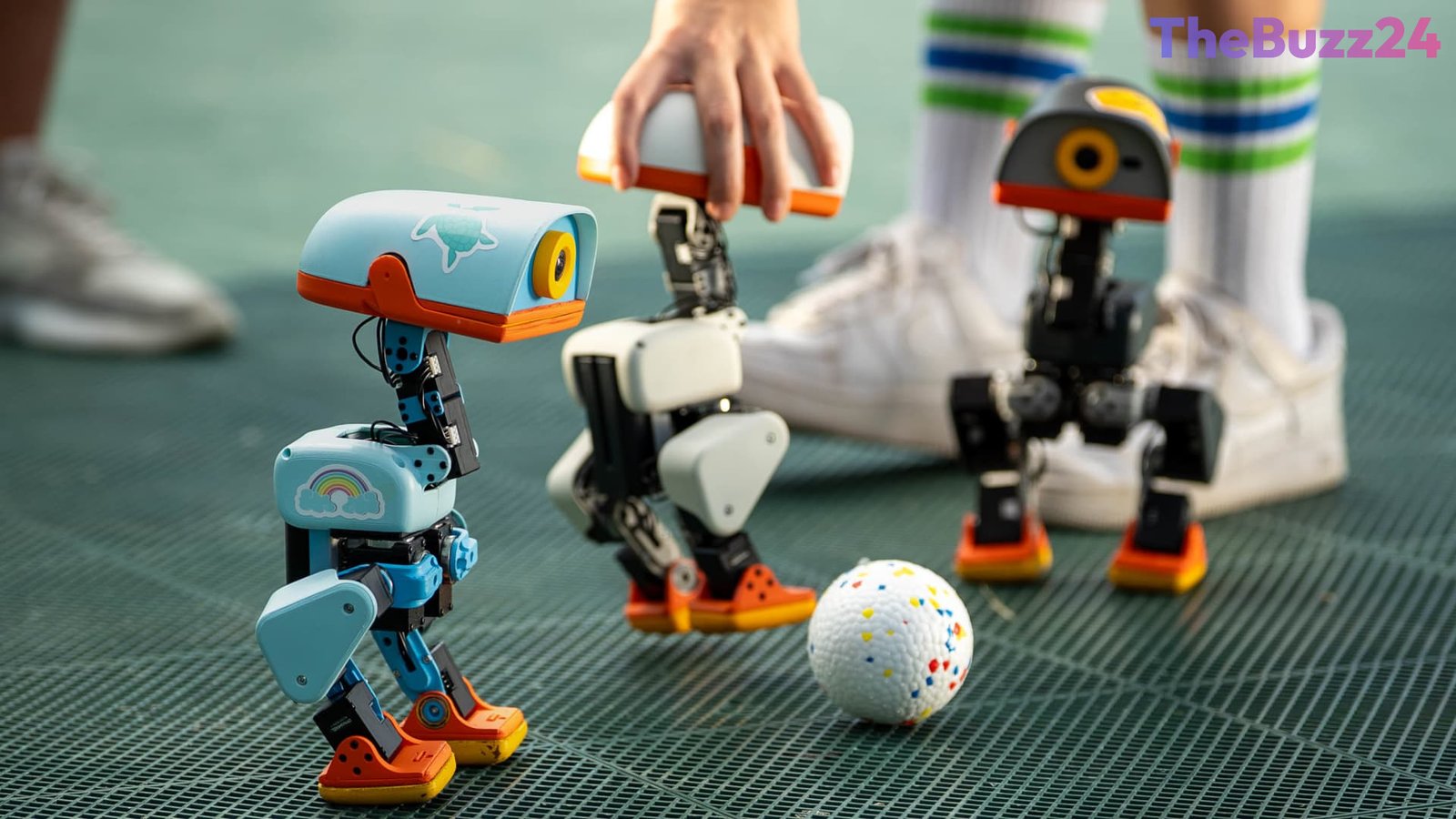
Pollen Robotics, a French subsidiary of the AI powerhouse Hugging Face, has launched a new programmable personal robot named Microduck, which has rapidly captured consumer interest. Since its introduction, the colorful, duck-shaped device has sold over 10,000 units, generating more than $4 million at a unit price of $399. This overwhelming demand has already pushed delivery estimates for new orders well beyond the initial Christmas 2026 promise, underscoring a burgeoning market for interactive personal robotics.
At the heart of each Microduck lies Rockchip’s RK3566 processor, providing the on-device computing power, sensors, and motors necessary for its functions. This chip, produced by the Shanghai-listed company, incorporates technology licensed from the British semiconductor firm ARM, illustrating the intricate and globally interconnected nature of modern technology supply chains. Industry analysts identify Rockchip as a significant provider for AI solutions that operate directly on devices rather than relying on cloud infrastructure. Rockchip’s chips are frequently utilized in machine vision applications, including object detection and image recognition, though they are noted to have limitations for more complex edge AI tasks due to their compute resources. The Chinese firm recently reported robust financial growth, with a 40% year-on-year increase in operating revenue and a more than 60% surge in net profit for the first half of the year.
Weighing 1.76 pounds (800g), the Microduck serves a dual purpose as both an engaging consumer toy and a versatile development platform. Leveraging open-source software, it is designed to learn from virtual simulations and goal-driven instructions, offering a dynamic user experience. This is Pollen Robotics’ second successful robot venture under Hugging Face’s ownership, following a previous model that also sold over 10,000 units. The success of Microduck coincides with a broader trend in the market, as other companies are also introducing personal robots. For instance, startup Zeroth recently unveiled a child-sized humanoid robot with similar virtual simulation learning capabilities, while Mondo Robotics’ Wall-E-inspired cameraman robot has significantly surpassed its crowdfunding goals, signaling a vibrant and expanding sector for consumer robotics.
Key Takeaways
- Hugging Face's Microduck robot has achieved rapid sales success, selling over 10,000 units and generating over $4 million, leading to significant delivery delays.
- The robot is powered by Rockchip's RK3566 processor, which integrates ARM technology, highlighting the global interdependence of tech supply chains and the growing importance of on-device AI.
- Microduck functions as both an interactive consumer toy and an open-source development platform, contributing to a broader market trend of new personal robot introductions from various companies.
Editor’s Analysis & Impact
The phenomenal sales performance of Hugging Face’s Microduck robot signals a strong and accelerating consumer appetite for accessible, programmable personal robotics. This trend is driven by advancements in on-device AI, making sophisticated functionalities more readily available without constant cloud reliance. The reliance on Rockchip’s chips, incorporating ARM technology, underscores the critical role of a globally integrated supply chain in bringing such innovations to market. While Rockchip excels in specific AI applications like machine vision, the demand for more complex edge AI capabilities will likely push semiconductor manufacturers to develop even more powerful, yet energy-efficient, processors. The emergence of open-source platforms like Microduck also democratizes robotics development, potentially fostering a new wave of innovation and user-driven applications, further expanding the market beyond simple consumer gadgets. This sector is poised for significant growth, attracting both established tech giants and agile startups.
Frequently Asked Questions
Q: What is the Microduck robot?
A: The Microduck is a programmable, duck-shaped personal robot launched by Pollen Robotics, a subsidiary of Hugging Face. It functions as both an interactive toy and a development platform, capable of learning through virtual simulations and goal-driven instructions using open-source software.
Q: What technology powers the Microduck?
A: The Microduck is powered by Rockchip's RK3566 processor, which provides its on-device computing capabilities, sensors, and motors. This chip incorporates technology licensed from the British semiconductor company ARM, showcasing a globally integrated tech supply chain.
Q: Why are Microduck's delivery times delayed?
A: The Microduck experienced unexpectedly high demand immediately after its launch, selling over 10,000 units very quickly. This rapid sales volume overwhelmed initial production and logistics, causing delivery estimates for new orders to be pushed significantly beyond the original schedule.
AI Disclosure: This article is based on verified data and official reports. Our Team and AI have cross-referenced every financial detail with primary sources to ensure total accuracy.
More from this Category