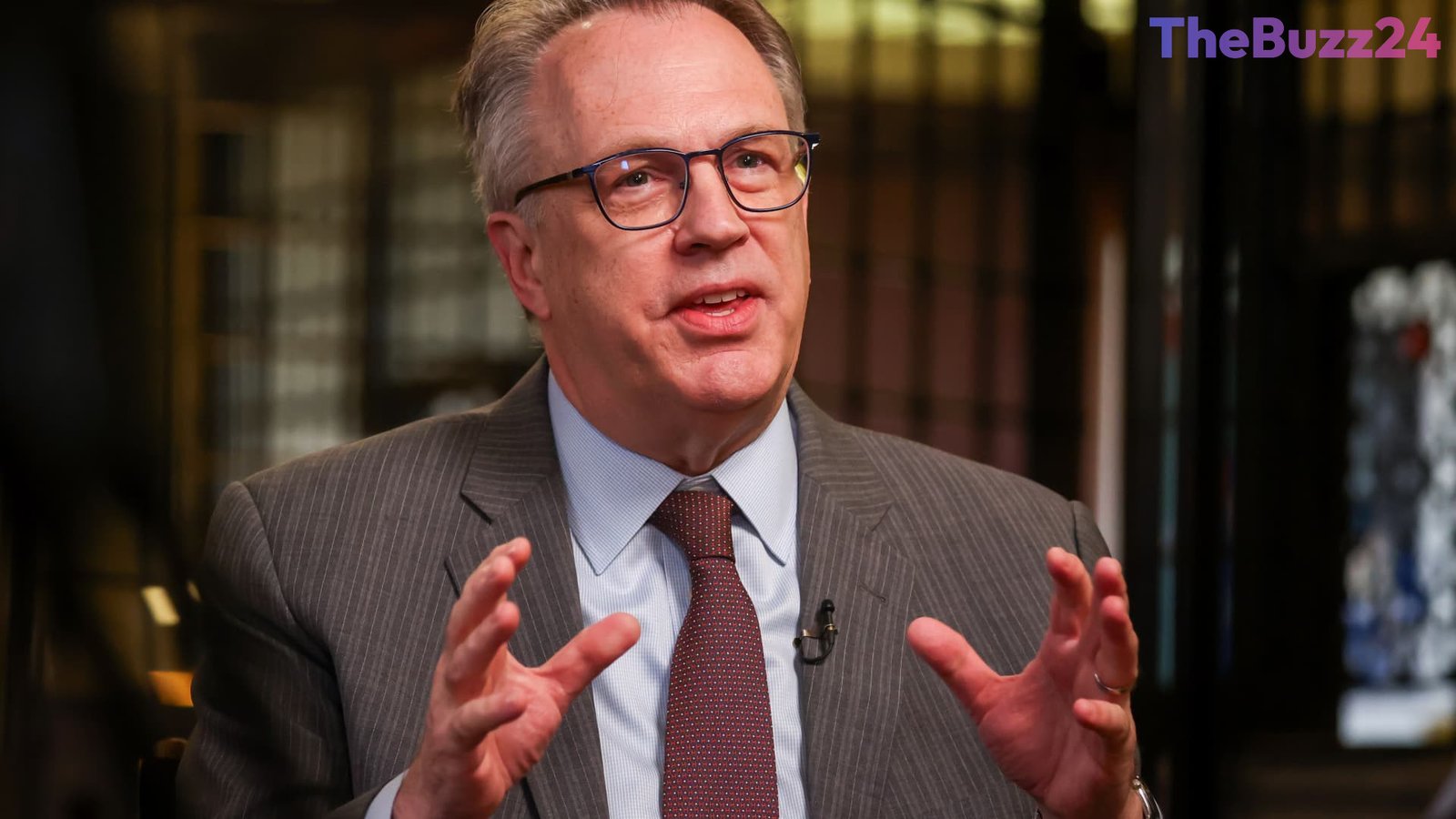
New York Fed President Williams Attributes Treasury Yield Surge to Economic Vigor
Federal Reserve officials are closely monitoring the recent upward trajectory in Treasury yields, viewing the movement not as a sign of underlying market dysfunction, but rather as a reflection of robust macroeconomic conditions. Policymakers point to heavy investments in artificial intelligence, technology infrastructure, and data centers as primary drivers of this sustained financial momentum.
Speaking on monetary policy, central bank leadership has adopted a patient, data-dependent stance regarding potential future interest rate adjustments. While recent inflation indicators have shown promising signs of cooling, officials emphasize the necessity of evaluating comprehensive long-term data before determining whether current policy restrictiveness is entirely sufficient to achieve long-range inflation targets.
Market participants continue to weigh incoming economic reports against shifting probabilities for upcoming central bank meetings. Despite lingering concerns surrounding price pressures and broader geopolitical factors, underlying inflation expectations remain firmly anchored, reinforcing confidence in the long-term stability of the broader financial landscape.
Key Takeaways
- Recent surges in Treasury yields are primarily attributed to a strong U.S. economy and heavy investments in technology and AI.
- Federal Reserve officials maintain a patient, data-dependent approach regarding potential future interest rate hikes.
- Inflation expectations remain well anchored despite recent price pressures linked to tariffs and global conflicts.
Editor’s Analysis & Impact
The commentary from the New York Federal Reserve leadership underscores a fundamental shift in how policymakers interpret recent bond market movements. By linking rising Treasury yields directly to capital expenditures in high-growth sectors like artificial intelligence and advanced technology, the central bank signals confidence in the intrinsic strength of the productive economy rather than fearing systemic distress. This perspective reduces immediate panic over high borrowing costs, reframing them as a byproduct of economic expansion. Looking forward, the Federal Reserve’s commitment to a deliberate, data-dependent trajectory will likely temper market volatility. However, persistent uncertainty surrounding inflation and global supply chains means policymakers will remain hyper-sensitive to incoming macroeconomic indicators, keeping rate speculation alive through upcoming policy meetings.
Frequently Asked Questions
Q: What is driving the recent rise in Treasury yields according to the Federal Reserve?
A: The rise in Treasury yields is largely viewed as the product of a strong U.S. economy, fueled by significant investments in artificial intelligence, data centers, and general technology infrastructure.
Q: Has the Federal Reserve committed to a new interest rate hike?
A: No, policymakers have adopted a wait-and-see approach, emphasizing the need to analyze comprehensive economic data before determining if further monetary policy action is required.
Q: How are current inflation expectations behaving?
A: Despite recent price run-ups linked to external pressures such as tariffs and global conflicts, the central bank views overall inflation expectations as remaining well anchored.
AI Disclosure: This article is based on verified data and official reports. Our Team and AI have cross-referenced every financial detail with primary sources to ensure total accuracy.
More from this Category