Global Conflict Drives Diesel Prices to Record Highs, Threatening Broader Inflation
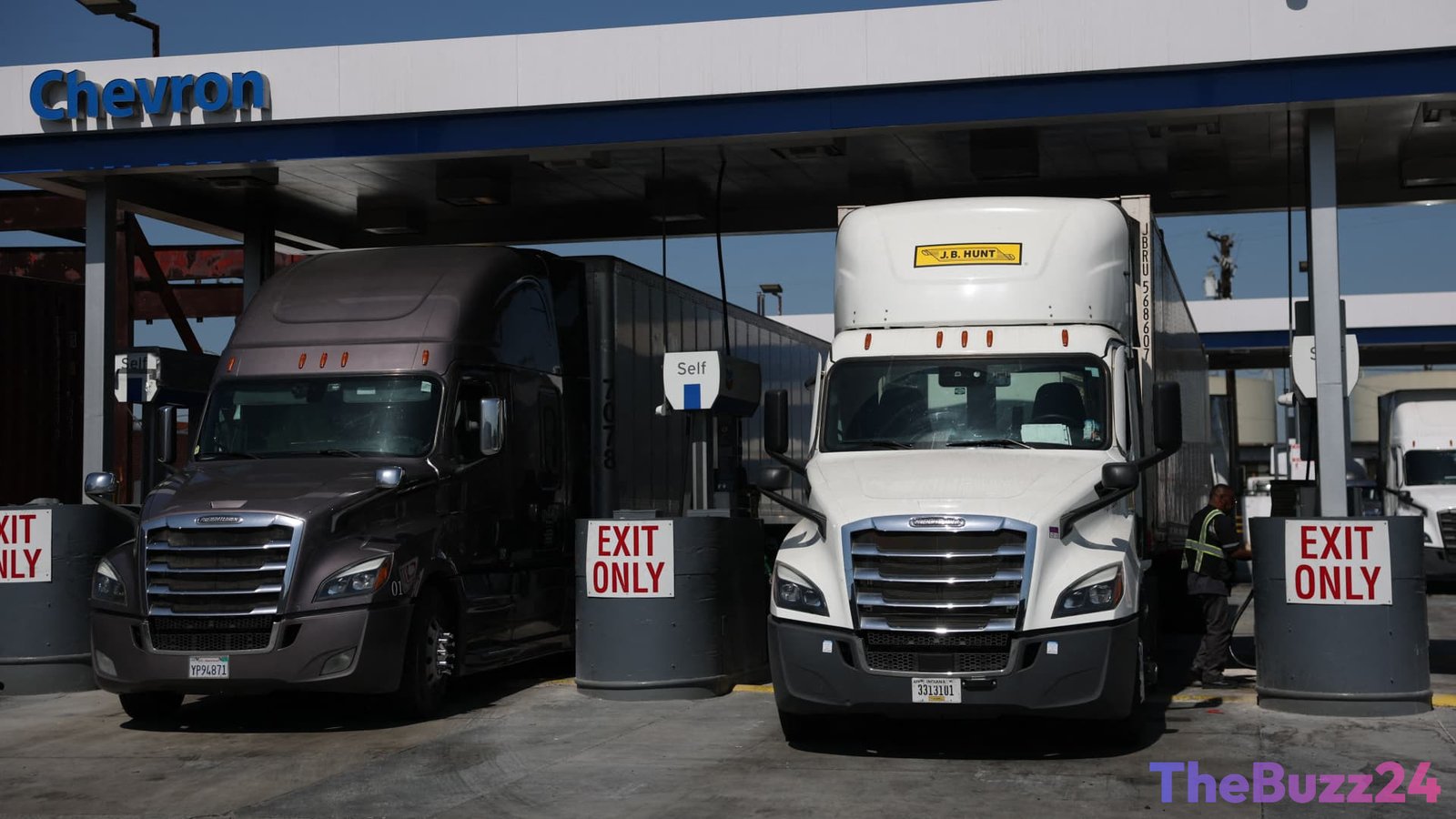
Diesel prices have surged to historic highs across the United States, intensifying fears of persistent inflation as geopolitical conflicts disrupt global energy supplies. Nationwide, truck drivers are facing an average price of $5.85 per gallon—a staggering 60% increase compared to the $3.71 average recorded during the same period last year. The situation is even more acute in California, where diesel has climbed to $7.70 per gallon, nearly two dollars above the national average. Because diesel is the primary fuel powering commercial transport, agriculture, and industrial manufacturing, these soaring costs are expected to ripple rapidly through the global supply chain.
The primary catalysts for this supply crunch are ongoing military conflicts in Eastern Europe and the Middle East, which have collectively knocked out approximately 5 million barrels per day of global refining capacity. Ukrainian drone strikes on Russian energy infrastructure have forced Moscow to implement a strict ban on diesel exports, removing roughly 800,000 barrels per day from the global market. Meanwhile, tensions in the Middle East, including attacks on shipping tankers in the Strait of Hormuz and regional infrastructure, have disrupted another 1.2 million barrels per day. Additionally, Houthi forces targeted Saudi Arabia’s Jizan refinery, taking another 200,000 barrels per day offline.
Industry experts warn that these disruptions affect roughly 8% of the global diesel demand, which currently stands at 28 million barrels per day. Executives from major refining firms, including Valero and Phillips 66, have noted that refining fundamentals are exceptionally tight and continuing to constrict. John Kilduff, a partner at Again Capital, emphasized that because virtually all physical goods rely on diesel-powered transportation at some point in their journey, consumers cannot escape the financial impact. Analysts like Bob McNally of Rapidan Energy and Andy Lipow of Lipow Oil Associates describe the rising fuel costs as a “stealth tax” that will inevitably be passed down to everyday consumers in the form of higher prices for goods and services.
Key Takeaways
- US diesel prices have jumped nearly 60% year-over-year, averaging $5.85 nationally and reaching $7.70 in California.
- Geopolitical conflicts in Ukraine and the Middle East have disrupted approximately 8% of global diesel supply, taking 5 million barrels per day of refining capacity offline.
- Because diesel is deeply embedded in transport, agriculture, and manufacturing, the price hike acts as a 'stealth tax' that will likely drive up consumer inflation.
Editor’s Analysis & Impact
The current diesel crisis highlights the extreme vulnerability of global supply chains to localized geopolitical conflicts. With approximately 5 million barrels per day of refining capacity offline, the margin for error in the global energy market has virtually vanished. This squeeze is not a temporary blip; it represents a structural shift as refining capacity struggles to keep pace with geopolitical fragmentation. For central banks fighting inflation, this surge in diesel prices presents a major headwind. Because diesel is the lifeblood of industrial activity and freight transport, these costs will inevitably cascade into consumer goods, potentially forcing interest rates to remain higher for longer. Looking ahead, unless geopolitical tensions ease or alternative refining capacity rapidly comes online, businesses and consumers should prepare for sustained inflationary pressures across all sectors.
Frequently Asked Questions
Q: Why is diesel more critical to inflation than gasoline?
A: While gasoline primarily powers personal passenger vehicles, diesel is the primary fuel for commercial trucks, trains, agricultural machinery, and industrial manufacturing. Consequently, any increase in diesel costs directly inflates the cost of producing and transporting virtually all physical goods, which is then passed on to consumers.
Q: What specific geopolitical events are driving up diesel prices?
A: The price surge is driven by Ukrainian attacks on Russian refineries, which led to a Russian export ban, alongside Middle Eastern conflicts. These include attacks on tankers in the Strait of Hormuz and Houthi strikes on Saudi Arabia's Jizan refinery, collectively disrupting about 8% of global diesel supply.
Q: How much have diesel prices increased compared to last year?
A: Nationwide in the U.S., diesel prices have risen by nearly 60%, climbing from an average of $3.71 per gallon last year to $5.85 per gallon. In California, prices have reached as high as $7.70 per gallon.
AI Disclosure: This article is based on verified data and official reports. Our Team and AI have cross-referenced every financial detail with primary sources to ensure total accuracy.
More from this Category