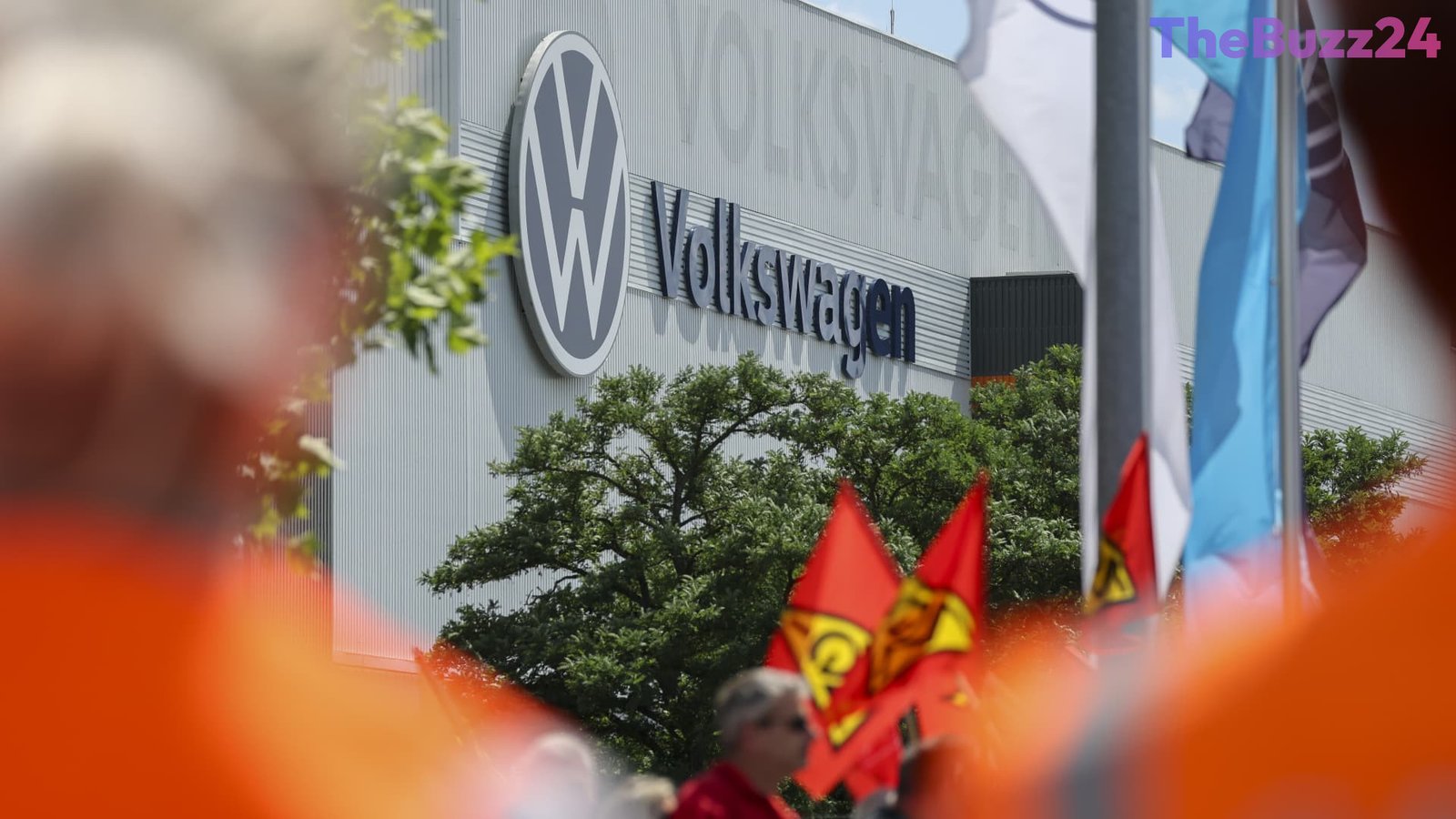
Volkswagen Shares Surge After Unveiling Massive Restructuring and 50,000 Additional Job Cuts
Volkswagen has announced a major expansion of its restructuring efforts, revealing plans to cut an additional 50,000 jobs globally. This latest round of layoffs brings the German automaker’s total planned workforce reductions to 100,000 as it rolls out its “Future Plan 2030.” The sweeping initiative, which represents the most significant strategic overhaul in the company’s 89-year history, aims to streamline management, flatten corporate hierarchies, and address severe competitive pressures. Investors reacted enthusiastically to the aggressive cost-cutting measures, sending Volkswagen’s shares up by 8% in Friday trading, despite the stock remaining down over 20% for the year.
Under the newly approved transformation strategy, the automotive giant will also slash its vehicle model portfolio by 50% by the year 2035. Additionally, the company is exploring alternative uses for four of its primary German manufacturing plants where future production schedules remain unsecured beyond 2031. Volkswagen Chief Executive Oliver Blume emphasized that while the company is taking responsibility for its global workforce, these drastic measures are necessary to secure the long-term competitiveness of its iconic brands. To support this transition, the group plans to invest a three-figure billion sum into technological upgrades and product development over the coming years.
The restructuring comes at a time when European automakers are grappling with a perfect storm of rising tariffs and intense competition from Chinese electric vehicle manufacturers like BYD and Geely. Volkswagen’s tariff expenses reached 2.9 billion euros ($3.4 billion) in 2025, driven by import duties on European vehicles rising from 2.5% to 15% in recent years. This tariff burden, combined with weaker demand for early-generation electric vehicles, has exposed significant overcapacity issues within Europe’s domestic factories.
Industry observers suggest that Volkswagen’s decisive action could serve as a turning point for the broader European automotive sector. By demonstrating a willingness to execute highly difficult structural reforms, the company may establish a precedent—or “halo effect”—encouraging other regional manufacturers to address their own excess capacity and high cost structures. While the plan does not resolve the company’s competitive challenges overnight, it marks a fundamental breakthrough in addressing the systemic imbalances currently threatening the European auto market.
Key Takeaways
- Volkswagen is cutting an additional 50,000 jobs, bringing its total planned workforce reductions to 100,000 under its 'Future Plan 2030' initiative.
- The automaker will reduce its vehicle model portfolio by 50% by 2035 and repurpose four German manufacturing plants to combat domestic overcapacity.
- Rising tariff costs, which hit 2.9 billion euros in 2025, and fierce competition from Chinese EV makers like BYD have forced the aggressive restructuring.
Editor’s Analysis & Impact
Volkswagen’s dramatic restructuring highlights the existential crisis facing the European automotive industry. For years, European legacy carmakers have operated with significant structural overcapacity, a vulnerability now laid bare by the rapid rise of highly competitive, lower-priced Chinese electric vehicles from rivals like BYD and Geely. By cutting 100,000 jobs and slashing its product lineup, Volkswagen is acknowledging that the old operating model is no longer viable in a high-tariff, high-competition global market. This aggressive pivot is likely to trigger a ‘halo effect’ across the continent, forcing other European manufacturers to initiate similarly painful but necessary cost-cutting measures. While the short-term social and political fallout in Germany will be severe, this consolidation is a critical step if European automakers hope to survive the transition to software-defined, electric mobility.
Frequently Asked Questions
Q: Why is Volkswagen cutting so many jobs?
A: Volkswagen is cutting 100,000 jobs in total to streamline its management hierarchy, reduce operational costs, and address severe competitive pressures from Chinese EV manufacturers and rising global tariffs.
Q: How did the stock market react to the restructuring announcement?
A: Volkswagen's shares jumped by 8% following the announcement, as investors welcomed the company's decisive action to address its structural inefficiencies, though the stock remains down significantly for the year.
Q: What other changes are included in Volkswagen's Future Plan 2030?
A: In addition to job cuts, the plan includes reducing its vehicle model portfolio by 50% by 2035, finding alternative uses for four German factories, and investing a three-figure billion sum into brand competitiveness and technology.
AI Disclosure: This article is based on verified data and official reports. Our Team and AI have cross-referenced every financial detail with primary sources to ensure total accuracy.
More from this Category