The Rise of AI Surveillance: How Flock Safety Cameras Sparked a National Debate on Privacy
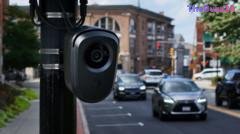
Across neighborhoods in the United States, a quiet infrastructure expansion has been underway, featuring sleek black poles topped with oval cameras and solar panels. These devices belong to Flock Safety, a rapidly growing automated license plate reader (ALPR) network founded in 2017. Operating in over 7,000 communities with an estimated 100,000 cameras deployed nationwide, the company captures rear-facing images of every passing vehicle. While law enforcement agencies praise the technology for dramatically increasing stolen vehicle recoveries and helping locate missing persons, the massive scale of the network has triggered sharp opposition, including instances of coordinated vandalism and contract cancellations in major metropolitan areas.
The core controversy lies not just in individual cameras, but in the vast, interconnected databases that grant local police access to tens of thousands of devices stretching across state lines. Civil rights advocates and privacy groups argue that these expansive search scopes allow authorities to track citizens’ everyday routines, mapping out commutes, school routes, and personal habits without probable cause. Furthermore, isolated incidents of system misuse—such as an officer utilizing the network to track an estranged partner or detectives bypassing warrant requirements—have heightened public apprehension. Although the company maintains it provides a safety tool rather than a surveillance mechanism, critics contend that the integration of artificial intelligence and expansive data-sharing protocols treads dangerously close to eroding fundamental civil liberties.
In response to mounting pushback, hundreds of communities have opted to cancel or forgo renewing their contracts, while lawmakers are increasingly calling for stricter legislative guardrails. Flock Safety has introduced mandatory AI-powered audit tools and shortened default data retention periods to address privacy concerns. However, the tension between public safety and individual privacy remains palpable. For many residents living under the watchful gaze of these lenses, the promise of reduced crime rates offers little comfort against the looming fear of pervasive, state-adjacent tracking.
Key Takeaways
- Flock Safety has deployed an estimated 100,000 AI-powered license plate reader cameras across more than 7,000 U.S. communities.
- Law enforcement agencies champion the technology for solving crimes and recovering stolen property, while civil rights advocates raise severe privacy and warrant-bypassing concerns.
- Growing pushback has led over 200 communities to cancel or refuse to renew their contracts, prompting calls for tighter federal and local regulatory guardrails.
Editor’s Analysis & Impact
The rapid proliferation of AI-driven surveillance networks like Flock Safety highlights a critical inflection point in the modern intersection of public safety, municipal governance, and civil liberties. As police departments increasingly adopt advanced automated tools to augment crime-fighting capabilities, the friction between institutional security and citizen privacy intensifies. The trend of municipalities canceling contracts and lawmakers proposing stricter warrant requirements signals a shifting political and social landscape where tech providers and law enforcement must navigate rigorous public scrutiny. Moving forward, the long-term viability of these surveillance networks will likely depend on transparent governance, strict accountability frameworks, and verifiable data-protection measures that can successfully balance community safety with the constitutional rights of individuals.
Frequently Asked Questions
Q: What is Flock Safety and what do its cameras do?
A: Flock Safety is an automated license plate reader (ALPR) network that uses AI-powered cameras to take pictures of the rear of every passing vehicle, storing the data to help law enforcement investigate crimes.
Q: Why are critics opposed to the expansion of these cameras?
A: Critics argue that the interconnected national database allows authorities to track citizens' daily routines without warrants, posing serious risks to personal privacy and civil liberties.
Q: How are communities responding to the backlash?
A: Over 200 communities have cancelled or chosen not to renew their contracts with Flock Safety, while lawmakers are proposing legislation to mandate warrants for accessing the data.
AI Disclosure: This article is based on verified data and official reports. Our Team and AI have cross-referenced every financial detail with primary sources to ensure total accuracy.
More from this Category