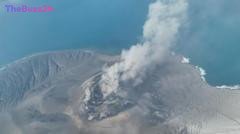
Volcanic Ash Blankets Indonesia, Stranding 150,000 Travelers and Disrupting Air Travel
A significant volcanic eruption in Indonesia has caused widespread travel chaos, leaving an estimated 150,000 passengers stranded and leading to the temporary closure of eight airports. The ash plume from the Anak Krakatau volcano, meaning ‘Child of Krakatoa’, has disrupted air traffic, forcing authorities to suspend flight operations.
Jakarta’s Soekarno-Hatta International Airport was among the first to cease operations on Sunday morning after volcanic ash was detected in the airspace. The Indonesian Transport Minister, Dudy Purwagandhi, stated that 712 flights have been impacted so far and advised airlines to explore diverting flights to alternative airports. The volcano’s activity began late Friday night with continuous seismic tremors, lava fountaining, and audible booms, followed by two more significant eruptions early Sunday.
The disruptions have primarily affected flights connecting to and from Singapore, as well as international routes to destinations like Doha, Sydney, and Kuala Lumpur. The decision to close additional airports was prompted by findings that the volcanic ash had spread significantly towards West Java. Authorities are urging airlines to expedite ticket refunds for affected passengers and to provide clear, timely information to minimize confusion and overcrowding at airports.
According to Indonesia’s meteorological agency, BMKG, the ash cloud reached altitudes of up to 20,000 feet (6,000 meters) over Java and an astonishing 50,000 feet (15,000 meters) over Sumatra. While there is no tsunami warning associated with this eruption, residents in affected areas have been advised to remain indoors and wear face masks due to potential respiratory, eye, and skin irritation from the ash. Some schools have canceled activities, and local residents have reported discomfort and the need for constant cleaning due to the pervasive ash.
Key Takeaways
- Anak Krakatau volcano eruption has stranded over 150,000 passengers in Indonesia.
- Eight airports were temporarily closed, significantly disrupting domestic and international flights.
- Volcanic ash reached high altitudes, prompting health advisories and travel warnings.
Editor’s Analysis & Impact
This event highlights the persistent vulnerability of air travel to natural phenomena, particularly in geographically active regions like Indonesia, situated on the Pacific Ring of Fire. The scale of passenger disruption underscores the need for robust contingency planning by airlines and airport authorities, including efficient communication and refund processes. The economic impact extends beyond immediate travel costs, affecting tourism and supply chains. Future eruptions, given Anak Krakatau’s history, could necessitate ongoing investment in advanced ash detection and dispersion modeling to mitigate such widespread disruptions and ensure traveler safety.
Frequently Asked Questions
Q: What is Anak Krakatau?
A: Anak Krakatau, meaning 'Child of Krakatoa', is a volcanic island that emerged in the sea in the early 20th century within the caldera of the much larger Krakatoa volcano. It has a history of sporadic activity.
Q: What are the health risks associated with volcanic ash?
A: Volcanic ash can cause respiratory problems, eye irritation, and skin irritation. Health authorities advise residents in affected areas to stay indoors and wear protective masks.
Q: Has this volcano caused a tsunami before?
A: Yes, Anak Krakatau's collapse in December 2018 triggered a devastating tsunami that killed over 400 people and caused widespread damage along the coasts of Java and Sumatra.
AI Disclosure: This article is based on verified data and official reports. Our Team and AI have cross-referenced every financial detail with primary sources to ensure total accuracy.
More from this Category