China Unveils Massive $54 Billion Capital Injection to Bolster State Banks and Revive Economy
In a decisive bid to reinforce its financial infrastructure and stimulate sluggish growth, Beijing has announced a sweeping capital injection totaling 360 billion yuan, equivalent to roughly $53.6 billion. Spearheaded by the nation’s finance ministry, this massive financial rescue package targets eight major state-owned financial institutions, comprising three prominent commercial lenders and five key insurance providers.
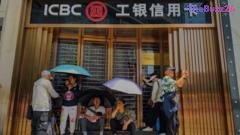
The strategic infusion aims to significantly bolster the operational resilience, risk-mitigation capacities, and lending power of critical entities such as the Industrial and Commercial Bank of China, the Agricultural Bank of China, and the China Export & Credit Insurance Corporation. By strengthening these pillars of the financial sector, authorities intend to channel fresh credit directly into the broader economy, providing a vital buffer against escalating global financial turbulence and external economic shocks.
This aggressive stimulus arrives as the world’s second-largest economy navigates a complex web of structural headwinds. Compounding domestic challenges—including a prolonged property market downturn, a rapidly aging population, and a shrinking domestic workforce—are ongoing trade frictions with Western nations and external pressures affecting global energy markets. With second-quarter gross domestic product growing at a modest 4.3%, falling short of initial projections and reflecting tepid domestic demand, leadership in Beijing continues to prioritize financial stability as a cornerstone of national security and economic recovery.
Key Takeaways
- China's finance ministry is injecting 360 billion yuan ($53.6 billion) into eight major state-owned banks and insurers.
- The primary objective is to enhance the risk resistance and lending capacity of financial institutions to support the broader economy.
- The stimulus comes in response to slowing GDP growth, a persistent property slump, and mounting international trade pressures.
Editor’s Analysis & Impact
The decision by Beijing to inject substantial capital into its state-owned financial institutions underscores the growing urgency to stabilize the domestic economy amidst severe structural transitions. While this massive fiscal intervention provides immediate breathing room for major lenders and insurers, its long-term success will depend on how effectively these funds translate into productive lending for the real economy rather than simply masking deep-seated systemic issues like the property market slump. As China contends with a shrinking workforce and intensifying geopolitical friction with Western economies, reliance on state-directed capital injections highlights the limits of traditional monetary policy in sparking organic consumer and business demand. Moving forward, structural reforms addressing consumer confidence and domestic consumption will remain essential for achieving sustainable, long-term economic expansion.
Frequently Asked Questions
Q: How much money is China injecting into its financial sector?
A: The Chinese finance ministry is injecting 360 billion yuan, which is approximately $53.6 billion, into selected state-owned banks and insurance companies.
Q: Which institutions are benefiting from this financial package?
A: The package boosts the finances of three major lenders—including the Industrial and Commercial Bank of China and the Agricultural Bank of China—alongside five key insurance companies, such as the China Export & Credit Insurance Corporation.
Q: What are the main economic challenges prompting this intervention?
A: Beijing is addressing a slowing economic growth rate, a prolonged property market downturn, an aging workforce, and various external pressures including international trade tensions.
AI Disclosure: This article is based on verified data and official reports. Our Team and AI have cross-referenced every financial detail with primary sources to ensure total accuracy.
More from this Category