Bitcoin’s Evolving Identity: A Digital Gold Amidst Macro Crosscurrents
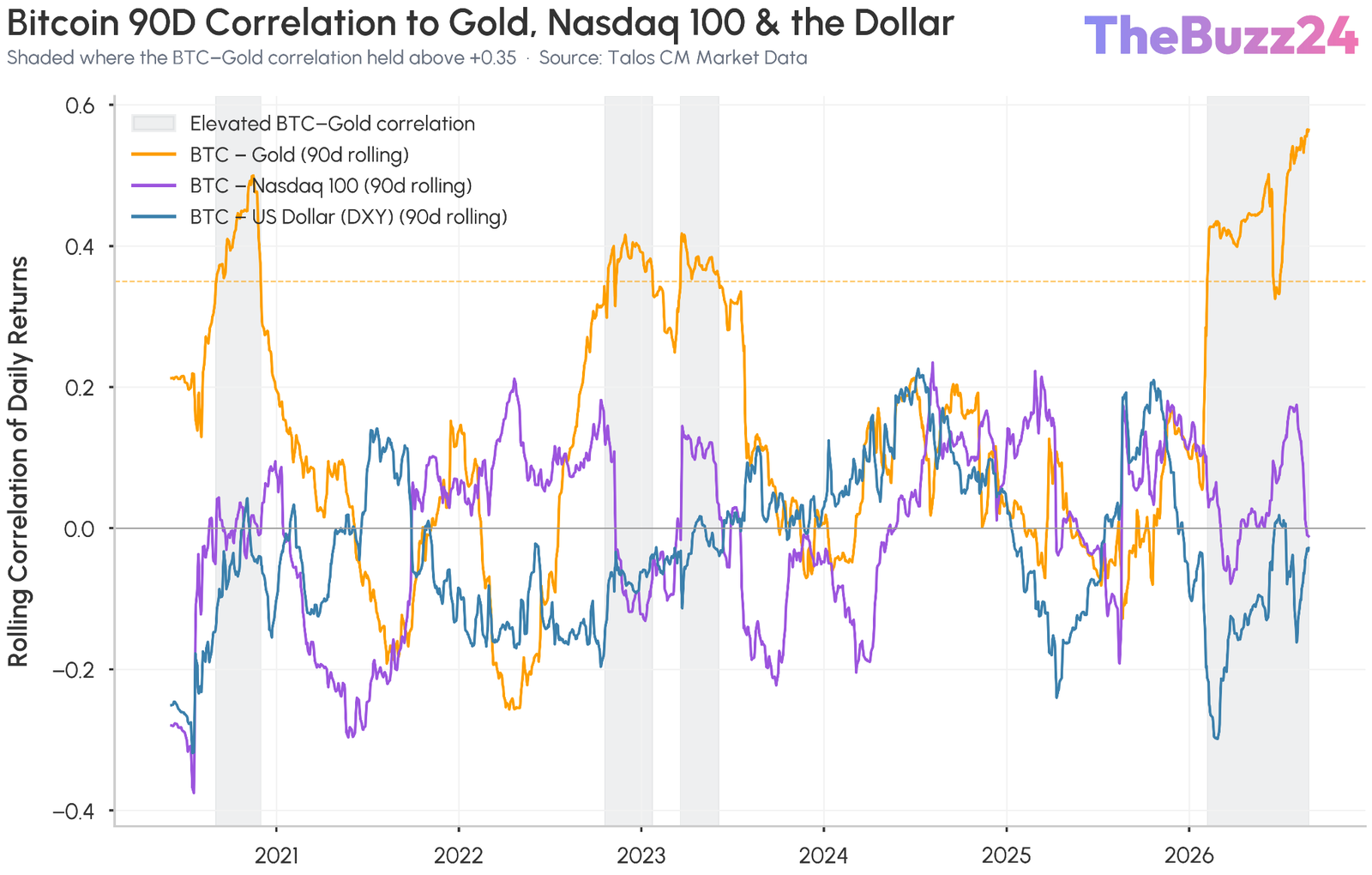
Bitcoin’s market behavior is undergoing a significant transformation, increasingly aligning with traditional safe-haven assets like gold rather than its historical correlation with high-beta technology stocks. Recent analysis reveals that Bitcoin’s 90-day correlation with gold has surged to +0.56, a level not seen since 2020 and 2023, while its correlation with the Nasdaq 100 and the U.S. dollar hovers near zero. This shift suggests that the cryptocurrency’s price action is now more influenced by broader macroeconomic forces that also support gold, such as concerns over currency debasement, sovereign debt, and the trajectory of real yields.
This notable divergence stems from two powerful, often opposing, macroeconomic forces. On one hand, the U.S. Treasury’s efforts to support the long end of the bond market, including larger buybacks of longer-dated bonds, have brought fiscal deficits, debt issuance, and the dollar’s long-term purchasing power back into focus. These actions have inadvertently revived the ‘debasement trade,’ bolstering scarce assets like gold and Bitcoin. Conversely, the Federal Reserve’s ongoing battle against inflation means that stronger economic data, particularly employment figures, can keep interest rates and real yields elevated, making non-yielding assets less appealing.
Bitcoin’s sensitivity to macroeconomic data releases has become particularly pronounced. Employment reports, such as non-farm payrolls, now trigger the largest immediate price movements for the cryptocurrency, often producing twice the reaction of a typical non-event window within the first 30 minutes. For instance, the August payrolls report on September 4 led to a substantial 2.32% drop in Bitcoin’s value within 30 minutes, a reaction six times its typical response to such data. Similarly, core Consumer Price Index (CPI) releases also generate significant, albeit more persistent, market reactions. These events directly influence market expectations for Federal Reserve policy decisions, with even slight shifts in implied rate hike probabilities causing notable Bitcoin price fluctuations.
While Bitcoin’s price action remains a key indicator for the broader crypto market, the digital asset industry continues to expand beyond its immediate influence. Innovations in on-chain trading, tokenization, settlement solutions, and prediction markets, exemplified by platforms like Hyperliquid and Robinhood Chain, are creating new avenues for volume, fees, and liquidity. This growing ecosystem suggests that even in a challenging interest rate environment, demand for stablecoins, on-chain yield, tokenized assets, and 24/7 trading infrastructure will continue to build, positioning the digital asset space for growth across various macro regimes.
Key Takeaways
- Bitcoin's 90-day correlation with gold has significantly increased to +0.56, suggesting a shift towards a 'digital gold' identity, while its correlation with equities and the dollar remains near zero.
- Macroeconomic data, particularly employment reports, now trigger the largest immediate price movements for Bitcoin, indicating heightened sensitivity to Federal Reserve policy expectations.
- Bitcoin's market behavior is currently influenced by opposing forces: U.S. Treasury actions supporting long-term bonds (raising debasement concerns) and the Federal Reserve's ongoing efforts to combat inflation (keeping real yields elevated).
Editor’s Analysis & Impact
Bitcoin’s evolving macro identity marks a significant maturation for the asset class. Its increased correlation with gold suggests it is being viewed more as a store of value and inflation hedge, potentially attracting a broader base of institutional investors seeking portfolio diversification beyond traditional assets. This shift could lead to less volatility driven by tech stock sentiment and more by global economic stability and monetary policy. The heightened sensitivity to employment and inflation data underscores the growing integration of digital assets into the mainstream financial system, making Federal Reserve communications and economic indicators crucial for its short-term trajectory. While Bitcoin navigates these macro crosscurrents, the broader digital asset ecosystem continues to innovate, offering new use cases and investment opportunities that could provide resilience even if Bitcoin faces headwinds.
Frequently Asked Questions
Q: Why is Bitcoin's correlation with gold increasing?
A: The correlation is rising due to shared market conditions, including concerns about currency debasement, sovereign debt, and the outlook for real yields. These factors make scarce assets like gold and Bitcoin more attractive as potential hedges against economic uncertainty and inflation.
Q: How do employment reports affect Bitcoin's price?
A: Employment reports, such as non-farm payrolls, can significantly influence expectations for Federal Reserve interest rate decisions. Stronger-than-expected reports may lead to higher rate hike probabilities, making non-yielding assets like Bitcoin less attractive and potentially causing price drops as investors favor assets with yield.
Q: What are the 'opposing macro forces' influencing Bitcoin?
A: Bitcoin is currently caught between two forces: the U.S. Treasury's actions to support long-dated bonds (which can raise concerns about government debt and dollar purchasing power, benefiting scarce assets) and the Federal Reserve's ongoing fight against inflation (which can keep interest rates and real yields high, potentially pressuring non-yielding assets).
AI Disclosure: This article is based on verified data and official reports. Our Team and AI have cross-referenced every financial detail with primary sources to ensure total accuracy.
More from this Category