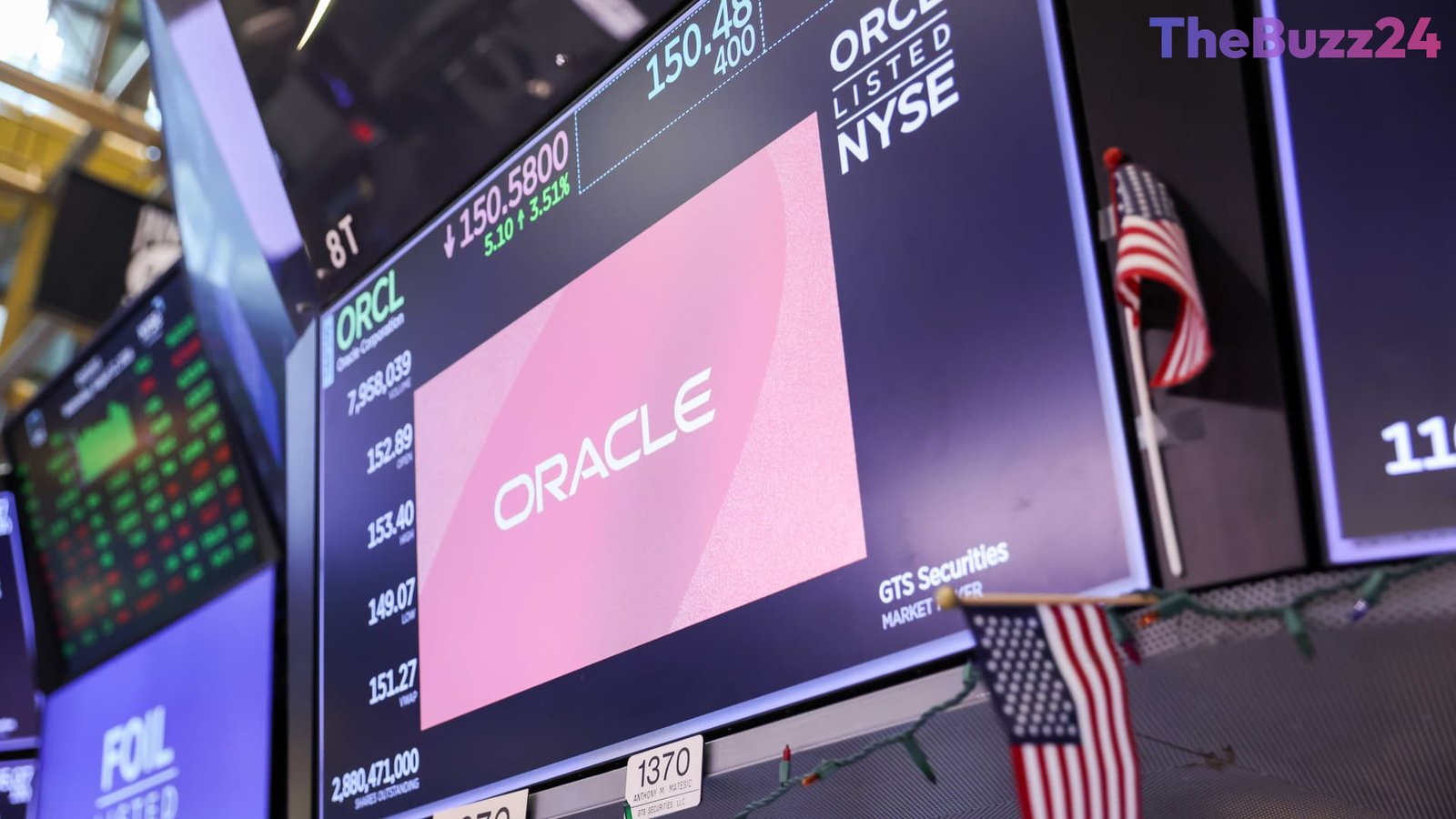
Oracle’s Options Market Signals Strong Bullish Sentiment Ahead of Key Earnings Report
Despite a challenging year that has seen Oracle shares decline by 17% year-to-date and lose over half their value from 52-week highs, options traders are exhibiting a curious and notably bullish sentiment as the company approaches its earnings announcement. Current options pricing implies an anticipated stock movement of approximately 11% following the report. While this might seem substantial, it’s moderately elevated compared to Oracle’s average earnings-related move of 9.5% over the past three quarters, hinting at heightened expectations.
Further examination of the options market reveals a distinct pattern: significant call-side activity. There are considerably larger clusters of open interest in call options compared to put options. Moreover, call options trading within the expected price range are commanding much richer premiums than equidistant put options leading up to earnings. For instance, in the September 11th weekly contracts, specific call strikes were trading at nearly double the premium of comparable put strikes. This dynamic, where investors are paying more for potential upside exposure than for downside protection, reverses the typical market trend where downside protection usually costs more. This trend has been observed in Oracle’s options over the last year but has become particularly pronounced in the week preceding earnings.
Several factors could be fueling this optimism. Oracle has experienced strong momentum recently, with its stock climbing 15% in the last week alone, potentially encouraging investors to capture further gains. The company also has a history of explosive upside moves post-earnings, notably a 35% surge in September 2025 that blew past investor expectations, a memory that likely influences current trading. Furthermore, with the stock rebounding from 52-week lows in July, there appears to be genuine optimism regarding Oracle’s future trajectory, particularly concerning its massive investments in AI infrastructure. This sentiment mirrors recent positive market responses to AI-driven growth seen in companies like Microsoft and Amazon, whose shares jumped significantly after reporting strong revenue growth and future bookings tied to their AI initiatives. The critical question for Oracle, however, remains whether it can sustain the funding for its extensive AI buildout without incurring further financial strain.
Key Takeaways
- Options traders are showing unusual bullish sentiment for Oracle's upcoming earnings, with significantly higher premiums for call options compared to puts.
- This optimism is fueled by Oracle's history of explosive post-earnings stock movements and investor hopes for its substantial AI infrastructure investments, mirroring recent tech giants' successes.
- Despite a recent stock decline, the market anticipates an approximately 11% price swing following the earnings report, reflecting confidence in potential upside.
Editor’s Analysis & Impact
The unusual options activity surrounding Oracle’s earnings report highlights a significant shift in investor sentiment, particularly the strong belief in potential upside. This trend, where call options command higher premiums than puts, suggests that the market is heavily weighing the potential for Oracle’s AI investments to yield substantial returns, similar to recent positive reactions seen with Microsoft and Amazon. For the broader technology sector, this reinforces the narrative that AI spending is now a critical driver of valuation and investor confidence. The future outlook for Oracle hinges on its ability to demonstrate tangible progress and sustainable funding for its massive AI infrastructure buildout. Should Oracle deliver on these expectations, it could solidify its position in the competitive cloud and AI landscape, potentially setting a precedent for how other companies’ AI strategies are perceived and valued by the market.
Frequently Asked Questions
Q: What does 'call-side activity' mean in options trading?
A: Call-side activity refers to increased trading volume or open interest in call options. A call option gives the holder the right, but not the obligation, to buy a stock at a specified price. High call-side activity typically indicates a bullish outlook, as traders expect the stock price to rise.
Q: Why are higher premiums for call options considered unusual?
A: In many equity markets, put options (which provide downside protection) often trade at higher premiums due to the perceived risk of a stock falling. When call options command significantly higher premiums than equidistant put options, it suggests investors are willing to pay more for potential upside gains, indicating strong bullish sentiment and a belief that the stock is more likely to rise than fall.
Q: How do AI investments impact Oracle's stock performance?
A: Investors are increasingly valuing technology companies based on their strategic investments and progress in artificial intelligence. For Oracle, significant investments in AI infrastructure are seen as a potential growth driver. Positive reports on AI-related revenue or future bookings, similar to recent successes by Microsoft and Amazon, can significantly boost investor confidence and, consequently, the company's stock price.
AI Disclosure: This article is based on verified data and official reports. Our Team and AI have cross-referenced every financial detail with primary sources to ensure total accuracy.
More from this Category