Northern Canada’s Tundra Transforms: An Early Glimpse of Autumn’s Hues
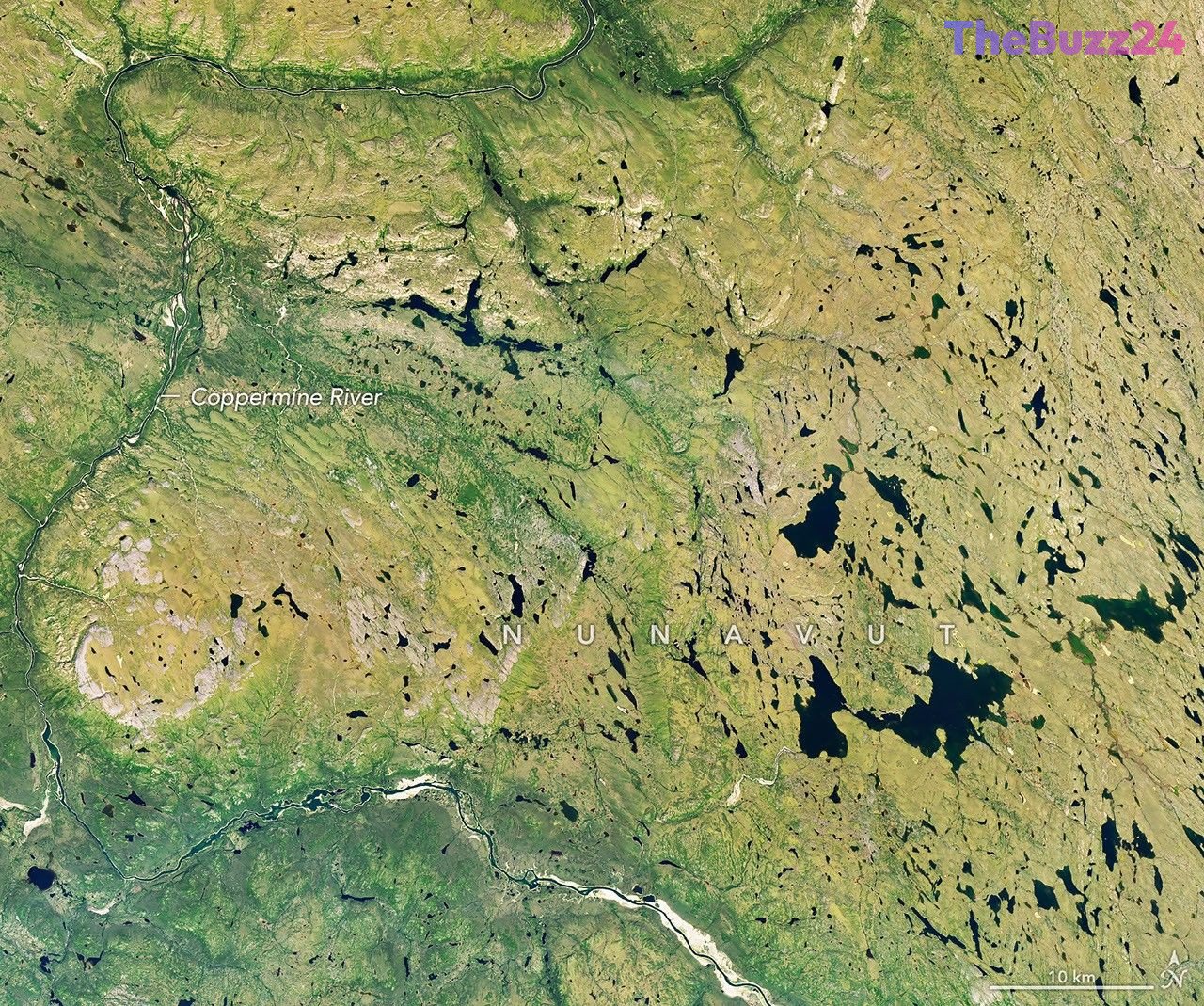
While much of North America endured a prolonged summer heatwave, the far northern reaches of Canada’s Nunavut territory were already embracing the vibrant spectacle of autumn by early September 2026. Satellite imagery has revealed the dramatic transformation of the subarctic landscape, showcasing the region’s unique position as one of the first areas on the continent to display fall foliage.
Observations captured on September 6, 2026, by the Operational Land Imager (OLI) aboard the Landsat 9 satellite, depicted a stunning tapestry of reds, oranges, and yellows sweeping across the low-growing shrubs and tundra vegetation. This striking change was particularly evident along the Coppermine River, upstream from the community of Kugluktuk. A comparative image from July 27, 2026, highlighted the stark contrast, showing the same area lush with green summer growth. Research, drawing on years of satellite data, indicates that foliage in this region typically begins its color shift in early September, reaching its peak by mid-month. However, this breathtaking display is fleeting, often lasting a week or less, a significantly shorter period than in many lower-latitude areas.
The vivid autumnal palette is a result of a fundamental biological process within the plants. As temperatures decline and daylight hours shorten in the fall, plants reduce their production of chlorophyll, the pigment responsible for their green appearance and essential for photosynthesis. With the green fading, other pigments, such as yellow carotenoids and red anthocyanins, which were always present but masked by the green, become visible, creating the characteristic fall colors. The Nunavut landscape is rich in willow and birch shrubs, alongside various berry plants like blueberries and bearberries, all contributing to the diverse array of colors.
The study of these seasonal changes extends beyond mere aesthetic appreciation. Citizen scientists have a crucial role to play in monitoring these environmental shifts through initiatives like the GLOBE North American Phenology Campaign. By observing and documenting leaf color changes each spring and fall, participants contribute valuable data to long-term environmental databases, aiding scientists in understanding how plant life responds to evolving climate patterns and broader ecological transformations.
Key Takeaways
- Nunavut, Canada, experiences early and rapid fall foliage changes, making it one of North America's first regions to display autumn colors.
- Satellite imagery from Landsat 9's OLI instrument captured the dramatic shift from green summer vegetation to vibrant reds, oranges, and yellows by early September 2026.
- The scientific explanation for fall colors involves the breakdown of chlorophyll, revealing underlying carotenoid and anthocyanin pigments, a process influenced by decreasing temperatures and shorter daylight hours.
Editor’s Analysis & Impact
This observation of early and rapid fall foliage in the Arctic tundra holds significant implications for climate science and environmental monitoring. The accelerated onset and shorter duration of peak color, as observed in Nunavut, could serve as an indicator of broader climatic shifts affecting northern ecosystems. Changes in phenology—the timing of biological events—can impact wildlife, plant reproduction, and carbon cycles. For industries reliant on natural resources or tourism, understanding these shifts is crucial for adaptation and planning. Furthermore, the reliance on satellite technology like Landsat 9 underscores the growing importance of remote sensing in tracking environmental changes at a global scale, providing invaluable data for climate models and conservation efforts. The citizen science component also highlights a pathway for public engagement in critical scientific research, fostering a deeper understanding of our changing planet.
Frequently Asked Questions
Q: Why do leaves change color in the fall?
A: Leaves change color in the fall primarily due to the breakdown of chlorophyll, the green pigment essential for photosynthesis. As chlorophyll diminishes with shorter days and cooler temperatures, other pigments like yellow carotenoids and red anthocyanins, which were always present but masked by the green, become visible.
Q: Is early fall foliage in the Arctic unusual?
A: While fall arrives earlier in Arctic and subarctic regions compared to lower latitudes, the specific timing and duration can vary year to year. Scientists monitor these changes closely as they can be indicators of broader climate shifts affecting plant phenology and ecosystem health.
Q: How do satellites help track fall foliage?
A: Satellites like Landsat 9 use instruments like the Operational Land Imager (OLI) to capture images of Earth's surface. By comparing images taken at different times, scientists can observe changes in vegetation color and health, track the progression of fall foliage across vast landscapes, and contribute to long-term environmental monitoring.
AI Disclosure: This article is based on verified data and official reports. Our Team and AI have cross-referenced every financial detail with primary sources to ensure total accuracy.
More from this Category