NASA Ames Honors Top Scientists and Engineers Driving Next-Gen Space and Earth Missions
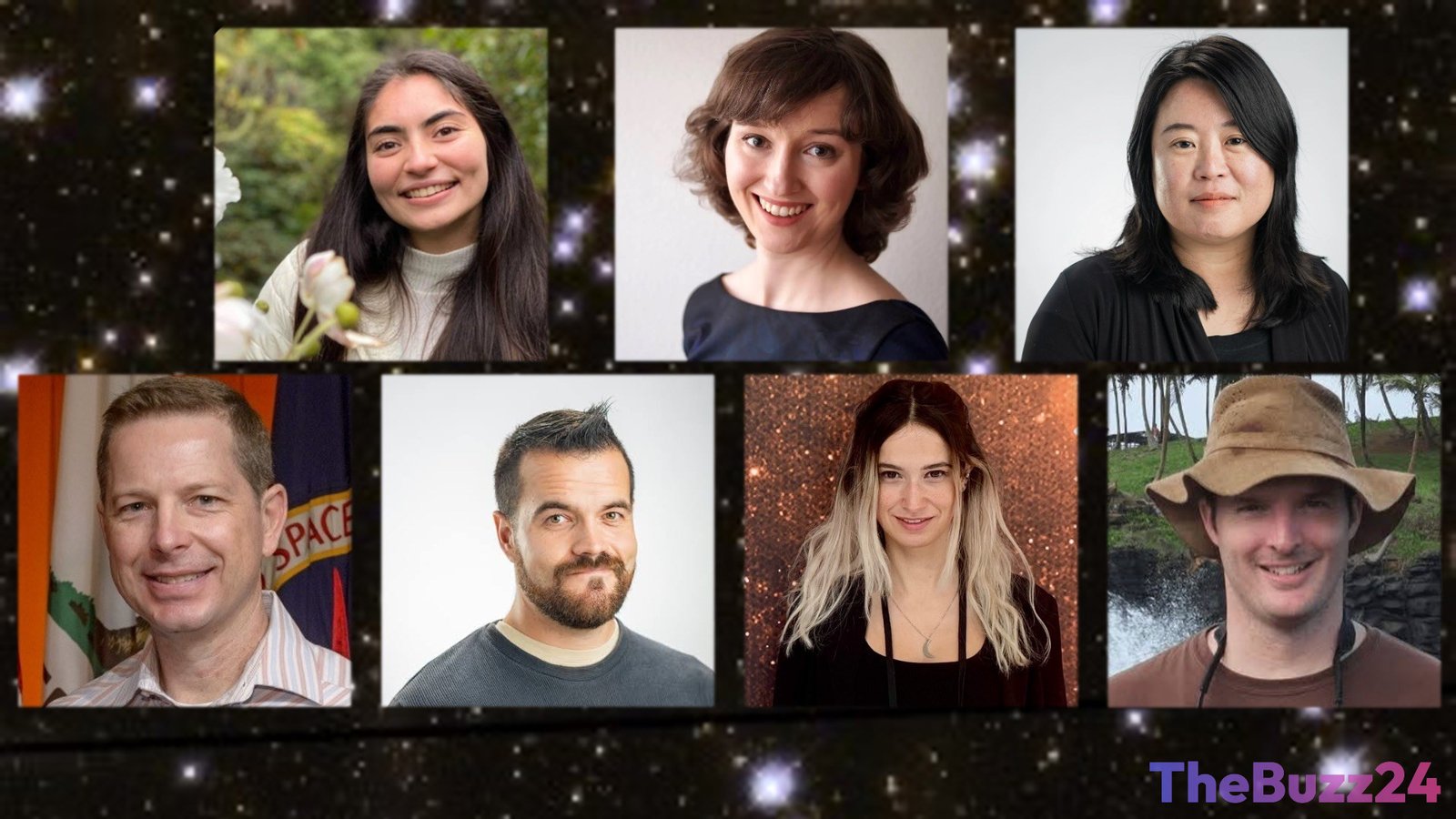
The NASA Ames Science Directorate has officially recognized seven outstanding professionals as its “Stars of the Month” for September 2026. These individuals, representing various scientific disciplines, have been commended for their exceptional technical expertise, collaborative spirit, and dedication to advancing both space exploration and Earth science. Their contributions span critical areas including biosciences, astrophysics, planetary science, and advanced geospatial artificial intelligence.
In the realm of Space Biosciences, Steve Ormsby and Aphrodite Kostakis of Amentum were celebrated for their vital roles in maintaining facility safety, infrastructure, and operational excellence. Meanwhile, the Astrophysics Division highlighted the groundbreaking work of Bay Area Environmental Research Institute (BAERI) scientists Alejandro Borlaff and Sarah Nickerson. Borlaff pioneered advanced image reduction pipelines for the Hubble and Roman Space Telescopes to detect ultra-low surface brightness features, while Nickerson was recognized for her meticulous curation of data from the EXES instrument on the SOFIA observatory, providing invaluable resources to the global scientific community.
The awards also spotlighted planetary and Earth sciences. Martina Caussi, a NASA Postdoctoral Program Fellow, utilized finite element simulations to model Europa’s Tegid crater, delivering crucial precursory data ahead of the highly anticipated Europa Clipper mission. In Earth Science, BAERI research scientists Keiko Nomura and Stephen Broccardo made significant strides. Nomura’s leadership in the NEX-GeoAI project is positioning the agency as a benchmark for federal and private-sector geospatial AI modeling, while Broccardo’s work in atmospheric remote-sensing has successfully preserved and advanced critical satellite-validation capabilities.
Key Takeaways
- NASA Ames has recognized seven key researchers and engineers for their pivotal contributions to space biosciences, astrophysics, planetary science, and Earth observation.
- Key achievements include the development of advanced imaging pipelines for major space telescopes and critical modeling of Europa's surface features ahead of the Europa Clipper mission.
- The integration of artificial intelligence in Earth science is accelerating through the NEX-GeoAI project, establishing new standards for geospatial modeling.
Editor’s Analysis & Impact
The recognition of these seven specialists highlights a broader trend within the aerospace sector: the increasing reliance on interdisciplinary collaboration and public-private partnerships. By collaborating with organizations like Amentum and the Bay Area Environmental Research Institute (BAERI), NASA Ames is effectively leveraging external expertise to bolster its core missions. The advancements in image processing for the Hubble and Roman Space Telescopes, alongside the development of the NEX-GeoAI project, demonstrate how data curation and artificial intelligence are becoming the backbone of modern space exploration and climate monitoring. As space agencies prepare for complex upcoming missions like the Europa Clipper, the foundational work in data pipelines, simulation modeling, and infrastructure safety will be critical in ensuring mission success and maximizing the scientific return on multi-billion-dollar investments.
Frequently Asked Questions
Q: What is the significance of the NEX-GeoAI project?
A: The NEX-GeoAI project utilizes artificial intelligence to analyze Earth science data, establishing a reliable 'ground-truth' standard for both federal agencies and private-sector organizations conducting geospatial modeling and decision-making.
Q: How does Martina Caussi's research benefit the Europa Clipper mission?
A: Caussi's finite element simulations of Europa's Tegid crater provide critical insights into the icy moon's topographic relaxation and geological history, helping scientists better understand the ocean world before the Europa Clipper spacecraft arrives.
Q: Who are the partner organizations involved with the recognized NASA Ames stars?
A: The recognized individuals are affiliated with key partner organizations, including Amentum, which supports facility operations and biosciences, and the Bay Area Environmental Research Institute (BAERI), which collaborates on astrophysics and Earth science research.
AI Disclosure: This article is based on verified data and official reports. Our Team and AI have cross-referenced every financial detail with primary sources to ensure total accuracy.
More from this Category