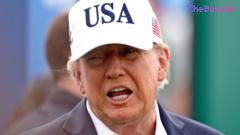
Trump Dismisses AI Safety Concerns as ‘Hoax’ Amid Economic Push
President Donald Trump has taken a firm stance against growing calls for artificial intelligence regulation, dismissing fears regarding the technology’s potential dangers as a “hoax.” In a series of recent statements, the President framed AI as the most significant economic engine in history, arguing that the only necessary oversight is strong executive leadership rather than restrictive legislative guardrails. This position places him at odds with a growing chorus of industry insiders and some members of his own party who warn that the rapid, unchecked development of AI could lead to catastrophic societal consequences.
Central to the President’s support for AI is his focus on maintaining American economic dominance and global competitiveness. With tech investment serving as a primary driver of recent U.S. economic expansion, the administration views the sector as vital to its political legacy. Trump has explicitly linked the advancement of AI to a zero-sum competition with China, asserting that the nation that leads in AI development will ultimately secure global power. By prioritizing market growth and industrial superiority, the administration has signaled a clear preference for deregulation over the precautionary measures advocated by critics.
Despite the administration’s enthusiasm, the political landscape remains divided. While some prominent tech entrepreneurs and advisors within the President’s circle have echoed his skepticism toward regulation, others in the industry continue to push for safety frameworks. Congressional efforts to introduce oversight have largely stalled, as lawmakers navigate the tension between public anxiety over AI and the President’s aggressive push for technological acceleration. As the debate intensifies, the administration continues to rely on existing regulatory powers, maintaining that the current approach is sufficient to manage the risks associated with the industry’s rapid evolution.
Key Takeaways
- President Trump has officially labeled AI safety concerns as a 'hoax,' prioritizing economic growth over new regulatory frameworks.
- The administration views AI as a critical component of U.S. economic expansion and a key battleground for global dominance against China.
- Legislative efforts to regulate AI face significant hurdles, as the President favors executive control and maintains close ties with industry leaders who oppose strict oversight.
Editor’s Analysis & Impact
The President’s dismissal of AI safety concerns marks a significant pivot in the intersection of technology and national policy. By framing AI regulation as a hindrance to economic prosperity, the administration is effectively betting that the benefits of rapid innovation will outweigh the potential risks of unchecked development. This approach creates a high-stakes environment for the tech sector, where companies are now caught between the administration’s ‘pro-growth’ mandate and the mounting public pressure for ethical safeguards. Looking ahead, the lack of a formal regulatory framework may lead to increased volatility in the tech market, as the industry remains vulnerable to unforeseen ‘black swan’ events. If a major AI-related failure occurs, the current political strategy of downplaying risks could become a significant liability, potentially forcing a reactive and chaotic legislative response that could disrupt the very economic growth the administration seeks to protect.
Frequently Asked Questions
Q: Why does the President oppose new AI regulations?
A: The President views AI as a vital economic engine and a key tool for maintaining global competitiveness against China. He argues that existing regulatory powers are sufficient and that additional 'guardrails' would stifle innovation.
Q: How has the tech industry responded to the President's stance?
A: The industry is divided; some prominent tech leaders and advisors support the President's deregulation-focused approach, while others continue to warn about the potential for catastrophic consequences and advocate for safety-first policies.
AI Disclosure: This article is based on verified data and official reports. Our Team and AI have cross-referenced every financial detail with primary sources to ensure total accuracy.
More from this Category