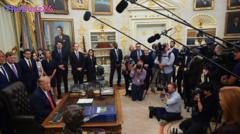
Trump Administration Implements White House Media Bans, Citing ‘Fiction and Lies’
President Donald Trump has announced an immediate ban on CNN, MS NOW, and Politico from accessing the White House, escalating his ongoing contentious relationship with several media organizations. The President stated on his social media platform, Truth Social, that these outlets “constantly write or report fiction or lies” about his administration, though specific examples were not provided.
Trump described the ban as “very simple” but offered no details on its implementation, leaving it unclear whether journalists from the affected outlets would be physically barred from White House grounds. CNN has strongly condemned the move, labeling it an “illegal assault” on press freedoms and vowing to defend its reporting and First Amendment rights. Politico echoed this sentiment, pledging to continue its coverage and vigorously protect its rights.
This action follows a pattern of friction between the Trump administration and the press corps. In February, the White House asserted control over the press pool, a system that has historically been managed by the White House Correspondents Association. Additionally, the administration previously barred Associated Press reporters from certain areas due to their use of specific terminology, a decision that led to a lawsuit. The White House Correspondents Association has voiced its support for the targeted journalists, emphasizing the public’s right to receive independent information about government activities.
Legal experts and press freedom advocates have widely criticized the ban, with organizations like the Knight First Amendment Institute and the Reporters Committee for Freedom of the Press asserting that such actions are unconstitutional. They argue that barring news organizations based on their reporting constitutes viewpoint discrimination and infringes upon First Amendment protections. The Reporters Committee for Freedom of the Press anticipates swift legal challenges, expecting the ban to be overturned by the courts.
Key Takeaways
- President Trump has banned CNN, MS NOW, and Politico from the White House, citing their reporting as "fiction or lies."
- Media organizations and press freedom advocates have condemned the ban as an "illegal assault" and a violation of the First Amendment.
- The ban is expected to face significant legal challenges, with experts predicting it will be struck down by the courts.
Editor’s Analysis & Impact
The Trump administration’s decision to ban specific news outlets from the White House marks a significant escalation in the executive branch’s ongoing conflict with the press. This move, framed by the President as a response to unfavorable coverage, raises serious concerns about press freedom and the public’s access to information. The administration’s justification, based on subjective claims of ‘fiction and lies,’ is likely to be scrutinized heavily in potential legal battles. Such actions could set a precedent for future administrations, potentially chilling journalistic inquiry and impacting the role of the press in holding power accountable. The broader implication is a deepening divide between government and media, potentially leading to a less informed public discourse.
Frequently Asked Questions
Q: What is the White House press pool?
A: The White House press pool is a group of journalists representing various news organizations who are granted access to cover presidential events and report back to the wider press corps. This system ensures that news is disseminated even when not all journalists can be present.
Q: What is the First Amendment?
A: The First Amendment to the U.S. Constitution protects several fundamental rights, including freedom of speech and freedom of the press. It prevents the government from enacting laws that abridge these freedoms.
Q: What are the potential legal ramifications of the ban?
A: Press freedom organizations and legal experts argue that banning news outlets based on their reporting violates the First Amendment's guarantee of a free press. Such actions are considered viewpoint discrimination and are expected to be challenged in court, with a high likelihood of being overturned.
AI Disclosure: This article is based on verified data and official reports. Our Team and AI have cross-referenced every financial detail with primary sources to ensure total accuracy.
More from this Category