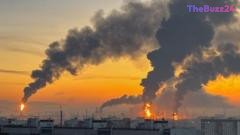
Massive Drone Offensive Targets Moscow as Energy Infrastructure Faces Escalating Strikes
In what is being described as the most significant drone assault on the Russian capital to date, Ukrainian forces launched a massive aerial offensive against the Moscow region. Mayor Sergei Sobyanin reported that hundreds of drones were intercepted by air defense systems, though the strike still managed to inflict damage on critical infrastructure, including a major oil refinery and residential areas. Regional authorities confirmed that the attacks resulted in at least two fatalities and numerous injuries, while also causing temporary disruptions to operations at Moscow’s major airports, Sheremetyevo and Vnukovo.
President Volodymyr Zelensky confirmed that the operation was a strategic effort to cripple Russian logistics and energy facilities that support the ongoing war effort. The targeted oil refinery is particularly significant, as it reportedly supplies a substantial portion of the fuel used by the Russian military. Ukrainian defense officials emphasized that these strikes are intended to undermine the enemy’s capacity to sustain its military operations, marking a shift toward targeting the economic foundations of the conflict.
The escalation comes amid a period of heightened hostilities, with both nations intensifying strikes against energy grids, transport hubs, and logistics centers. While the Russian government characterized the drone barrage as an attempt to disrupt ongoing parliamentary elections, the violence has extended well beyond the capital. Recent days have seen significant casualties in the Kyiv and Sumy regions due to Russian retaliatory strikes, including the deaths of several civilians and children. Despite international rhetoric regarding potential de-escalation, the conflict continues to intensify, with new economic pressures mounting as the United States implements fresh sanctions targeting major purchasers of Russian energy.
Key Takeaways
- Ukraine launched its largest-ever drone attack on Moscow, targeting a key oil refinery and causing civilian casualties.
- The strikes caused temporary shutdowns at major Moscow airports and damaged infrastructure critical to the Russian military's fuel supply.
- The escalation coincides with intensified reciprocal attacks on energy and logistics infrastructure across both nations, despite international efforts to curb the conflict.
Editor’s Analysis & Impact
The recent surge in drone warfare marks a critical inflection point in the conflict, signaling a transition from frontline combat to a war of attrition focused on economic and logistical infrastructure. By targeting refineries that supply the Russian military, Ukraine is attempting to degrade Moscow’s long-term operational capacity rather than merely contesting territory. This strategy carries significant risks, as it invites further retaliatory strikes on Ukrainian civilian centers and energy grids. Furthermore, the introduction of aggressive U.S. sanctions on Russian energy buyers adds a layer of global economic volatility. As both sides demonstrate an increasing willingness to strike deep within enemy territory, the prospect of a negotiated ceasefire appears increasingly distant, suggesting that the conflict will likely remain characterized by high-intensity aerial campaigns for the foreseeable future.
Frequently Asked Questions
Q: What was the primary objective of the drone attack on Moscow?
A: The primary objective, according to Ukrainian officials, was to strike key energy and logistics infrastructure, specifically an oil refinery that provides fuel for the Russian military, to undermine their war-fighting capabilities.
Q: How did the drone strikes affect civilian life in Moscow?
A: The attacks resulted in at least two deaths and multiple injuries, damaged residential buildings, and caused temporary operational halts and flight delays at Moscow's major airports.
AI Disclosure: This article is based on verified data and official reports. Our Team and AI have cross-referenced every financial detail with primary sources to ensure total accuracy.
More from this Category