Earth’s Celestial Balance: Unpacking the Equinox Phenomenon
Twice a year, our planet experiences a moment of celestial equilibrium known as the equinox, a pivotal event that has captivated humanity for millennia. Derived from the Latin for “equal night,” equinoxes are observed globally and have historically served as crucial markers for seasonal transitions, influencing ancient calendars, agricultural practices, and navigational techniques. While modern calendars readily pinpoint these dates, the underlying astronomical mechanics reveal a fascinating interplay between Earth’s orbit and its axial tilt.
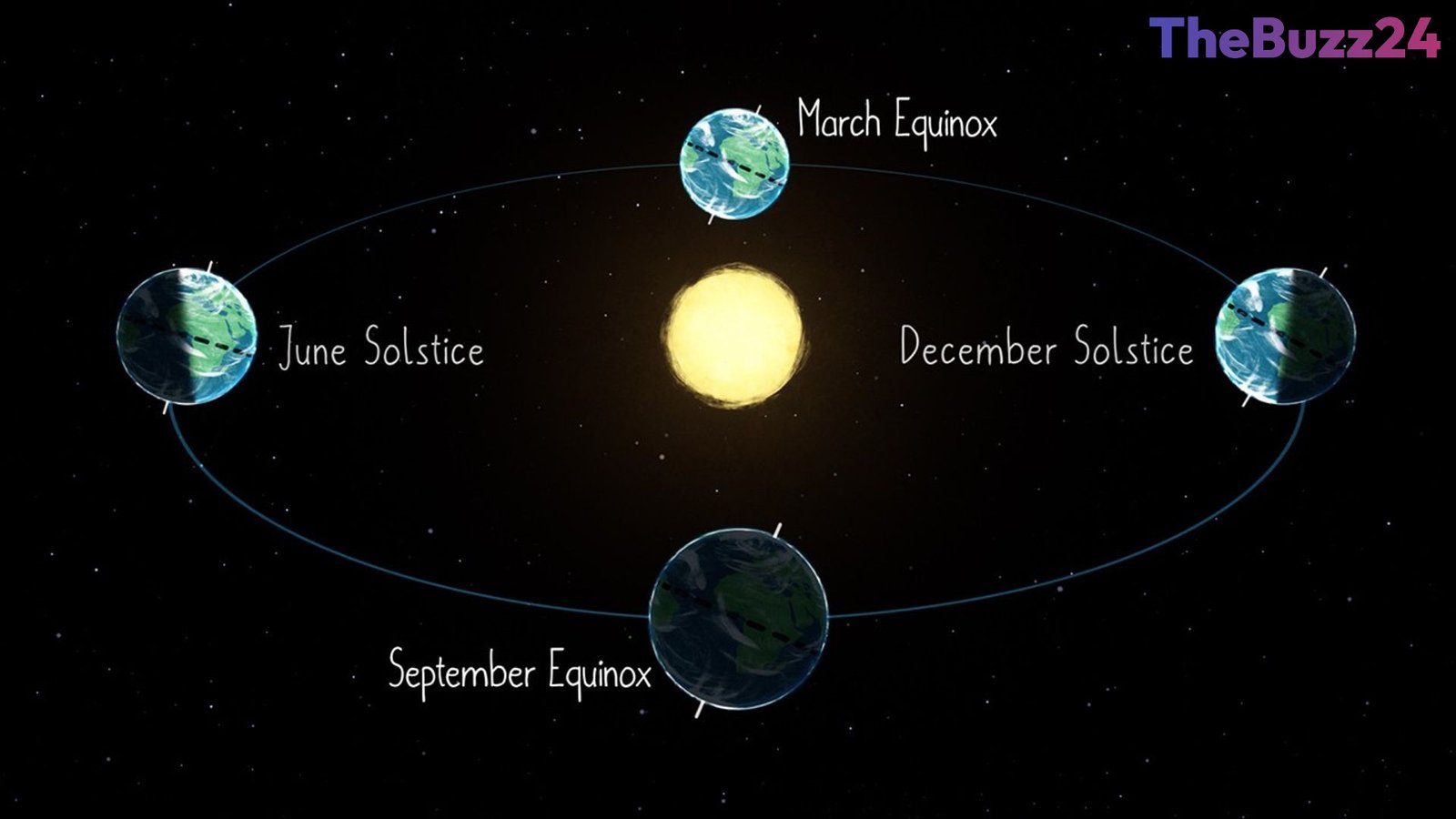
An equinox precisely occurs when the center of the Sun aligns with the plane of Earth’s equator. This alignment happens around March 20th and September 22nd or 23rd annually. For instance, in 2026, the March equinox is slated for March 20 at 14:46 UTC, followed by the September equinox on September 23 at 00:05 UTC. During these exact moments, observers positioned at the equator would witness the Sun directly overhead at noon. Following the March equinox, the Sun’s apparent path in the sky shifts northward until the June solstice, then begins its southward journey, crossing the equatorial plane again at the September equinox before reaching its southernmost point at the December solstice. This cyclical movement leads some to refer to the March event as the northward equinox and the September event as the southward equinox.
A defining characteristic of the equinoxes is the near-equal distribution of sunlight across both the Northern and Southern Hemispheres. This unique alignment means that the Earth’s North and South Poles are simultaneously illuminated by the Sun, a phenomenon exclusive to these two annual events. While the term “equinox” suggests perfectly equal day and night, this is an approximation. Factors such as the Sun’s spherical shape and the refractive properties of Earth’s atmosphere slightly extend daylight hours, meaning the exact day of equal light and darkness might occur a few days before or after the astronomical equinox, depending on one’s latitude.
These celestial events are intrinsically linked to the changing seasons. In the Northern Hemisphere, the March equinox heralds the arrival of spring, bringing longer, warmer days. Conversely, for the Southern Hemisphere, it signifies the onset of autumn, with days growing shorter and nights cooler. The September equinox reverses this pattern, marking autumn’s beginning in the Northern Hemisphere and spring’s arrival in the Southern Hemisphere, underscoring the profound impact of Earth’s orbital dance on our daily lives and natural world.
Key Takeaways
- Equinoxes occur twice a year (March and September) when the Sun's center crosses the Earth's equatorial plane, leading to nearly equal day and night globally.
- These events are crucial astronomical markers that signal the change of seasons, bringing spring to one hemisphere and autumn to the other.
- During an equinox, both the North and South Poles are simultaneously illuminated by the Sun, a unique annual occurrence.
Editor’s Analysis & Impact
The equinoxes, while seemingly simple astronomical occurrences, hold significant historical and cultural weight, deeply influencing human civilization from ancient agricultural practices to navigation. Scientifically, they offer a tangible demonstration of Earth’s axial tilt and orbital mechanics, reinforcing our understanding of planetary dynamics. While they don’t directly impact financial markets or specific industries in a transactional sense, their role in defining seasons is fundamental to agriculture, tourism, and even energy consumption patterns globally. The continued observation and explanation of such phenomena are vital for public scientific literacy and underscore humanity’s enduring connection to the cosmos, fostering a deeper appreciation for our planet’s place in the solar system.
Frequently Asked Questions
Q: What exactly is an equinox?
A: An equinox is an astronomical event that occurs twice a year when the Sun's center passes directly over the Earth's equator. This results in both the Northern and Southern Hemispheres receiving nearly equal amounts of sunlight.
Q: When do equinoxes typically occur?
A: Equinoxes generally happen around March 20th (the vernal or spring equinox) and September 22nd or 23rd (the autumnal or fall equinox) each year. The precise date and time can vary slightly due to the Earth's elliptical orbit and the calendar system.
Q: Is the length of day and night perfectly equal on an equinox?
A: While the term "equinox" means "equal night," the length of day and night is not precisely equal on the exact day of the equinox. This slight discrepancy is due to factors like the Sun's spherical shape and the refraction of sunlight by Earth's atmosphere, which makes the Sun appear above the horizon slightly earlier and set slightly later.
AI Disclosure: This article is based on verified data and official reports. Our Team and AI have cross-referenced every financial detail with primary sources to ensure total accuracy.
More from this Category