The Global AI Hegemony: Inside the High-Stakes Tech Rivalry Between the US and China
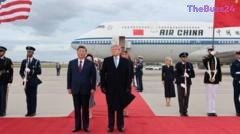
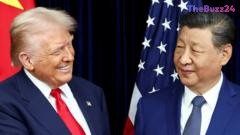
As US President Donald Trump and Chinese President Xi Jinping prepare for a pivotal summit, the race for artificial intelligence supremacy has emerged as a primary geopolitical battleground. While Trump has been characteristically direct about his ambition to secure American dominance and counter China’s technological rise, Xi has quietly positioned AI as a core pillar of China’s long-term national power. The upcoming discussions between the two leaders carry profound implications for global technology standards, economic competitiveness, and international security.
Currently, the United States maintains a strong lead in developing cutting-edge “frontier” models, driven by massive capital investments in companies like OpenAI, Google, and Anthropic. However, this lead is narrowing. Recent benchmarks show Chinese models, such as DeepSeek and Moonshot AI’s Kimi K3, performing remarkably close to their American counterparts. To maintain its edge, Washington has relied on strict export controls, limiting China’s access to advanced semiconductor chips. Despite these restrictions, Chinese developers have demonstrated significant resilience, utilizing alternative techniques like model distillation to bridge the capability gap.
Unlike the proprietary, subscription-based approach favored by many US tech giants, China has focused heavily on open-weight models that are freely downloadable and customizable. This strategy aims to democratize capable AI tools, integrating them rapidly across the domestic economy to gain massive geopolitical and industrial leverage. Furthermore, China holds distinct advantages in infrastructure, including lower energy costs for power-hungry data centers and a dominant position in robotics manufacturing, producing the vast majority of the world’s humanoid robots.
The two superpowers also diverge sharply on AI safety and regulation. The Trump administration has prioritized rapid innovation, advocating for minimal regulatory hurdles to avoid stifling growth. In contrast, Beijing has implemented a highly centralized, cautious regulatory framework, focusing on keeping AI under strict human control to prevent domestic instability and cybersecurity threats. Despite these ideological differences, preliminary discussions between US Treasury Secretary Scott Bessent and Chinese Vice Premier He Lifeng regarding an incident notification mechanism suggest that both nations recognize the need to prevent accidental escalation in this high-stakes technological cold war.
Key Takeaways
- The US currently leads in proprietary frontier AI models, but Chinese open-weight models are rapidly closing the performance gap to within just a few months.
- Washington is leveraging semiconductor export controls to slow China's progress, while Beijing is capitalizing on lower energy costs and its dominant robotics manufacturing sector.
- While the US prioritizes deregulation to foster rapid innovation, China has adopted a centralized regulatory approach focused on maintaining strict human control and domestic stability.
Editor’s Analysis & Impact
The technological standoff between the US and China represents a defining paradigm shift for the global tech sector. The US strategy of aggressive capital deployment and cutting-edge proprietary research faces a formidable counter-strategy from China, which emphasizes open-weight models, rapid economic integration, and hardware dominance in robotics. While US export controls on advanced microchips have successfully created friction, they have also forced Chinese firms to innovate rapidly under constraints. This has led to highly efficient model architectures that require less computing power. Moving forward, the global AI landscape is likely to bifurcate into two distinct ecosystems: a highly regulated, open-weight-driven sphere led by China, and a commercial, proprietary-led sphere championed by the US. The success of proposed safety communication channels, like incident notification systems, will be critical in preventing technological competition from spiraling into active cyber or geopolitical conflict.
Frequently Asked Questions
Q: How does China's AI strategy differ from that of the United States?
A: While the US focuses on highly advanced, proprietary 'frontier' models funded by massive private investment, China has prioritized open-weight models that are easily adaptable and cheap to deploy. Additionally, China leverages its manufacturing dominance in robotics and lower energy costs to integrate AI deeply into its industrial sector.
Q: What measures has the US taken to maintain its lead in the AI race?
A: The US government has implemented strict export restrictions to prevent Chinese firms from acquiring advanced semiconductor chips, which are essential for training cutting-edge AI models. The US also emphasizes deregulation to allow domestic tech companies to innovate without restrictive guardrails.
Q: Are the US and China cooperating on AI safety?
A: Cooperation remains limited due to differing priorities; the US is concerned about models escaping human control, while China focuses on domestic stability and cybersecurity. However, recent high-level talks have explored establishing a notification mechanism for serious AI incidents to prevent accidental escalation.
AI Disclosure: This article is based on verified data and official reports. Our Team and AI have cross-referenced every financial detail with primary sources to ensure total accuracy.
More from this Category