Next-Gen Navigation: NASA’s SPLICE Tech Promises Safer Space Exploration
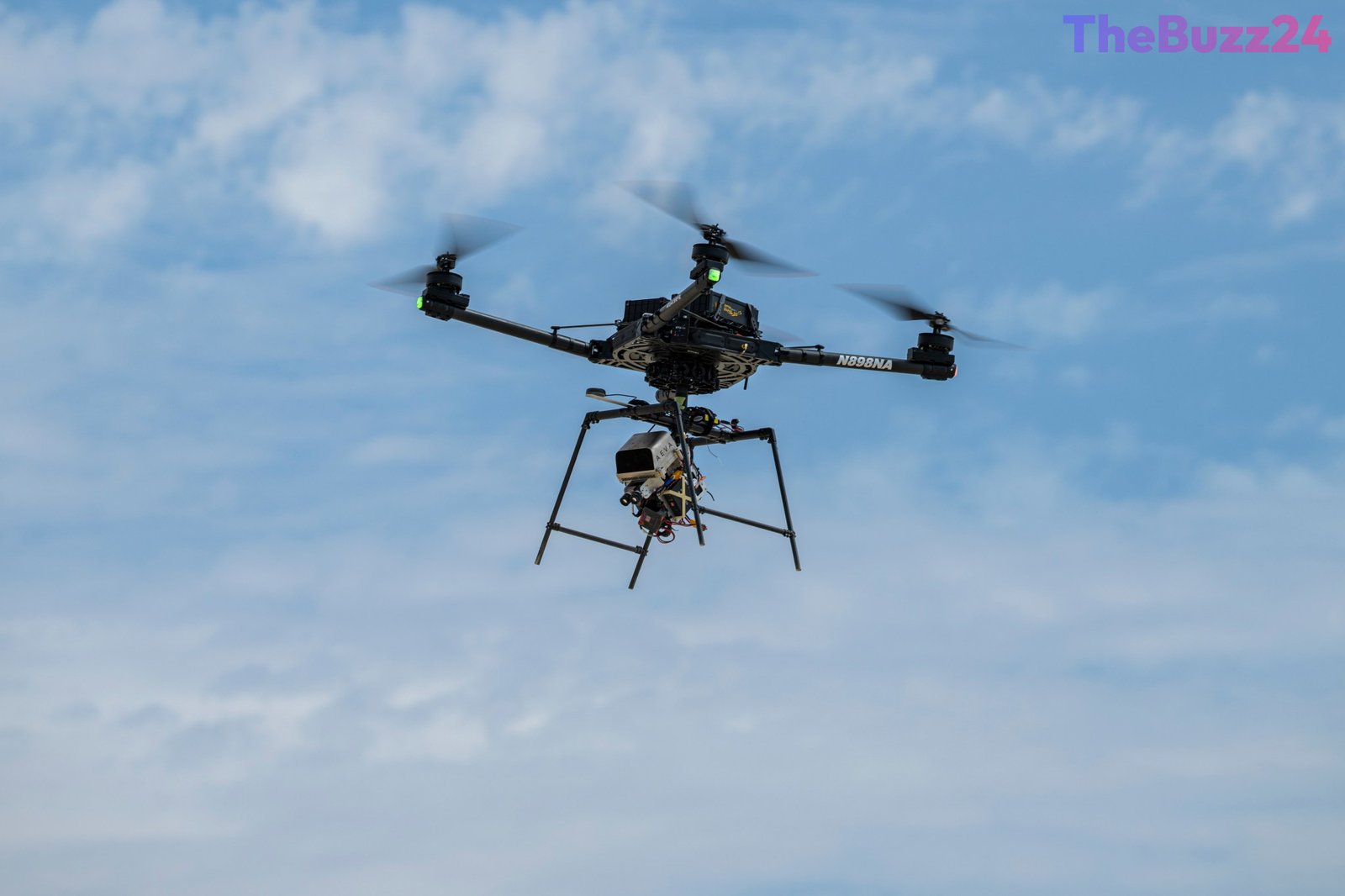
NASA is making significant strides in advanced space navigation with the successful testing of its Safe and Precise Landing – Integrated Capabilities Evolution (SPLICE) experiment. Recently, an Alta-X drone was observed flying the sophisticated system near NASA’s Armstrong Flight Research Center in Edwards, California, simulating crucial lunar descent and landing maneuvers. This development marks a pivotal step towards enhancing the safety and precision of future missions to various celestial bodies.
Developed by researchers at NASA’s Johnson Space Center in Houston, SPLICE represents a cutting-edge guidance and navigation system. Its core function is to provide unparalleled accuracy and safety during the critical landing phase of space missions. The technology employs specialized navigation, guidance, and processing techniques to ensure a controlled and precise touchdown, even in challenging environments.
The capabilities of SPLICE extend beyond lunar missions, offering potential applications for landings on Mars, icy worlds, and other distant destinations. By enabling spacecraft to land safely in hard-to-reach and previously inaccessible areas, SPLICE will unlock new opportunities for scientific discovery. These precision landing capabilities are crucial for exploring regions of high scientific interest that might otherwise be too risky for conventional landing approaches.
Key Takeaways
- NASA's SPLICE system successfully completed simulated lunar landing tests using an Alta-X drone.
- SPLICE is an advanced guidance and navigation technology designed to ensure safe and precise landings for future space missions.
- The technology will enable access to challenging, scientifically significant areas on the Moon, Mars, icy worlds, and other celestial bodies.
Editor’s Analysis & Impact
The successful testing of NASA’s SPLICE system represents a significant leap forward for space exploration. This technology is critical for the upcoming Artemis missions and future robotic and human endeavors to Mars and beyond, as it directly addresses one of the most challenging aspects of planetary exploration: safe and precise landing. By enabling access to previously inaccessible, high-value scientific sites, SPLICE will unlock new avenues for research and discovery, potentially revealing insights into the origins of our solar system and the potential for extraterrestrial life. Furthermore, advancements in autonomous precision landing systems like SPLICE could have broader implications for industries such as autonomous vehicles and drone logistics, pushing the boundaries of navigation technology.
Frequently Asked Questions
Q: What is the SPLICE experiment?
A: SPLICE, which stands for Safe and Precise Landing – Integrated Capabilities Evolution, is an advanced guidance and navigation system developed by NASA researchers. It is designed to enable safe and precise landings for spacecraft on various celestial bodies.
Q: Where was the SPLICE system tested?
A: The SPLICE system underwent testing near NASA’s Armstrong Flight Research Center in Edwards, California, where an Alta-X drone was used to simulate lunar descent and landing maneuvers.
Q: What are the main applications of SPLICE technology?
A: SPLICE technology is intended for safe and precise landings on the Moon, Mars, icy worlds, and other distant destinations. Its primary application is to enable spacecraft to land in hard-to-reach and unknown areas of high scientific interest, expanding the scope of space exploration.
AI Disclosure: This article is based on verified data and official reports. Our Team and AI have cross-referenced every financial detail with primary sources to ensure total accuracy.
More from this Category