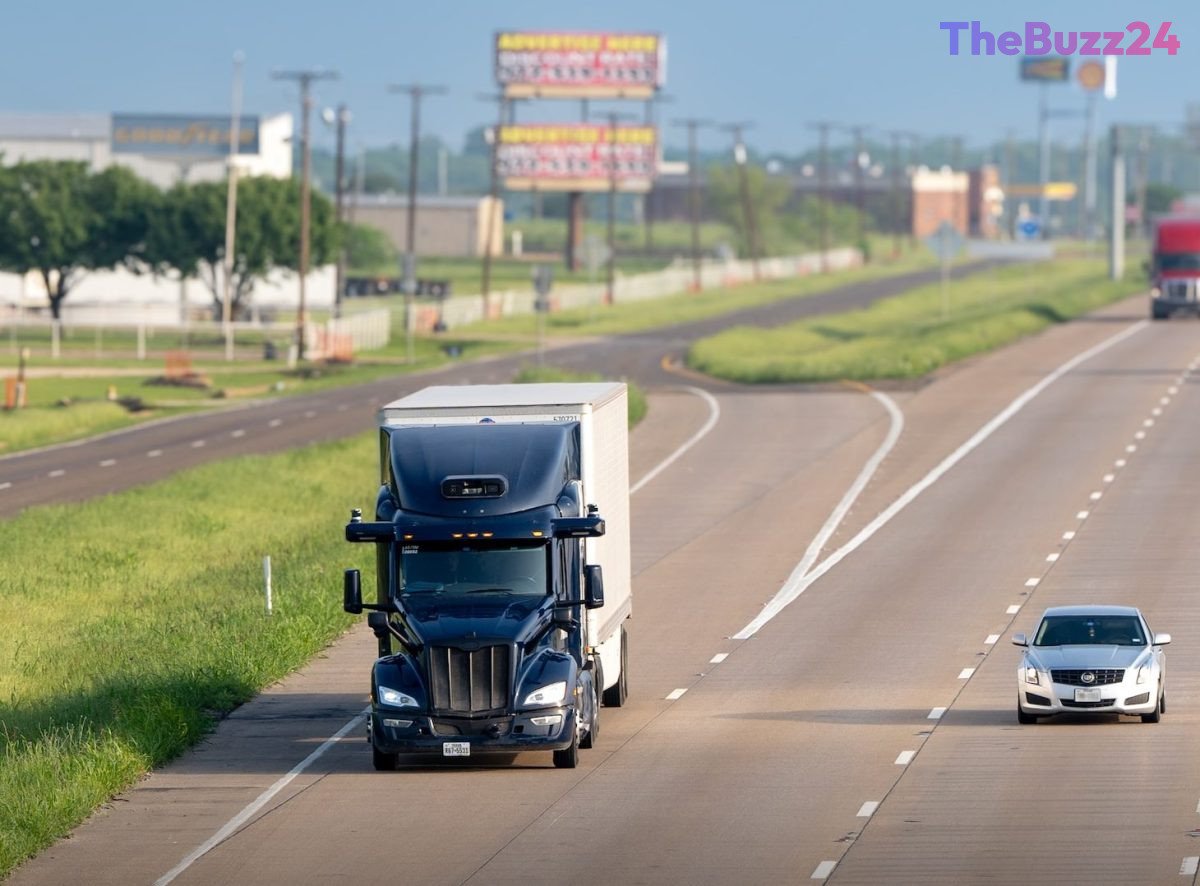
Aurora Targets Massive Expansion with 30,000 Autonomous Trucks by 2030
Autonomous vehicle developer Aurora has unveiled an ambitious roadmap to scale its self-driving truck fleet to over 30,000 units by the end of 2030. While the company currently operates a limited proof-of-concept model with roughly 500 trucks, leadership maintains that the transition to a large-scale commercial operation is well within reach. Aurora projects that this fleet expansion will generate approximately $5 billion in annual revenue, marking a significant jump from the $80 million run rate expected by the end of 2026.
CFO David Maday argues that the 30,000-truck target is modest when compared to the broader trucking industry, which sees hundreds of thousands of new vehicles manufactured annually. To facilitate this growth, Aurora plans to pivot from its current transportation-as-a-service model—where the company owns and operates the fleet—to a driver-as-a-service model. Under this new structure, customers will purchase their own trucks and pay Aurora a per-mile subscription fee for the autonomous technology, effectively removing the heavy capital burden of fleet ownership from Aurora’s balance sheet.
The company’s strategy relies heavily on the 2027 launch of its third-generation hardware, which will be mass-produced in partnership with Aumovio. This collaboration is designed to streamline manufacturing and financing, allowing Aurora to focus on software maintenance and system reliability. As the company scales, it intends to expand its operational footprint from its current base in the southern United States to cover the majority of the continental U.S., with potential future plans to enter the robotaxi market once its trucking operations reach profitability.
Key Takeaways
- Aurora aims to deploy 30,000 autonomous trucks by 2030, projecting $5 billion in annual revenue.
- The company is shifting to a 'driver-as-a-service' subscription model to reduce capital expenditure and scale faster.
- A partnership with Aumovio for mass-produced hardware is central to Aurora's plan to reach breakeven gross margins by 2027.
Editor’s Analysis & Impact
Aurora’s aggressive growth plan highlights the critical transition phase currently facing the autonomous trucking sector: moving from capital-intensive pilot programs to scalable, asset-light software models. By shifting the burden of vehicle ownership to logistics partners, Aurora is attempting to solve the ‘scaling trap’ that has hindered many self-driving startups. However, the market’s skepticism, reflected in recent stock volatility, suggests that investors remain wary of the execution risks involved in such a rapid ramp-up. If Aurora successfully hits its 2027 breakeven milestone, it could set a new industry standard for profitability in autonomy. Conversely, failure to meet these hardware integration timelines could force the company to seek further capital, potentially diluting shareholder value and delaying their entry into the lucrative robotaxi market.
Frequently Asked Questions
Q: How does Aurora plan to make money under its new business model?
A: Aurora is moving to a 'driver-as-a-service' model where customers own the trucks and pay Aurora a subscription fee of approximately $0.85 per mile for the use of its autonomous software and hardware.
Q: What role does Aumovio play in Aurora's expansion?
A: Aumovio is responsible for mass-producing, financing, and servicing Aurora's third-generation autonomous hardware, which helps Aurora reduce its own financial and operational overhead.
AI Disclosure: This article is based on verified data and official reports. Our Team and AI have cross-referenced every financial detail with primary sources to ensure total accuracy.
More from this Category