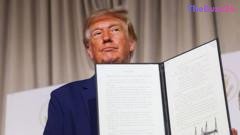
Trump Rejects AI Collaboration with China, Citing National Security Risks
President Donald Trump has officially dismissed the possibility of a joint artificial intelligence venture between the United States and China. During a recent event in Washington, the President emphasized that such a partnership would effectively surrender critical technological advantages to a primary economic competitor. Trump asserted that the U.S. currently maintains a significant lead in the AI sector and intends to preserve that dominance by keeping proprietary developments secure.
This stance comes despite recent diplomatic efforts to establish an AI dialogue between the two nations following a meeting between President Trump and President Xi Jinping. While both countries have agreed to open communication channels to mitigate risks during AI-related incidents, the President remains firm that formal cooperation on development is off the table. He expressed concern that any shared initiative would provide China with immediate access to sensitive information that could compromise American technological superiority.
Domestically, the administration continues to face pressure regarding the rapid advancement of AI. Public sentiment remains divided, with recent polling indicating that a majority of Americans perceive potential existential risks associated with the technology. Despite these concerns and calls for stricter regulatory guardrails, the President has consistently downplayed the severity of these warnings, maintaining that the focus should remain on fostering growth and maintaining a competitive edge on the global stage.
Key Takeaways
- President Trump has explicitly ruled out joint AI development ventures with China to protect U.S. technological secrets.
- The administration maintains that the U.S. holds a significant lead in AI and views collaboration as a threat to that competitive advantage.
- Despite public anxiety and calls for increased safety regulations, the President continues to prioritize AI growth over implementing restrictive guardrails.
Editor’s Analysis & Impact
The rejection of a joint AI venture with China signals a deepening of the ‘technological cold war’ between the world’s two largest economies. By framing AI development as a zero-sum game, the administration is signaling that national security and intellectual property protection will take precedence over international cooperation. This policy stance will likely force private sector firms to navigate an increasingly fragmented global market, where cross-border collaboration becomes difficult or legally fraught. Looking ahead, this approach may accelerate the ‘balkanization’ of AI standards, as the U.S. and China pursue divergent development paths. While this may secure short-term domestic advantages, it also raises long-term concerns regarding the lack of a unified global framework for AI safety and ethical governance, potentially increasing the risk of accidents or unintended consequences in the global digital ecosystem.
Frequently Asked Questions
Q: Why does the U.S. government oppose joint AI ventures with China?
A: The administration argues that such partnerships would lead to the loss of critical technological secrets and undermine the United States' current competitive lead in the AI sector.
Q: Are there any ongoing communications between the U.S. and China regarding AI?
A: Yes, the two nations have established a communications channel intended to prevent misunderstandings during AI-related incidents, though this does not extend to joint development projects.
AI Disclosure: This article is based on verified data and official reports. Our Team and AI have cross-referenced every financial detail with primary sources to ensure total accuracy.
More from this Category