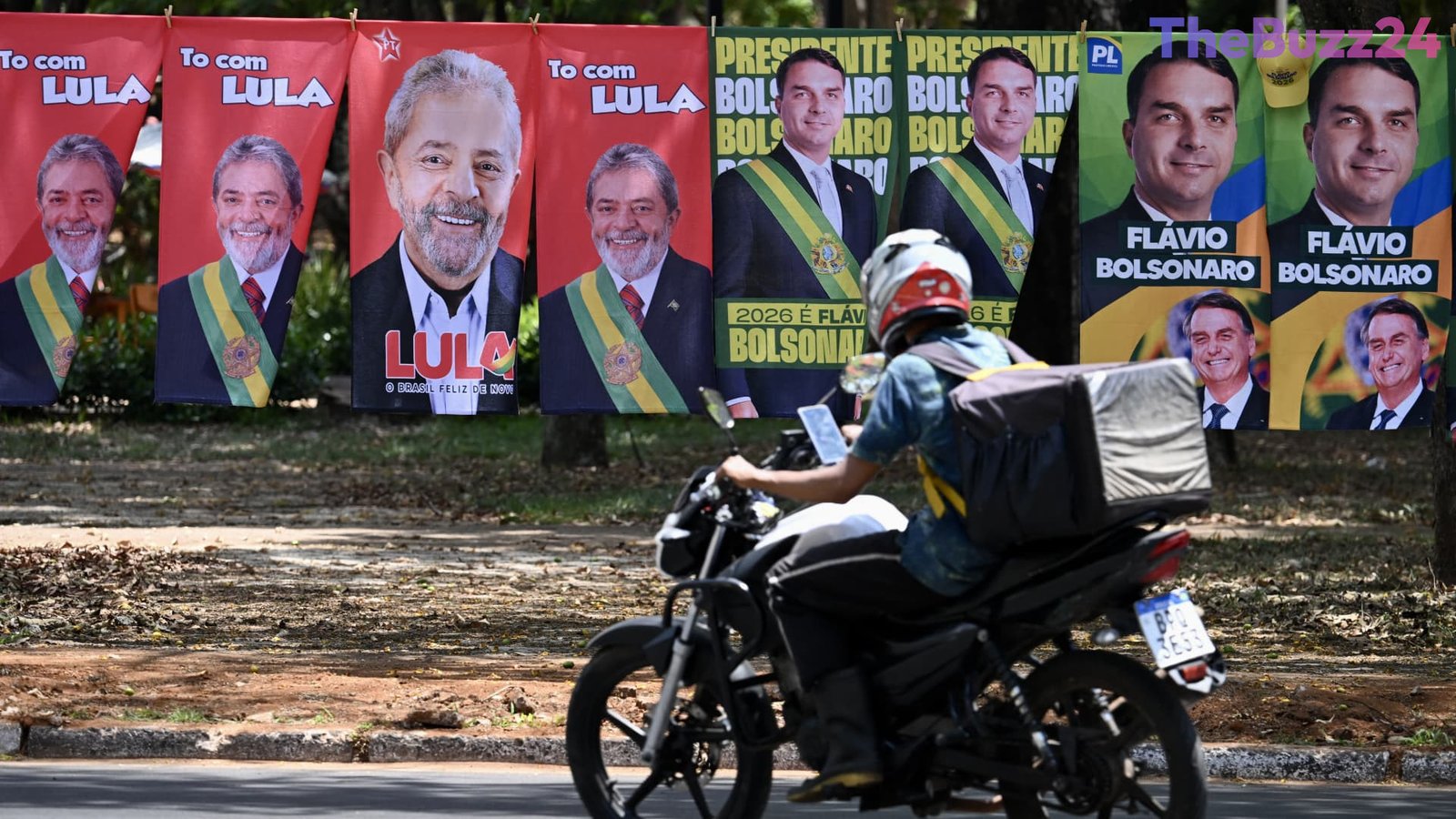
Brazil’s Presidential Race Headed to Runoff After Bolsonaro Shocks in First Round
The political landscape in Latin America’s largest economy has shifted dramatically following the first round of Brazil’s presidential election. Right-wing Senator Flavio Bolsonaro secured a surprising lead over incumbent leftist President Luiz Inacio Lula da Silva, defying pre-election surveys that had predicted a comfortable victory for the current administration. With neither candidate securing the majority needed to win outright, the race will now proceed to a high-stakes runoff later this month.
The initial vote centered heavily on pressing domestic issues, including the rising cost of living, persistent household debt, and public safety concerns. Bolsonaro capitalized on voter frustrations regarding economic headwinds and public spending, capturing 47% of the ballots compared to Lula’s 45%. This stronger-than-anticipated showing has energized conservative factions and is expected to provide substantial momentum heading into the final showdown.
Political analysts noted that the surprising outcome highlights the limitations of traditional polling methods in the region, particularly as a wave of right-wing political movements gains traction. While Lula’s campaign focused on past governance and expanded welfare initiatives, the opposition successfully rallied voters seeking a change in leadership. As both camps prepare for the upcoming runoff, the focus will intensify on fiscal policy, economic growth, and securing the crucial blocks of undecided voters necessary to claim the presidency.
Key Takeaways
- Senator Flavio Bolsonaro outperformed pre-election polls, securing a narrow lead over incumbent President Luiz Inacio Lula da Silva in the first round.
- The election campaign was heavily influenced by voter concerns over inflation, the cost of living, public debt, and security.
- The two candidates will face off in a decisive runoff later this month to determine the country's next leader.
Editor’s Analysis & Impact
The unexpected first-round results in Brazil highlight a growing global trend of voter dissatisfaction with incumbent administrations, largely driven by post-pandemic economic pressures, inflation, and cost-of-living crises. For the financial markets, Bolsonaro’s stronger-than-expected performance is viewed favorably by business-friendly investors who anticipate more market-oriented economic policies. However, whoever assumes the presidency will inherit significant fiscal hurdles, including public debt exceeding 82% of GDP and sluggish economic growth forecasts. The upcoming runoff will not only test the resilience of Brazil’s traditional political alliances but also shape the nation’s macroeconomic trajectory and foreign relations for years to come.
Frequently Asked Questions
Q: Who are the leading candidates in Brazil's presidential election?
A: The runoff features right-wing Senator Flavio Bolsonaro and leftist incumbent President Luiz Inacio Lula da Silva.
Q: What were the primary issues driving voter decisions in this election?
A: Voters were primarily motivated by the rising cost of living, household debt, economic growth concerns, crime, and general dissatisfaction with current public finances.
Q: Why did the first-round results surprise political analysts?
A: Private surveys and polls had consistently predicted that Lula would secure a lead of around 3 percentage points and potentially win in the first round, whereas Bolsonaro ultimately took a slight lead.
AI Disclosure: This article is based on verified data and official reports. Our Team and AI have cross-referenced every financial detail with primary sources to ensure total accuracy.
More from this Category