Britain at a Crossroads as Chinese Electric Vehicles Flood the Domestic Market
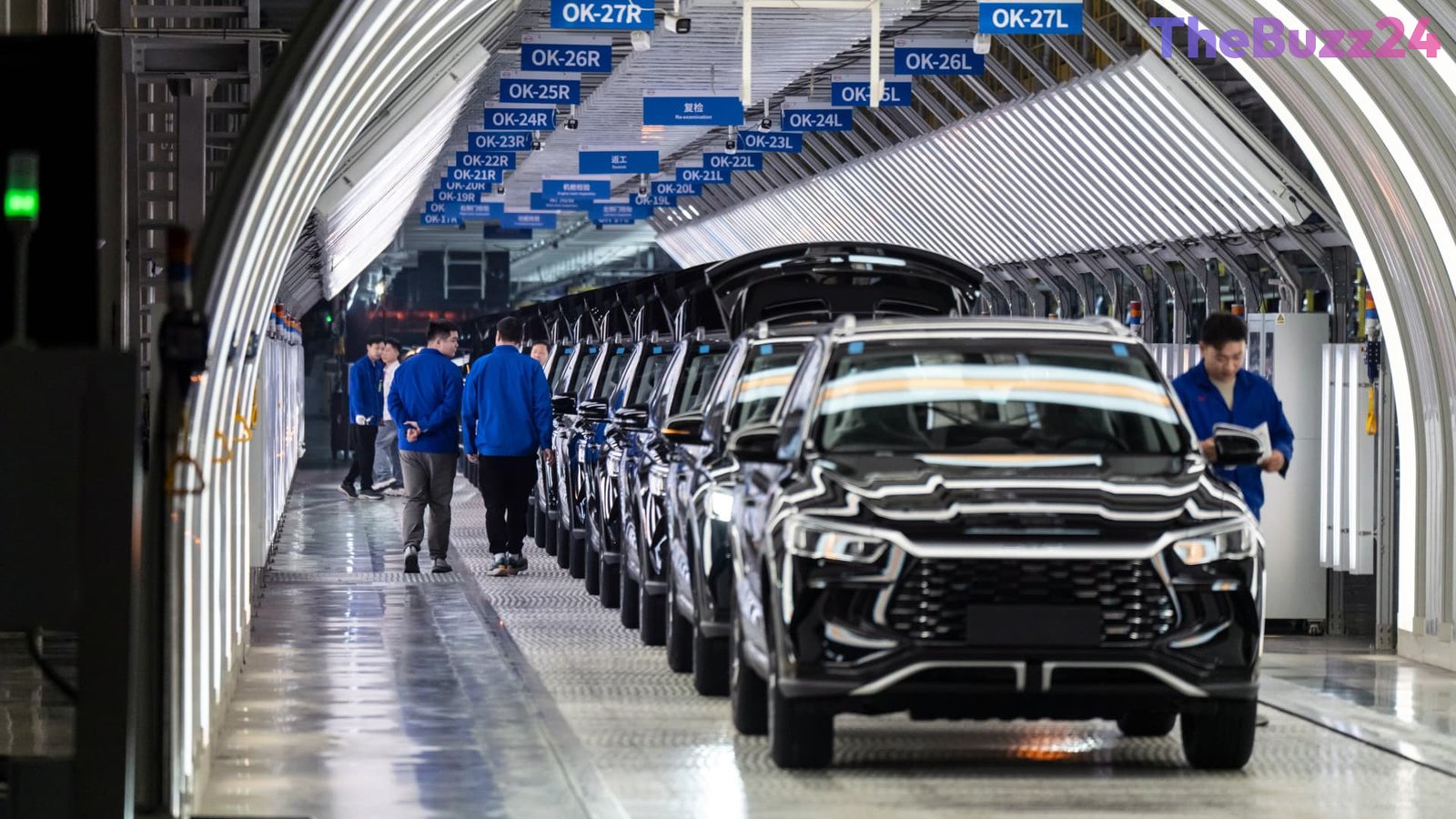
The United Kingdom is navigating a complex economic and geopolitical dilemma regarding whether to follow the European Union in imposing restrictive tariffs on Chinese electric vehicles. Unlike the United States, which effectively locked out Chinese manufacturers with a steep 100% levy, or the EU, which implements manufacturer-specific duties up to 35.3%, Britain has maintained a standard 10% import duty. This welcoming stance has allowed Chinese automakers to rapidly expand their footprint across the British automotive landscape, driven by competitive pricing, robust supply chains, and advanced product development.
Recent market data highlights the dramatic surge of Chinese brands in the region. Registrations for Chinese original equipment manufacturers spanning both battery-electric and hybrid powertrains have climbed significantly, lifting their overall market share to 28.1%. Models like the Jaecoo 7—affectionately dubbed the “Temu Range Rover”—have even outperformed traditional bestsellers from established brands due to their compelling affordability. However, this open-market approach has created friction with neighboring European allies. Proposed EU trade regulations, such as the “Made in Europe” initiative, threaten to penalize British companies selling into the bloc unless London aligns its trade policies and raises tariffs to match continental standards.
As the government weighs its options, officials face mounting pressure from both international and domestic stakeholders. While aligning with the EU could protect British exporters from trade barriers, it risks triggering retaliatory economic measures from Beijing, which has already expressed serious concern over potential tariff hikes. Industry experts emphasize that simple import duties alone may not be enough to curb China’s automotive advance, pointing to surging hybrid sales and foundational cost advantages. Ultimately, policymakers must craft a balanced strategy that safeguards domestic industrial interests while maintaining competitive access to both European and global supply chains.
Key Takeaways
- Britain maintains a relatively open market with only a 10% standard import duty on Chinese electric vehicles, contrasting sharply with the U.S. and EU.
- Chinese automakers and hybrids have captured a substantial share of the British market, with affordable models like the Jaecoo 7 outperforming traditional western favorites.
- Proposed EU trade restrictions could force the U.K. to align its tariffs or risk facing severe commercial consequences for domestic exporters selling into Europe.
Editor’s Analysis & Impact
The dilemma facing the U.K. automotive sector underscores a broader global tension between open-market consumer benefits and domestic industrial protectionism. As Chinese manufacturers leverage superior supply chains and cost efficiencies to dominate international markets, traditional Western automotive hubs are forced to choose between economic isolationism and collaborative integration. For Britain, the challenge is compounded by its post-Brexit trade aspirations; balancing a desire for independent trade agreements with the economic gravity of the European Union is nearly impossible in high-stakes sectors like automotive manufacturing. Moving forward, mere tariffs will likely prove insufficient. The long-term viability of Western automotive industries will depend on massive investments in local manufacturing ecosystems, battery production, and charging infrastructure to sustainably compete with the juggernaut of Chinese production cadence.
Frequently Asked Questions
Q: Why has the U.K. not imposed heavy tariffs on Chinese EVs?
A: Unlike the U.S. and the EU, Britain has maintained a standard 10% import duty to foster open trade and keep vehicle prices accessible for consumers, though it is currently under pressure from EU policies to reconsider.
Q: What is the 'Made in Europe' initiative?
A: It is a proposed legislative framework designed to protect the EU's internal market by prioritizing European-made goods and potentially penalizing external trading partners that do not align with EU tariff standards.
Q: How are Chinese automakers performing in the British market?
A: Chinese brands have experienced massive growth, with their combined market share rising significantly as affordable models, particularly mid-size SUVs and hybrids, routinely outsell established Western competitors.
AI Disclosure: This article is based on verified data and official reports. Our Team and AI have cross-referenced every financial detail with primary sources to ensure total accuracy.
More from this Category