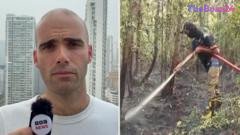
The Persistence of Indonesia’s Wildfires: Why Toxic Haze Continues to Choke Southeast Asia
Persistent wildfires have been raging across various regions of Indonesia for weeks, generating dense clouds of smoke that drift across national borders and envelop neighboring countries such as Malaysia, Singapore, and the Philippines in hazardous haze. These recurring environmental crises pose severe public health risks and disrupt daily life across the region.
Battling these fires presents extraordinary logistical and environmental challenges for local authorities. A primary factor complicating firefighting efforts is the unique geography of the terrain, particularly the vast expanse of carbon-rich peatlands where the fires frequently ignite. Unlike standard forest fires, peat fires burn underground smoldering beneath the surface, making them notoriously difficult to detect and extinguish completely, even with substantial rainfall.
Furthermore, the sheer scale of the affected areas strains available resources, requiring a coordinated international response and advanced monitoring techniques. As regional governments grapple with the recurring smog, environmental experts continue to emphasize the urgent need for sustainable land-use policies and stricter enforcement against illegal agricultural burning to prevent future ecological disasters.
Key Takeaways
- Wildfires in Indonesia have persisted for weeks, spreading toxic haze to Malaysia, Singapore, and the Philippines.
- The fires are exceptionally difficult to extinguish because they frequently burn underground within peatlands.
- Experts emphasize the critical need for sustainable land-use policies and stricter enforcement against illegal agricultural burning.
Editor’s Analysis & Impact
The recurring Indonesian peatland fires highlight a systemic environmental and economic vulnerability in Southeast Asia. Beyond the immediate public health crises and regional diplomatic tensions caused by cross-border haze, these events accelerate global carbon emissions due to the destruction of dense peat ecosystems. In the future, regional trade blocs and environmental agencies will likely increase pressure on agricultural supply chains, demanding stricter corporate accountability and traceable palm oil production. For investors and agribusinesses operating in the region, failure to adopt sustainable practices could lead to severe regulatory penalties, reputational damage, and supply chain disruptions. Mitigating this ongoing crisis requires substantial long-term capital investment in fire prevention infrastructure, community-based land management, and advanced satellite monitoring systems.
Frequently Asked Questions
Q: Why are Indonesian wildfires so difficult to put out?
A: The fires frequently burn in peatlands, meaning they smolder underground beneath the surface where water and standard firefighting techniques cannot easily reach them.
Q: Which neighboring countries are affected by the Indonesian smog?
A: The toxic haze often drifts across borders, impacting Malaysia, Singapore, and parts of the Philippines.
Q: What is the primary cause of these recurring fires?
A: Many of the fires are linked to agricultural land-clearing practices, exacerbated by dry weather conditions and the highly flammable nature of dried peat soil.
AI Disclosure: This article is based on verified data and official reports. Our Team and AI have cross-referenced every financial detail with primary sources to ensure total accuracy.
More from this Category