Ukraine’s Harvest Crisis: Blockaded Ports Threaten Global Food Supply and Farmer Survival
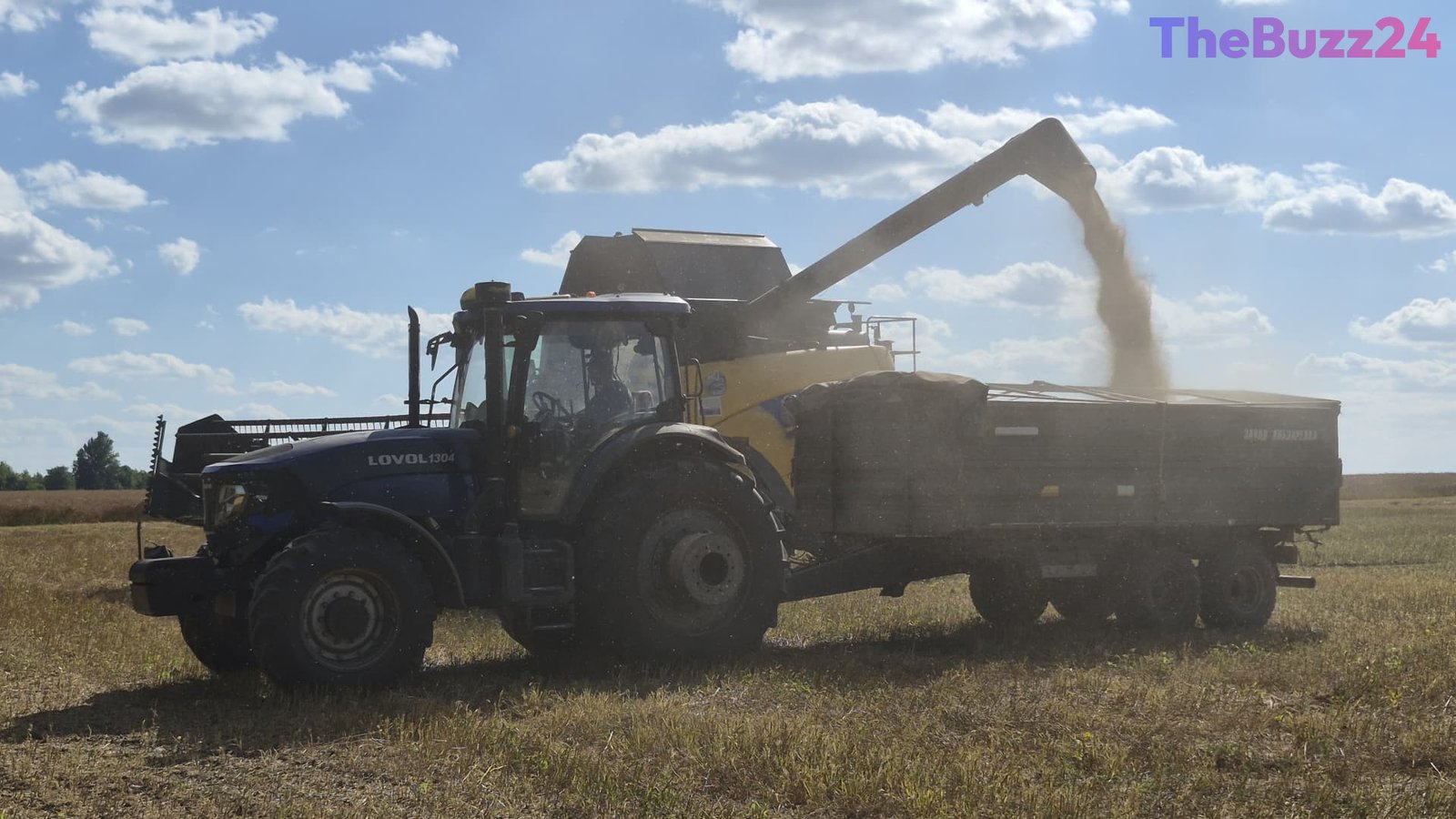
Ukrainian farmers are facing an unprecedented crisis, with abundant harvests trapped by an ongoing export blockade in the Black Sea, pushing many to the brink of financial ruin and threatening global food security. Despite strong yields, producers like Oleksandr Chumak in the Odesa region find themselves unable to sell approximately 80% of their grain at a profit, leading to severe cash shortages and a reluctance to plant for future seasons. This dire situation is exacerbated by intensified military activity in the Black Sea, rendering commercial shipping uninsurable and effectively sealing off vital export routes for both Ukrainian and, increasingly, Russian agricultural products.
Millions of tons of grain and oilseeds are currently languishing in storage facilities across Ukraine and Russia, unable to reach traditional markets in Europe, the Middle East, Asia, and Africa. The inability to move these commodities has caused domestic prices to plummet, eroding farmers’ profitability and their capacity to cover essential operating costs like taxes and land rent. Agricultural leaders, such as Andrii Dykun of the Ukrainian Agri Council, highlight that only specific crops like rapeseed and sunflower seeds offer any sales viability, but even these volumes are insufficient to sustain operations, questioning the incentive for future planting.
In response to these challenges, many agricultural producers are revising their strategies, opting to scale back traditional grain crops like corn and barley in favor of oilseeds and niche crops, which are less susceptible to high logistics costs. Ukraine’s largest lender, PrivatBank, has significantly increased working capital finance to agribusinesses, acknowledging that funds remain tied up in inventories while farms struggle to secure financing for upcoming sowing campaigns. However, even with projected increases in grain and oilseed production, the existing storage infrastructure is under immense pressure, with facilities like plastic silobags and metal grain elevators becoming vulnerable targets. Alternative export routes via rail, road, and river are proving difficult, slow, and economically unviable compared to the Black Sea, with neighboring countries often reluctant to facilitate transit due to concerns about market saturation.
The global implications of this blockade are twofold. While the current scarcity of Ukrainian and Russian supplies has contributed to elevated world crop prices, a potential ceasefire or the reopening of Black Sea routes could swiftly unleash vast, cheap stockpiles onto the market. This sudden influx would likely cause global grain prices to drop significantly, potentially “flipping the market fast” with little warning. The ongoing crisis underscores the fragility of global food supply chains and the critical role Ukraine plays in feeding the world, even as its farmers contend with the immediate dangers of war and economic hardship.
Key Takeaways
- Ukrainian farmers face severe financial hardship due to Black Sea export blockades, leading to unsold harvests and reduced future planting.
- Millions of tons of grain are trapped, impacting global food security and driving farmers to shift towards less logistically dependent crops.
- The blockade currently supports high global commodity prices, but its resolution could trigger a rapid market downturn due to the release of vast stockpiles.
Editor’s Analysis & Impact
The ongoing disruption to Ukraine’s agricultural exports represents a critical juncture for global food markets and geopolitical stability. The immediate impact is a paradox: strong harvests in Ukraine are met with financial distress for farmers, while global commodity prices remain elevated due to scarcity. This situation highlights the vulnerability of supply chains to regional conflicts. Looking ahead, the strategic shift by Ukrainian farmers towards oilseeds and niche crops could alter global agricultural landscapes, potentially leading to long-term changes in crop distribution and pricing. A sudden resolution to the Black Sea blockade, while desirable for humanitarian reasons, carries the risk of a rapid market correction, potentially destabilizing agricultural economies reliant on current high prices. The broader implication is a reinforced need for diversified food sources and resilient trade routes, as reliance on a few key regions proves increasingly precarious.
Frequently Asked Questions
Q: Why are Ukrainian farmers struggling despite good harvests?
A: Ukrainian farmers are struggling because the Black Sea export routes, vital for shipping their grain to international markets, are largely blocked due to ongoing conflict and the inability to insure commercial vessels. This has led to millions of tons of produce being trapped in storage, causing domestic prices to collapse and making it unprofitable for farmers to sell their crops.
Q: How does the Black Sea blockade impact global food prices?
A: The blockade has a dual impact. Currently, it contributes to higher global food prices by limiting the supply of Ukrainian and Russian grains and oilseeds, which are significant contributors to the world market. However, if the Black Sea routes were to reopen, the release of vast stockpiles could flood the market, potentially causing global commodity prices to drop sharply.
Q: What are Ukrainian farmers doing to cope with the export challenges?
A: To cope, many Ukrainian farmers are revising their planting strategies. They are scaling back on traditional grains like corn and barley and instead focusing on oilseeds and niche crops, which are less dependent on complex logistics and can be sold more profitably through alternative, albeit less efficient, routes. They are also facing significant financial strain, with banks providing increased working capital to help cover operating expenses.
AI Disclosure: This article is based on verified data and official reports. Our Team and AI have cross-referenced every financial detail with primary sources to ensure total accuracy.
More from this Category