Federal Regulators Clear Major Barrier for Self-Driving Trucks as Autonomous Mobility Sector Gains Momentum
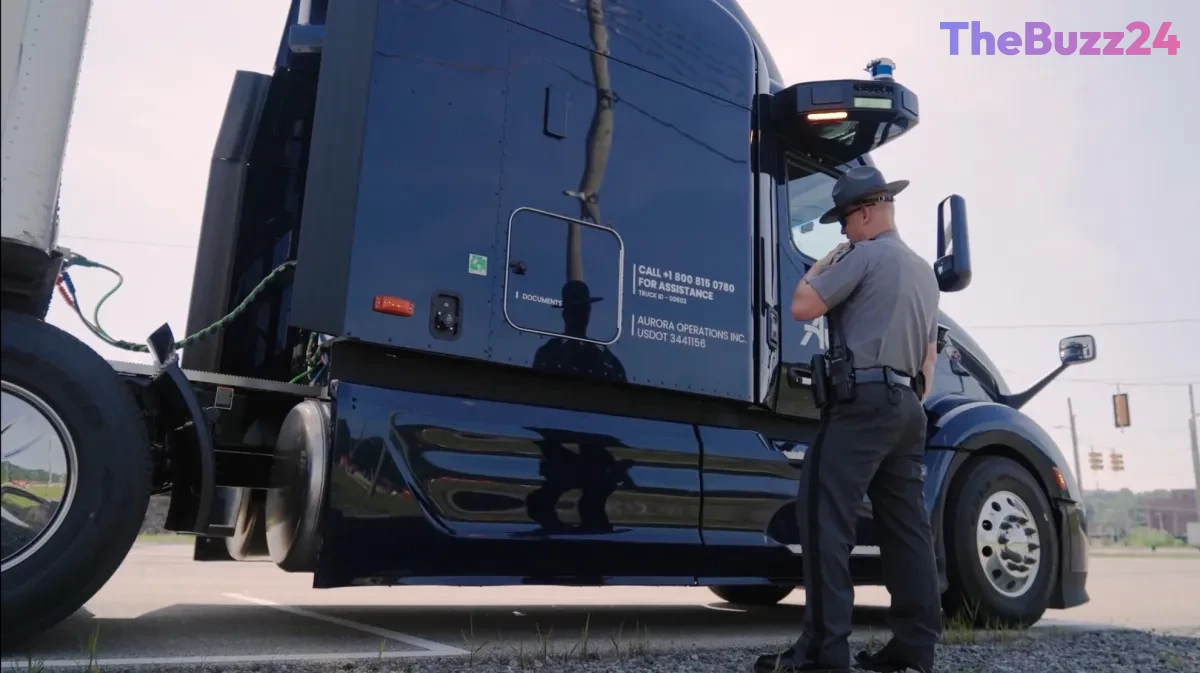
In a decisive victory for the autonomous freight industry, federal transportation regulators have cleared a long-standing operational hurdle for self-driving commercial trucks. Developers including Aurora Innovation and Kodiak AI have been granted a five-year exemption by the Federal Motor Carrier Safety Administration, allowing them to bypass traditional roadside warning device mandates. Previously, federal safety codes required human drivers to physically deploy reflective warning triangles within ten minutes of pulling over during an emergency. Under the new waiver, autonomous rigs can now utilize high-visibility, cab-mounted warning beacons to alert approaching motorists without requiring human intervention.
Industry leaders view the regulatory shift as a crucial catalyst for scaling commercial driverless logistics across the United States. For years, the requirement posed a legal and practical obstacle for driverless operations, prompting legal challenges and policy appeals from tech developers. Executives emphasized that replacing manual triangle placement with automated roof-mounted beacons enhances overall highway safety by keeping human personnel out of dangerous traffic zones while ensuring continuous hazard signaling.
Alongside regulatory progress, capital flows into the broader autonomous and advanced mobility sectors remain aggressive. Waymo recently secured $5 billion in debt financing—its first time leveraging debt markets—led by prominent institutional lenders including PIMCO, Blackstone, and Sixth Street. The massive capital injection is set to fund Waymo’s operational expansion into new domestic and international markets across Europe and Asia, signaling growing institutional confidence in commercial robotaxi scalability.
Meanwhile, corporate activity across the logistics and electric vehicle landscape continues to evolve rapidly. Autonomous freight routes are expanding, with Kodiak AI launching a 435-mile commercial haul lane between Dallas and Laredo, Texas. In corporate dealmaking, Uber reached an agreement to acquire corporate catering platform ezCater for $2.3 billion in cash, and rail automation startup Parallel Systems closed a $100 million financing round. These developments reflect a dynamic period of restructuring, consolidation, and capital allocation across the modern transportation sector.
Key Takeaways
- Federal regulators granted a five-year exemption allowing autonomous truck operators to use cab-mounted warning beacons instead of manual warning triangles during roadside stops.
- Waymo raised $5 billion in its first-ever debt financing round to fuel commercial expansion across global markets.
- Autonomous freight operations continue to expand commercially, highlighted by new driverless routes in Texas and major corporate investments across transport tech.
Editor’s Analysis & Impact
The federal exemption granted to autonomous truck operators represents a crucial policy evolution toward accommodating driverless hardware. By adapting rules originally written for human drivers, regulators are removing structural barriers to commercial deployment. Simultaneously, Waymo’s reliance on $5 billion in debt financing—rather than pure equity—signals that autonomous driving technology is entering a mature phase where scale and infrastructure deployment drive capital needs. While early-stage venture volatility and corporate restructuring persist across tech suppliers and EV manufacturers, the broader industry trajectory favors heavily capitalized, utility-focused autonomous transit and logistics networks.
Frequently Asked Questions
Q: What safety rule was updated for autonomous trucks?
A: Federal regulators granted a five-year exemption allowing self-driving trucks to use cab-mounted hazard beacons during emergency stops, removing the requirement for a human driver to manually set up reflective warning triangles.
Q: Which companies received the regulatory exemption?
A: Autonomous trucking firms including Aurora Innovation and Kodiak AI were among the developers granted the waiver by federal transportation authorities.
Q: How is Waymo funding its latest expansion?
A: Waymo secured $5 billion through its first debt financing deal, backed by major institutional investors such as PIMCO, Blackstone, and Sixth Street.
AI Disclosure: This article is based on verified data and official reports. Our Team and AI have cross-referenced every financial detail with primary sources to ensure total accuracy.
More from this Category