Voice AI’s Next Frontier: Industry Leaders Discuss Path to Natural, Trustworthy Interactions
Despite significant investment and the emergence of advanced models, the voice artificial intelligence (AI) sector has yet to experience its transformative “ChatGPT moment,” according to leading industry executives. While billions of dollars are flowing into startups developing everything from core AI models to enterprise customer service solutions and meeting transcription tools, the reality of truly human-like voice interaction remains a key challenge.
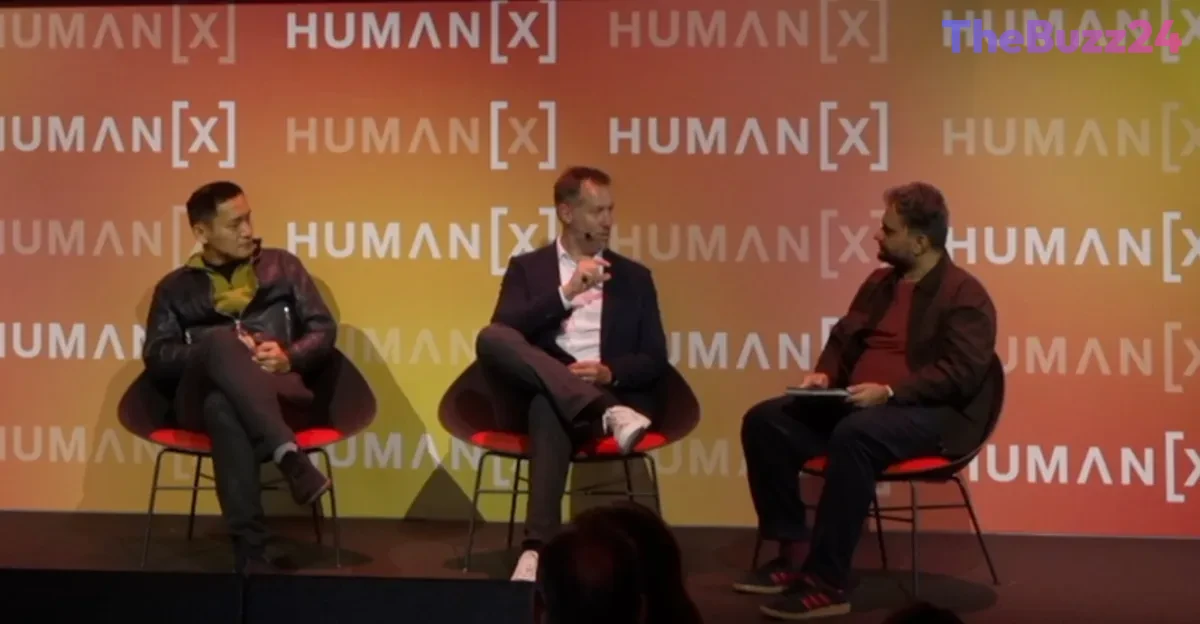
Shawn Wen, CTO of enterprise voice AI platform PolyAI, notes that while the industry has achieved milestones like full-duplex models—which allow AI to speak and listen simultaneously—the next hurdle is to dramatically increase reasoning speed. This improvement is essential for models to fetch answers quickly and ensure conversations feel genuinely natural. Wen also emphasizes that AI agents in customer service must move beyond robotic responses, sounding natural enough to instill confidence in callers that their problems can be effectively resolved. He believes that once voice quality is sufficiently high and initial interactions build trust, customers will increasingly opt for AI agents over human representatives for problem-solving.
Alex Gay, CMO for the meeting notetaker Otter, highlights the importance of accurate speaker identification, precise intent capture, and the integration of organizational knowledge as foundational steps for robust automation. Otter is also exploring digital twins designed to represent individuals in meetings, for which Gay stresses that the AI’s voice output must convey the same emotive expressions as a human to facilitate meaningful debate and strategic discussions. Both Wen and Gay agree on the critical need to improve Automatic Speech Recognition (ASR) models. Gay explains that inaccuracies in initial transcription can compromise all subsequent actions and erode user trust in the platform.
Beyond technical accuracy, transparency is emerging as a vital component for user adoption and trust. Industry leaders advocate for clear disclosure to customers when they are interacting with an AI or when conversations are being recorded. Companies like Otter are implementing methods to notify all participants in a meeting if a bot is present or if the session is being recorded, while PolyAI’s Wen underscores the importance of establishing that callers are speaking with an AI in enterprise settings. This commitment to transparency, alongside continuous advancements in ASR and conversational intelligence, will be crucial for voice AI to truly integrate seamlessly and reliably into daily life and business operations.
Key Takeaways
- Voice AI, despite advancements like full-duplex models, has not yet achieved a "ChatGPT moment" due to challenges in rapid reasoning and natural conversational flow.
- Industry leaders emphasize the critical need for AI agents to sound human-like, build user confidence, and accurately capture intent and context to be truly effective in applications like customer service and meeting transcription.
- Transparency regarding AI interaction and recording, along with continuous improvement in Automatic Speech Recognition (ASR) accuracy, are crucial for building user trust and enabling reliable downstream applications.
Editor’s Analysis & Impact
The insights from PolyAI and Otter executives underscore a critical juncture for the voice AI industry. While billions are being invested, the technology is still grappling with fundamental challenges in achieving truly human-like interaction, particularly in reasoning speed and nuanced conversational flow. This suggests that the market, despite its rapid growth, is maturing towards a focus on core capabilities rather than just advanced features. The future outlook for voice AI is promising, but contingent on significant breakthroughs in ASR accuracy, intent capture, and the ability to convey emotive expression. Success in these areas will not only enhance user experience in customer service and productivity tools but also build essential trust. Conversely, a failure to address these foundational issues could hinder widespread adoption and temper investor enthusiasm, impacting the broader digital transformation landscape.
Frequently Asked Questions
Q: What is meant by voice AI's "ChatGPT moment"?
A: It refers to a transformative breakthrough in voice AI technology, similar to how ChatGPT revolutionized text-based AI, making it widely accessible and demonstrating advanced capabilities that significantly shifted public perception and adoption.
Q: What are the main challenges preventing voice AI from reaching its full potential?
A: Key challenges include improving the speed of AI reasoning to make conversations feel natural, enhancing Automatic Speech Recognition (ASR) accuracy to capture full context, and developing AI agents that can convey emotive expressions and build user confidence.
Q: Why is transparency important in voice AI applications?
A: Transparency is crucial for building user trust. It involves clearly informing users when they are interacting with an AI agent or when their conversations are being recorded, ensuring ethical usage and user comfort.
AI Disclosure: This article is based on verified data and official reports. Our Team and AI have cross-referenced every financial detail with primary sources to ensure total accuracy.
More from this Category