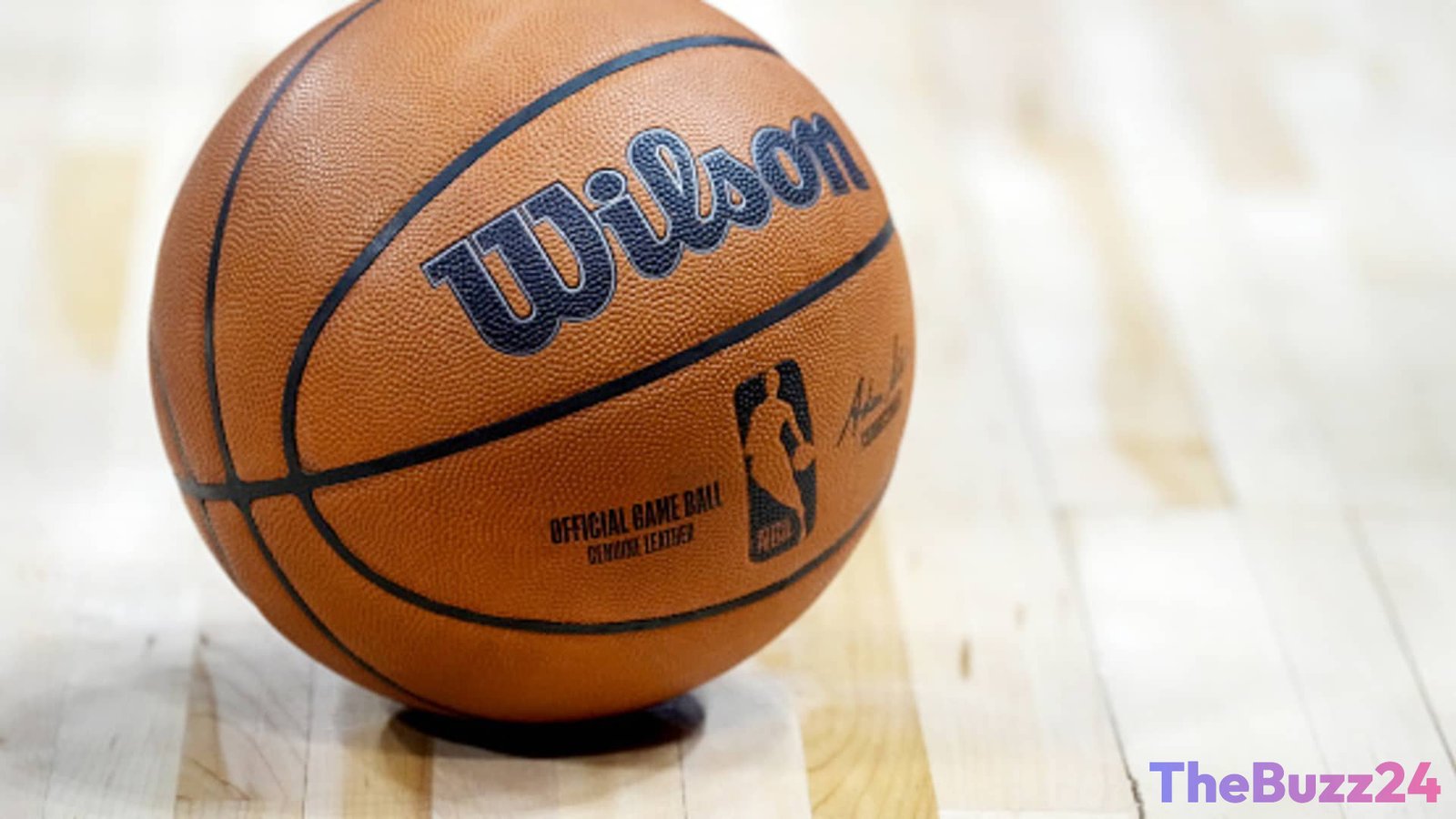
NBA Eyes Microchip-Enabled ‘Smart Balls’ and In-Game Wearables to Modernize Officiating
The National Basketball Association is advancing into the next generation of athletic technology through the development of a microchip-equipped “smart ball.” NBA Commissioner Adam Silver indicated that the league has been actively testing the sensor-embedded basketballs, which could see integration into professional officiating as early as next season, with wider deployment potentially arriving by 2027. The project, conducted in partnership with official equipment manufacturer Wilson, aims to bring unprecedented precision to instant replay reviews and court decisions.
The system relies on a minute Bluetooth microchip weighing approximately one gram, embedded directly inside standard regulation basketballs that weigh roughly 620 grams. Despite the high-tech addition, extensive trial runs across the NBA G League, Summer League, and select preseason matchups revealed that players could not differentiate between chipped and standard balls. The sensor tracks rapid changes in movement, spin, and trajectory, offering instant data that can confirm whether a player brushed a ball prior to an out-of-bounds ruling or altered the arc of a contested shot.
Beyond refereeing, the league anticipates substantial long-term value for players and casual consumers alike. Detailed ball-tracking metrics could eventually allow basketball players of all skill levels to analyze their release angles and rotational speed to optimize shooting accuracy. While Silver noted that a commercial consumer product remains several years down the line, the data architecture being built today promises to redefine skill development and mechanical analysis across the sport.
Parallel to ball tracking, the NBA is also evaluating wearable technology for both referees and athletes. While officials successfully piloted wrist devices to streamline communication with the central replay hub, broader player implementation remains on hold pending an agreement with the National Basketball Players Association (NBPA). Although athletes frequently wear fitness monitors off the court, union representatives remain wary of how real-time in-game fatigue and biometric tracking might be leveraged against players during future contract negotiations. Silver indicated that bridging this divide and reaching a mutual consensus with the union remains an active priority.
Key Takeaways
- The NBA is collaborating with Wilson on a microchip-enabled basketball that tracks spin, velocity, and trajectory in real time.
- Referees could begin utilizing the technology as soon as next season to resolve difficult deflection and out-of-bounds calls.
- League negotiations with the NBPA over in-game wearable tracking are ongoing, centered on player concerns regarding biometric data privacy in contract talks.
Editor’s Analysis & Impact
The NBA’s push toward sensor-laden equipment marks a critical evolutionary step in sports analytics and automated officiating. Integrating precise tracking within the basketball itself eliminates human error on marginal calls without disrupting the natural feel of the game—a monumental engineering achievement given athlete sensitivity to equipment adjustments. However, the true frontier and potential flashpoint lies in player data governance. As wearable tracking shifts from off-court wellness into live competition, the league faces complex negotiations with the NBPA over biometric privacy and economic leverage. If handled transparently, this connected ecosystem will not only safeguard competitive integrity and refine coaching strategy at the elite level, but also open lucrative commercial opportunities through consumer training tools and synchronized broadcasting data.
Frequently Asked Questions
Q: How will the smart basketball help NBA officials?
A: The microchip detects minute shifts in spin, velocity, and trajectory, allowing replay officials to definitively confirm who touched a ball last on out-of-bounds plays or whether a shot was tipped.
Q: Does the microchip alter the weight or feel of the basketball?
A: No. The chip weighs roughly one gram inside a 620-gram basketball. Testing in the G League and preseason confirmed that professional players could not detect any difference in weight, balance, or bounce.
Q: Why has the players' union not approved in-game wearable sensors?
A: The National Basketball Players Association is concerned that biometric tracking and fatigue data collected during competitive games could be used by front offices as leverage in contract negotiations.
AI Disclosure: This article is based on verified data and official reports. Our Team and AI have cross-referenced every financial detail with primary sources to ensure total accuracy.
More from this Category