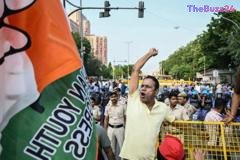
India Rocked by Mass Protests Over Alleged Voter Roll Fraud, Opposition Demands Election Chief’s Resignation
Thousands of opposition supporters have converged on India’s Supreme Court in Delhi, demanding the resignation of the Chief Election Commissioner amidst widespread allegations of electoral roll fraud. The “March for Democracy,” spearheaded by Congress leader Rahul Gandhi, marks the latest in a series of escalating demonstrations across the capital.
The core of the controversy revolves around the removal of tens of millions of names from voter lists, a process that opposition parties contend unfairly benefits Prime Minister Narendra Modi’s ruling Bharatiya Janata Party (BJP). While the Election Commission and the BJP vehemently deny these accusations, the opposition has submitted a petition to the Supreme Court challenging the integrity of the revision process. Chief Justice Surya Kant acknowledged the petition, assuring a swift hearing given the matter is already sub judice.
Authorities have responded to the unrest with a heavy hand, deploying thousands of security forces, barricading roads, and imposing severe restrictions on public gatherings. Over the past week, thousands of protesters, including prominent opposition leaders and journalists, have been detained. Attempts by groups like the Cockroach Janta Party (CJP) to organize demonstrations were met with extensive police action, including the dramatic detention of CJP leaders upon their arrival in Delhi. Furthermore, the Home Ministry has banned protests at the traditional site of Jantar Mantar, listing alternative locations should permission be granted.
The protests underscore deep-seated concerns about the fairness of India’s democratic processes. Demonstrators have voiced fears that their fundamental right to vote is under threat, with one protester calling the movement “a fight to save the very fabric” of the world’s largest democracy. Conversely, BJP President Nitin Nabin has accused opposition parties and the CJP of attempting to destabilize the nation at the behest of unnamed “foreign forces,” further polarizing the political landscape.
Key Takeaways
- Thousands of opposition supporters marched to India's Supreme Court demanding the Chief Election Commissioner's resignation over alleged voter roll fraud.
- The protests, led by Congress leader Rahul Gandhi and groups like the CJP, challenge the removal of millions of names from electoral lists, which opposition parties claim benefits the ruling BJP.
- Authorities have responded with heavy security deployment, mass detentions, and restrictions on protest sites, raising concerns about democratic freedoms and police conduct.
Editor’s Analysis & Impact
This unfolding political crisis in India highlights significant challenges to the integrity of democratic institutions in the world’s largest democracy. The allegations of voter roll manipulation, if proven, could severely erode public trust in the electoral process and the Election Commission’s impartiality. The heavy-handed response by authorities, including mass detentions and restrictions on protest, raises concerns about freedom of assembly and expression, potentially fueling further public discontent and political polarization. The Supreme Court’s handling of the petition will be a critical juncture, with its decision having profound implications for India’s political stability and democratic norms. This situation could lead to sustained political tension, impacting investor confidence and potentially diverting focus from economic reforms.
Frequently Asked Questions
Q: What is the main reason for the protests in India?
A: Protesters are demanding the resignation of Chief Election Commissioner Gyanesh Kumar over alleged fraud in the revision of voter lists, which has led to tens of millions of names being removed.
Q: Which political parties are leading these protests?
A: The main opposition Congress party, led by Rahul Gandhi, is at the forefront, supported by other opposition groups and civil society organizations like the Cockroach Janta Party (CJP).
Q: How have authorities responded to the demonstrations?
A: Authorities have deployed thousands of security forces, barricaded roads, imposed restrictions on protest sites like Jantar Mantar, and detained thousands of protesters and journalists, with some reports of police violence.
AI Disclosure: This article is based on verified data and official reports. Our Team and AI have cross-referenced every financial detail with primary sources to ensure total accuracy.
More from this Category