NASA Joins Forces with Japan to Unravel Martian Moon Mysteries
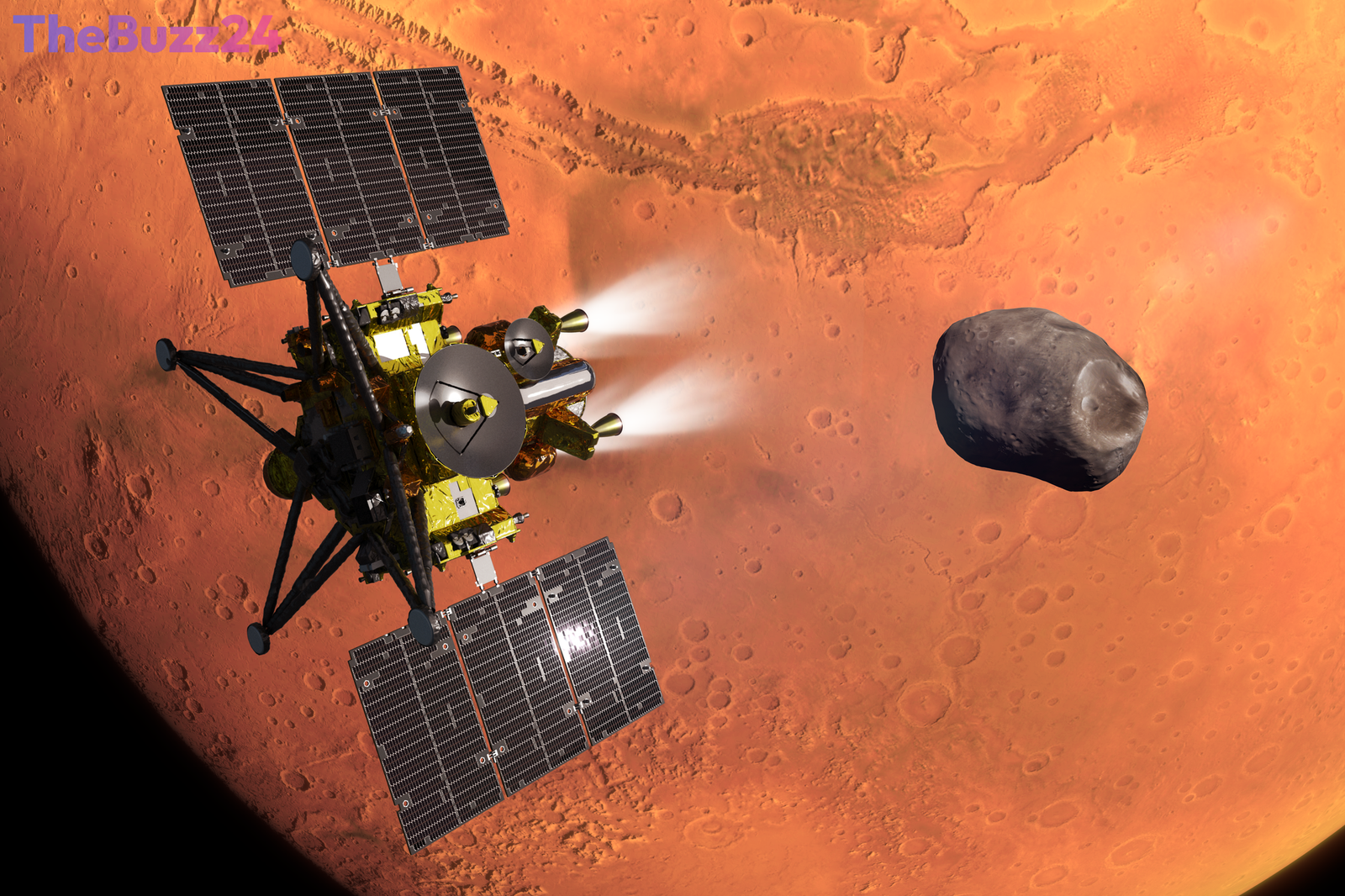
NASA is set to play a crucial role in Japan’s upcoming Martian Moons eXploration (MMX) mission, a collaborative effort aimed at significantly advancing our understanding of Mars’ two moons, Phobos and Deimos. This partnership builds upon NASA’s extensive legacy of exploring the Red Planet and seeks to answer fundamental questions about the origin and evolution of these celestial bodies.
The MMX mission, spearheaded by the Japan Aerospace Exploration Agency (JAXA), has a primary objective to characterize Phobos and Deimos and determine their origins. A key component of the mission involves collecting a sample from Phobos and returning it to Earth for detailed analysis. The MMX spacecraft is scheduled for launch from JAXA’s Tanegashima Space Center in Japan on October 19.
NASA’s contributions are vital to the mission’s success. These include providing the Mars-moon Exploration with Gamma rays and Neutrons (MEGANE) spectrograph, designed to analyze the elemental composition of Phobos’ surface by measuring emitted neutrons and gamma rays. Additionally, NASA is supplying a Pneumatic Sampler (P-Sampler) technology demonstration for collecting surface material, offering a complementary approach to JAXA’s own coring sampler. The agency will also provide essential communications and navigation support through its Deep Space Network and fund U.S. scientists involved in the MMX science team.
Scientists have long debated whether Phobos and Deimos are remnants of a massive impact on Mars or captured asteroids. The data and samples gathered by MMX are expected to provide definitive answers, shedding light on a critical period in the early solar system when inner planets may have been accumulating water and organic compounds. NASA will curate approximately 15% of the returned Phobos sample, making it available for extensive research for decades to come, a partnership deemed invaluable for future scientific discovery.
Key Takeaways
- NASA is collaborating with JAXA on the MMX mission to study Mars' moons, Phobos and Deimos.
- The mission aims to determine the origin of the Martian moons and will return a sample of Phobos to Earth.
- NASA's contributions include scientific instruments like the MEGANE spectrograph and a sample collection system, alongside network support and scientific funding.
Editor’s Analysis & Impact
The MMX mission represents a significant international collaboration in planetary science, highlighting the growing trend of shared resources and expertise in space exploration. NASA’s involvement, particularly in sample return and analysis, underscores the agency’s commitment to understanding Mars and its environment as humanity looks towards future crewed missions. The potential to resolve the long-standing debate about the origin of Phobos and Deimos could offer profound insights into the early solar system’s formation and evolution. This partnership not only advances scientific knowledge but also strengthens diplomatic ties through shared technological and scientific endeavors, paving the way for future joint missions.
Frequently Asked Questions
Q: What is the main goal of the MMX mission?
A: The main goal of the Martian Moons eXploration (MMX) mission is to determine the origin of Mars' moons, Phobos and Deimos, and to collect a sample from Phobos to return to Earth for analysis.
Q: What specific contributions is NASA making to the MMX mission?
A: NASA is providing the MEGANE spectrograph for surface analysis, a Pneumatic Sampler (P-Sampler) for sample collection, communications and navigation support via the Deep Space Network, and funding for U.S. scientists on the MMX science team.
Q: When is the MMX mission expected to return samples to Earth?
A: The MMX spacecraft is targeting a sample collection from Phobos no earlier than December 2028, with the sample delivery to Earth anticipated in 2031.
AI Disclosure: This article is based on verified data and official reports. Our Team and AI have cross-referenced every financial detail with primary sources to ensure total accuracy.
More from this Category