Amazon’s Panos Panay: Why Embracing Failure is Essential for Innovation
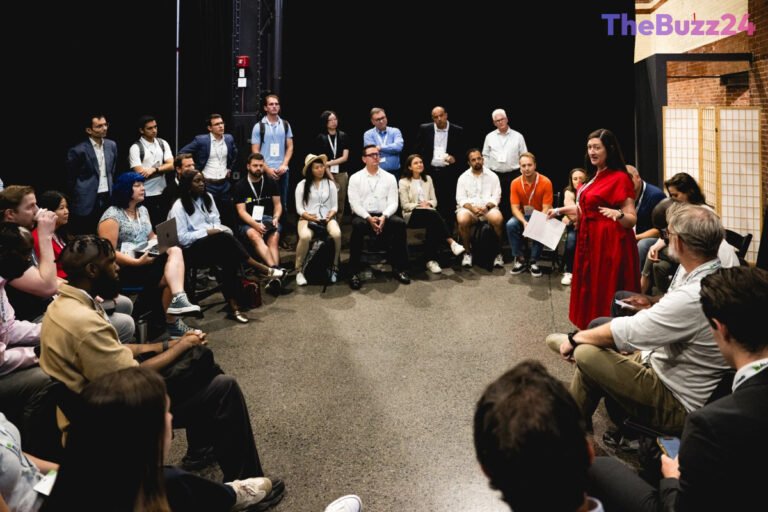
Panos Panay, the Senior Vice President of Devices, Alexa, and Leo at Amazon, recently shared a crucial message for aspiring startup founders and product developers: failure is not merely a possibility but a fundamental and necessary component of building successful products. Speaking at a recent industry event, Panay drew upon his extensive experience, particularly his nearly two-decade tenure at Microsoft, to illustrate this point.
Panay emphasized that true innovation requires pushing boundaries, which inherently involves the risk of failure. He recounted a significant setback during his time at Microsoft with the launch of the Surface RT, the company’s inaugural tablet computer. This venture ultimately resulted in a substantial write-down of nearly $1 billion, a moment Panay vividly remembers being publicly labeled as a “failure.” However, he stressed that the real challenge wasn’t admitting the failure, but rather meticulously extracting the lessons from it.
According to Panay, the key lies in understanding the decisions that led to the failure, often tracing back years before the product’s launch, whether it involved incomplete software, incorrect inventory management, or flawed retail strategies. He urged founders to confront what went wrong without making excuses, accept the outcome, and then leverage those insights. While acknowledging setbacks, Panay underscored the importance of unwavering commitment to one’s core vision. He pointed to the eventual success of the Surface line as proof that learning from missteps, adapting, and maintaining a clear vision can lead to significant achievements.
Ultimately, Panay’s philosophy centers on continuous learning and agility. He believes that by embracing failures, analyzing them thoroughly, and making incremental adjustments to one’s approach—often just a 30-degree course correction rather than a complete overhaul—teams can accelerate progress and navigate new obstacles more effectively. The ability to quickly learn and adapt, rather than clinging to a flawed path, is what truly drives innovation forward.
Key Takeaways
- Amazon's Panos Panay asserts that failure is an inevitable and necessary part of product development and innovation.
- He highlighted the Microsoft Surface RT's nearly $1 billion write-down as a personal example of a significant failure that provided crucial lessons.
- Panay advises founders to learn from failures, adapt their strategies, and remain committed to their core vision to achieve long-term success.
Editor’s Analysis & Impact
Panos Panay’s insights offer a vital perspective for the fast-paced technology and business sectors. His emphasis on embracing failure as a learning opportunity, rather than a definitive end, is crucial for fostering a culture of innovation. In an industry where rapid iteration and risk-taking are paramount, this philosophy encourages companies to experiment boldly without fear of catastrophic consequences, provided they are committed to extracting actionable intelligence from every setback. This approach can lead to more resilient product development cycles, quicker market adaptation, and ultimately, more groundbreaking solutions. For leaders, it underscores the importance of creating environments where honest post-mortems are conducted, and lessons are integrated into future strategies, shaping a more dynamic and forward-thinking industry landscape.
Frequently Asked Questions
Q: Who is Panos Panay?
A: Panos Panay is the Senior Vice President of Devices, Alexa, and Leo at Amazon. Prior to joining Amazon, he spent over 19 years at Microsoft, where he was instrumental in the development of the Surface line of products.
Q: What was the 'significant failure' Panay referred to at Microsoft?
A: Panay referred to the launch of the Microsoft Surface RT, the company's first tablet computer. This product experienced a significant commercial failure, leading to a nearly $1 billion write-down for Microsoft.
Q: What is Panay's core advice for startup founders regarding failure?
A: Panay advises founders to not only be willing to fail but to actively embrace it as a necessary part of pushing boundaries. The key, he states, is to meticulously harvest the lessons learned from failures, understand the decisions that led to them, adapt one's approach, and remain committed to the overarching vision.
AI Disclosure: This article is based on verified data and official reports. Our Team and AI have cross-referenced every financial detail with primary sources to ensure total accuracy.
More from this Category