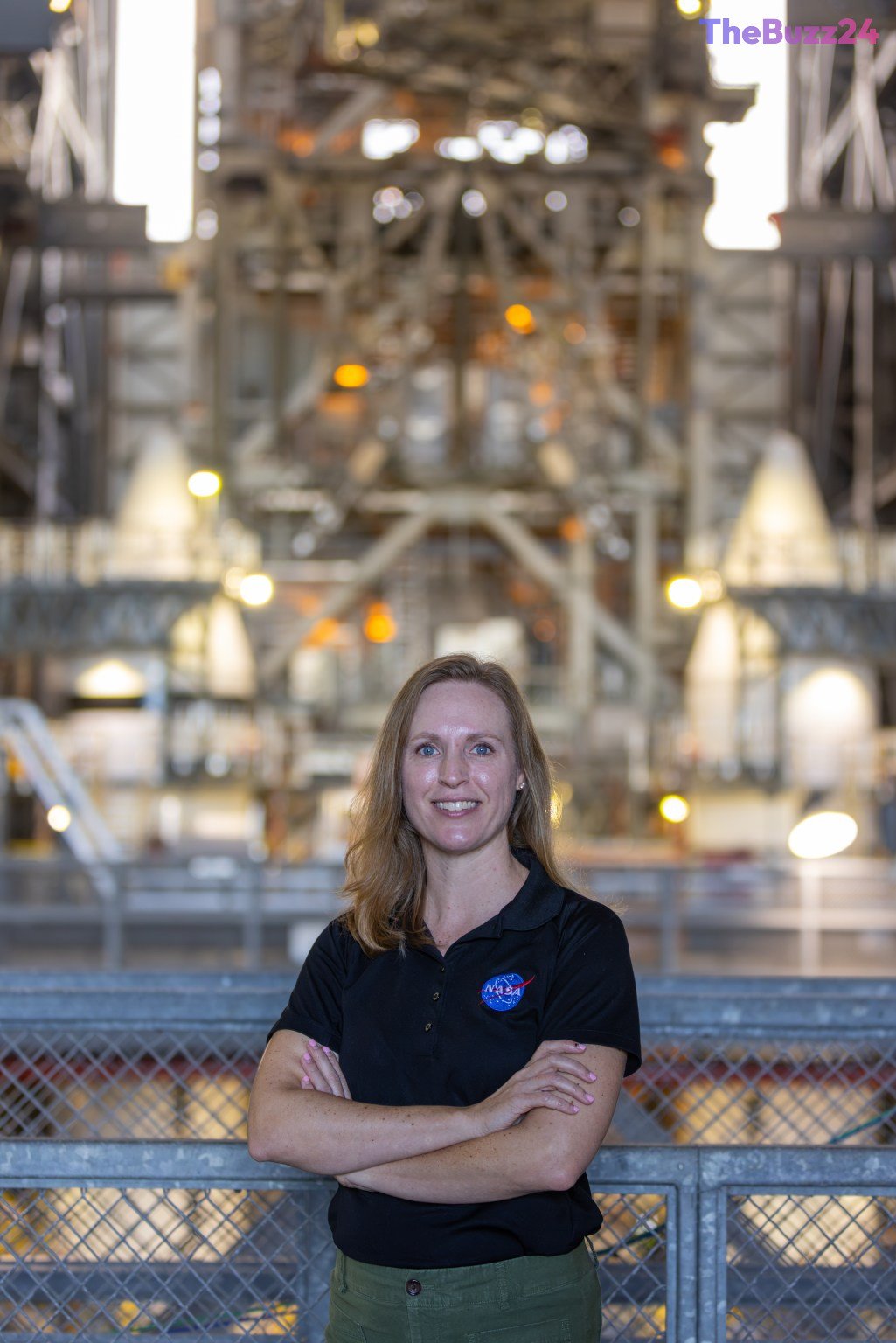
Behind the Launchpad: How Allison Mjoen is Helping Shape NASA’s Return to the Moon
As supercooled propellant flows into core stages and massive launch vehicles roar to life along the Florida coastline, aerospace professionals witness the culmination of decades of dedication. Among them is Allison Mjoen, a veteran operations manager for NASA’s Exploration Ground Systems Program, whose career spans critical eras of modern spaceflight from the Space Shuttle Program to the International Space Station and now the ambitious Artemis missions.
Operating as a spacecraft offline operations manager, Mjoen coordinates the intricate framework that occurs long before any vehicle reaches the launchpad. By collaborating closely with senior vehicle operations teams, she oversees ground processing, booster integration, and Orion spacecraft preparations. Her journey in the aerospace sector began as a flight crew systems engineer managing cabin configurations, spacesuits, and payloads, before transitioning into payload integration for the orbital laboratory.
Reaching a pivotal milestone during Artemis I as a certified operations project engineer, Mjoen transitioned into integrated firing room operations. In this high-stakes environment, every decision directly impacts mission safety and procedural execution. For Mjoen and her colleagues, the Artemis initiative represents more than technical achievement; it serves as a catalyst to inspire a new generation, paving the way for sustainable human presence on the lunar surface.
Key Takeaways
- Allison Mjoen brings over two decades of aerospace experience to NASA's Artemis program, having previously contributed to the Space Shuttle and International Space Station programs.
- Her current role as spacecraft offline operations manager involves coordinating vehicle processing, booster handling, and Orion spacecraft integration prior to launch.
- Mjoen earned critical certification as an operations project engineer during Artemis I, playing a direct role in real-time firing room operations and test procedures.
Editor’s Analysis & Impact
The ongoing evolution of NASA’s Artemis program underscores a broader shift in the aerospace industry toward sustainable, long-term lunar exploration and commercial-public partnerships. Personnel like Allison Mjoen highlight the vital, behind-the-scenes engineering and operational rigor required to transition from conceptual mission architecture to tangible launch execution. As deep space logistics become more complex, the expertise forged in legacy programs such as the Space Shuttle and the International Space Station remains invaluable. Looking ahead, the success of lunar return missions will heavily depend on seamless ground operations, cross-disciplinary collaboration, and the continuous development of robust safety protocols in vehicle processing.
Frequently Asked Questions
Q: What is Allison Mjoen's current role at NASA?
A: Allison Mjoen serves as the spacecraft offline operations manager for NASA’s Exploration Ground Systems Program, where she oversees vehicle processing and integration for Artemis.
Q: What previous NASA programs has Mjoen worked on?
A: Throughout her 20-year career, Mjoen has supported the Space Shuttle Program as a flight crew systems engineer and the International Space Station Program as a payload integration engineer.
Q: What are the primary responsibilities of offline operations management in space missions?
A: Offline operations management involves coordinating the ground work, integration plans, booster preparation, and spacecraft processing that happen long before a rocket reaches the launchpad.
AI Disclosure: This article is based on verified data and official reports. Our Team and AI have cross-referenced every financial detail with primary sources to ensure total accuracy.
More from this Category