A New Perspective on Comet 67P: Exploring the Rosetta Mission’s 3D Legacy
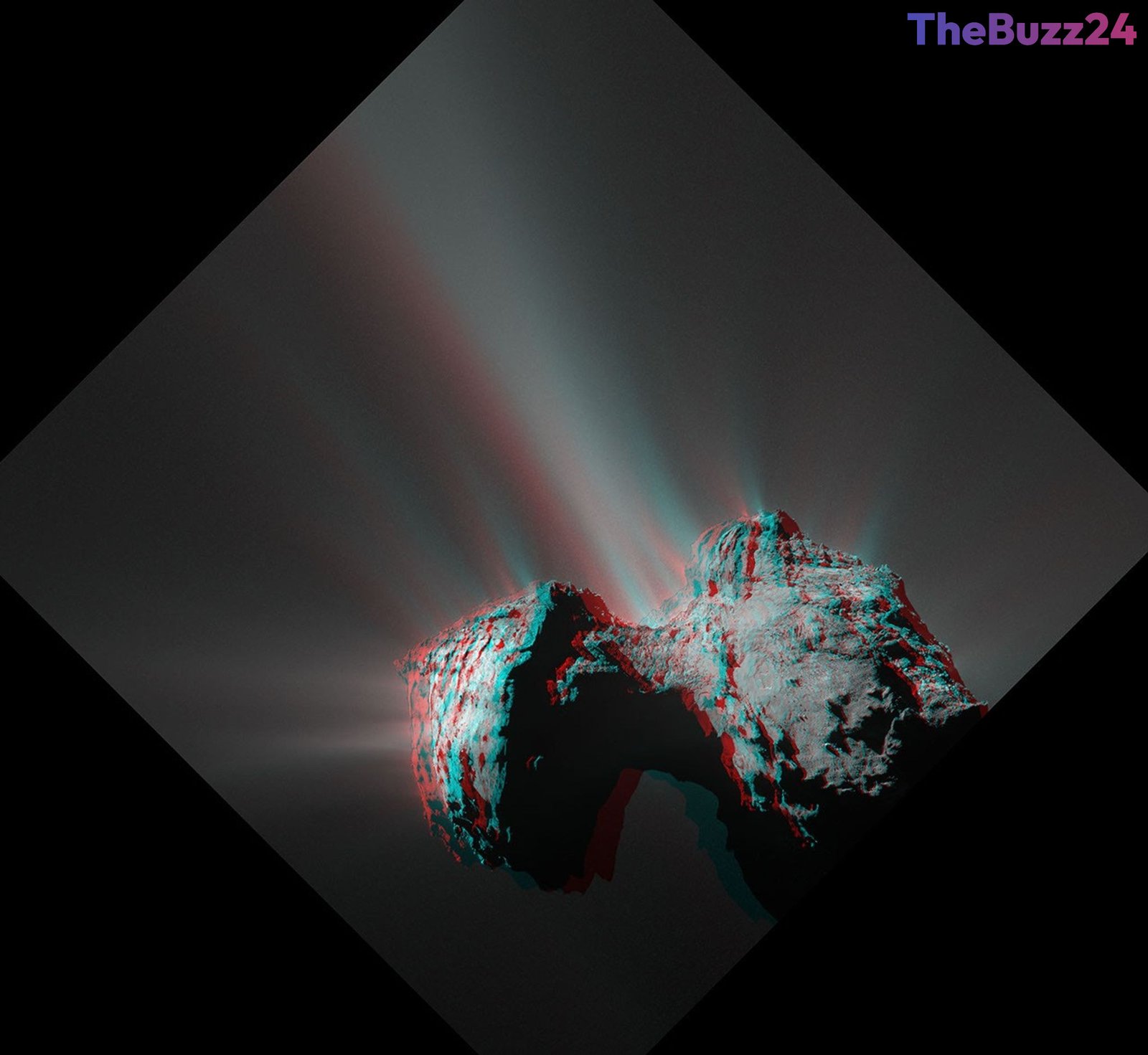
A striking new 3D visualization offers a rare, immersive look at the nucleus of Comet 67P/Churyumov-Gerasimenko. By utilizing stereo anaglyph technology, observers can view the comet’s distinct double-lobed structure in depth, revealing the jagged terrain and complex geography of this solar system traveler. The imagery was constructed using data captured by the Rosetta spacecraft’s OSIRIS narrow-angle camera during a close-approach maneuver in July 2015.
The comet itself is defined by two primary lobes: a larger section measuring approximately 4 kilometers in diameter and a smaller 2.5-kilometer lobe, connected by a narrow, distinct neck. During the time these images were captured, the comet was nearing its closest point to the Sun, resulting in visible jets of material erupting from its active surface. These eruptions provided scientists with invaluable data regarding the composition and behavior of cometary bodies as they interact with solar radiation.
This 3D reconstruction serves as a testament to the success of the Rosetta mission, which concluded in September 2016 with a controlled descent and impact onto the comet’s surface. While the spacecraft is no longer operational, the vast archive of imagery it collected continues to provide researchers with opportunities to study the comet in unprecedented detail. Enthusiasts and scientists alike can access a growing catalog of these stereo anaglyphs, which help bridge the gap between two-dimensional photography and the complex, three-dimensional reality of deep space exploration.
Key Takeaways
- A new 3D stereo anaglyph provides a detailed look at the double-lobed structure of Comet 67P/Churyumov-Gerasimenko.
- The imagery was derived from data captured by the Rosetta spacecraft's OSIRIS camera during its 2015 mission.
- The comet features a unique geography with two distinct lobes connected by a narrow neck, showing active surface jets near the Sun.
Editor’s Analysis & Impact
The release of high-fidelity 3D visualizations of Comet 67P highlights the enduring value of legacy space mission data. By repurposing raw telemetry and imagery into modern formats like stereo anaglyphs, the scientific community ensures that the findings from missions like Rosetta remain accessible and educational for the public. This approach not only fosters public interest in planetary science but also allows for new analytical perspectives on historical data. As space agencies continue to archive massive datasets, the trend of ‘data-mining’ past missions for new visual and scientific insights will likely grow, serving as a cost-effective way to maintain momentum in space exploration outreach and research long after the primary hardware has ceased operations.
Frequently Asked Questions
Q: What is a stereo anaglyph?
A: A stereo anaglyph is a type of 3D image created by overlaying two slightly different perspectives of the same object, typically viewed through red and blue glasses to create the illusion of depth.
Q: What happened to the Rosetta spacecraft?
A: The Rosetta spacecraft successfully completed its mission in September 2016, ending with a controlled impact onto the surface of Comet 67P.
AI Disclosure: This article is based on verified data and official reports. Our Team and AI have cross-referenced every financial detail with primary sources to ensure total accuracy.
More from this Category