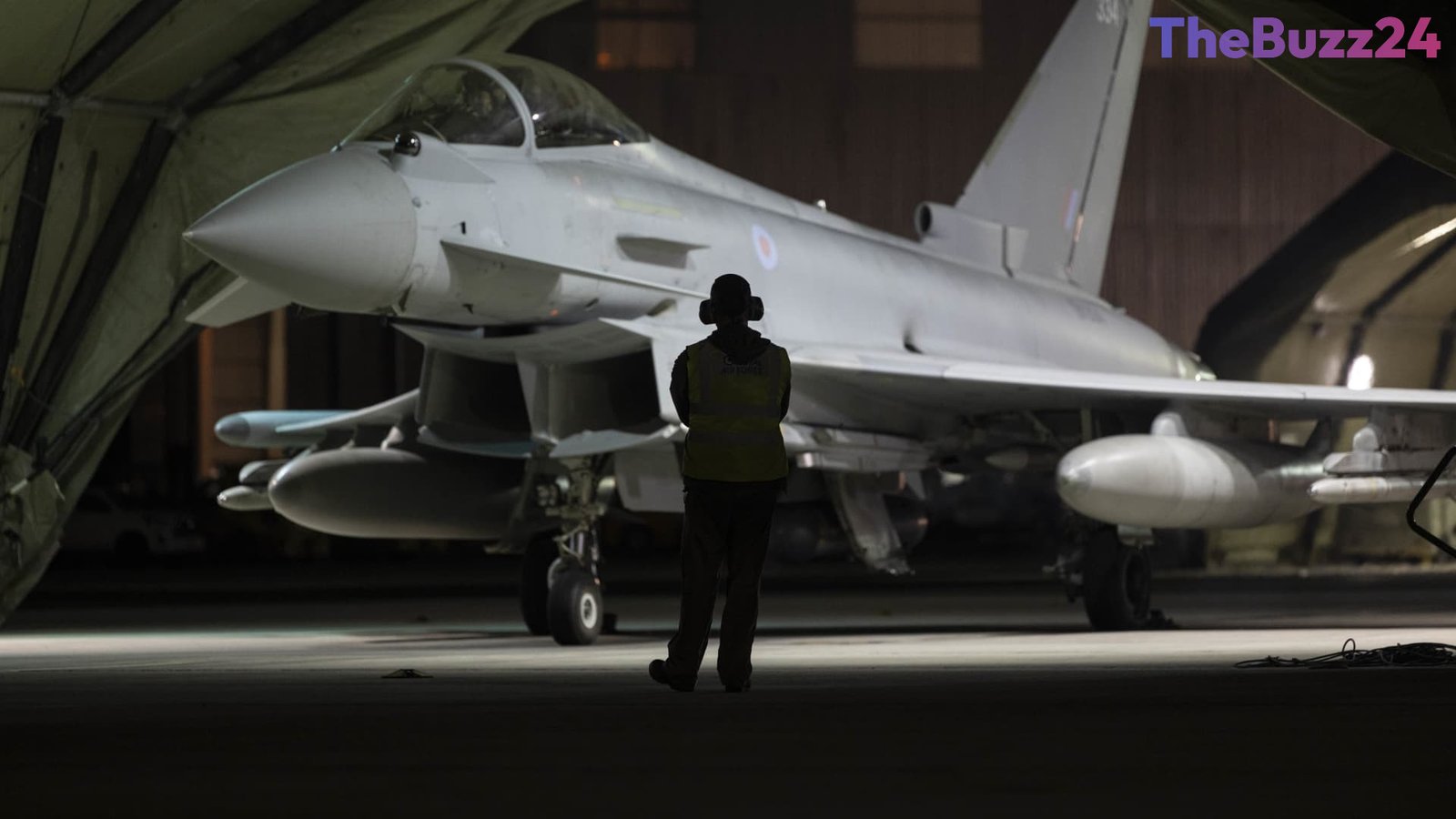
UK Bolsters Gulf Defenses with RAF Typhoon Deployment to Saudi Arabia Amid Rising Houthi Attacks
The United Kingdom has announced a significant deployment of Royal Air Force (RAF) assets to Saudi Arabia to assist in shielding the kingdom from escalating drone and missile incursions launched by Yemen’s Houthi militia. Under the newly unveiled plan, RAF Typhoon fighter jets will conduct defensive air patrols aimed at intercepting aerial threats, bolstering existing British military personnel and defensive infrastructure already operating within the Gulf nation.
This military commitment follows a surge in cross-border aggression by the Iran-aligned Houthi forces targeting critical infrastructure and civilian zones. Recent assaults have struck civilian aviation hubs, including King Khalid International Airport in Riyadh—resulting in casualties, severe property damage, and widespread flight cancellations—while strategic assets owned by state energy company Saudi Aramco were also subjected to attempted strikes.
Defense officials have emphasized that British air assets will adhere to a strictly defensive mandate, focusing entirely on neutralising incoming projectiles and safeguarding Saudi airspace rather than participating in offensive strikes within Yemen. Complementing the fighter squadron, the UK is dispatching an Airbus A400M Atlas transport aircraft to assist in logistics and the movement of defense materiel, while specialized military advisers will provide strategic guidance to Saudi command officers.
The deployment arrives as the protracted conflict in Yemen enters a volatile new phase, aggravated by broader regional geopolitical tensions. British officials highlighted that escalating insecurity across the Gulf poses direct global economic threats, including the potential disruption of vital international energy corridors and broader shipping routes, which could trigger renewed inflationary pressures worldwide.
Key Takeaways
- The UK is deploying RAF Typhoon fighter jets and an Airbus A400M transport aircraft to defend Saudi Arabia against Houthi aerial strikes.
- British forces will operate strictly in a defensive role, protecting civilian centers and critical energy infrastructure like Saudi Aramco assets.
- The move comes amid escalating regional conflict in Yemen, with heightened concern over international energy security and global economic stability.
Editor’s Analysis & Impact
The UK’s decision to bolster air defenses in Saudi Arabia underscores the delicate intersection of international security and global economic stability. With critical oil facilities such as Saudi Aramco and commercial transport hubs facing ongoing threats from Houthi drone and missile technology, any sustained disruption could roil global energy markets and exacerbate international inflation. By strictly limiting British involvement to defensive missions, London is attempting a careful diplomatic balancing act: reassuring a critical Gulf partner and protecting energy supply lines while avoiding direct military entanglement in Yemen’s multi-layered civil conflict. Going forward, Western allies are likely to maintain an active defensive presence in the region to deter further destabilization.
Frequently Asked Questions
Q: What role will the UK's RAF Typhoon jets play in Saudi Arabia?
A: The RAF Typhoon jets will operate exclusively in a defensive capacity, conducting air patrols to intercept and neutralize incoming Houthi drones and ballistic missiles targeting Saudi airspace.
Q: Why did the UK decide to send military assets to the region now?
A: The deployment is a response to recent escalations by Houthi forces, which have targeted critical civilian infrastructure, including Riyadh's airport, and oil facilities owned by Saudi Aramco.
Q: Will British forces participate in offensive operations in Yemen?
A: No, defense officials have confirmed that the mission is strictly defensive and British forces will not engage in offensive strikes inside Yemen.
AI Disclosure: This article is based on verified data and official reports. Our Team and AI have cross-referenced every financial detail with primary sources to ensure total accuracy.
More from this Category