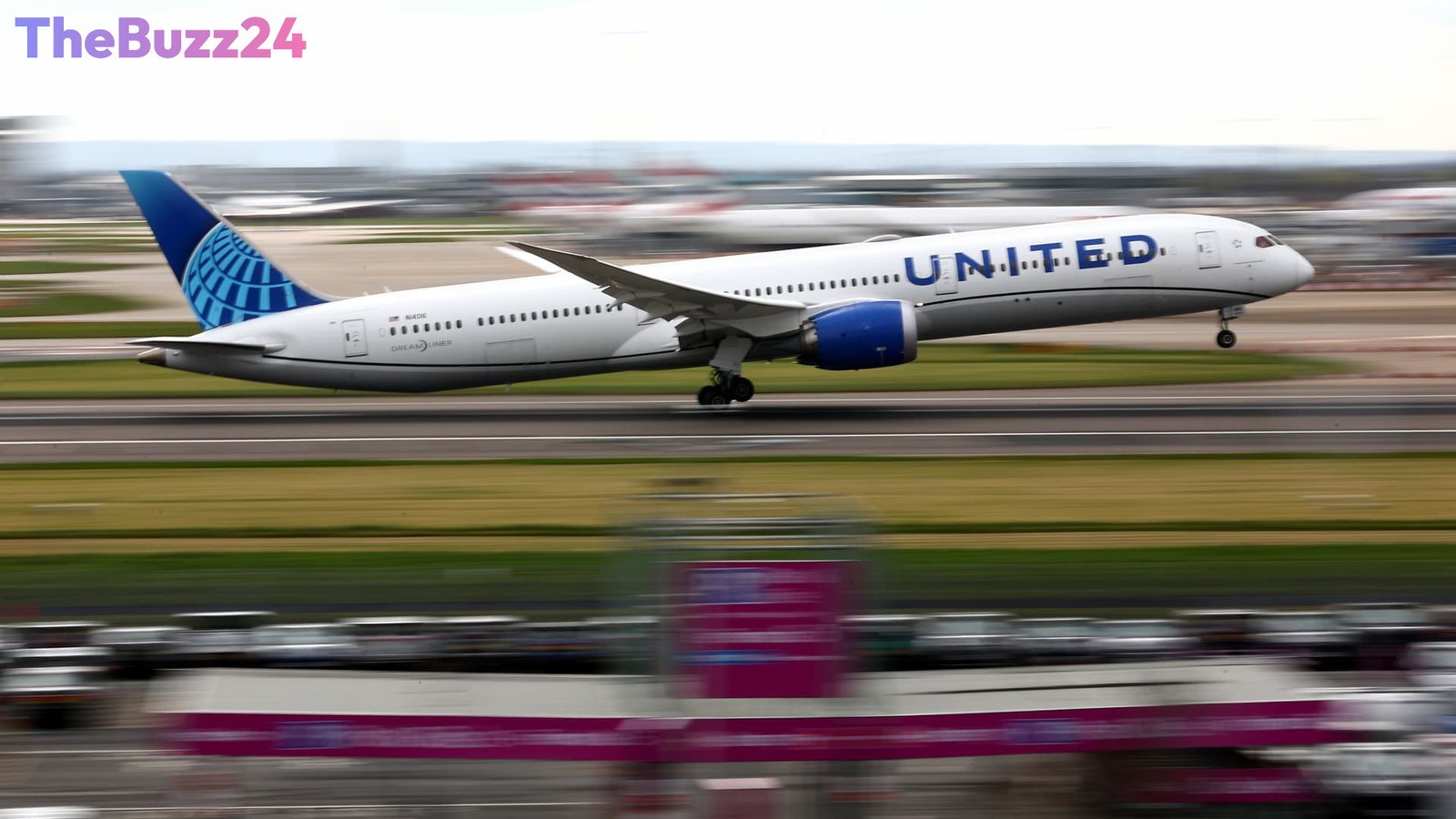
United Airlines Lowers Profit Forecast Amid Soaring Fuel Costs, Yet Passenger Bookings Remain Strong
United Airlines has announced a significant reduction in its profit outlook for the upcoming year, citing the persistent pressure of escalating fuel prices. The airline’s projected earnings for 2026 are now expected to be considerably lower than initially anticipated, a direct consequence of the increased operational costs associated with fuel.
Despite the downward revision in profit forecasts, United Airlines reported a surprising resilience in passenger demand. The company indicated that travelers are continuing to book flights in robust numbers, with passenger volumes showing an increase of over 2% compared to the previous year. This trend suggests that even as airfares rise, likely influenced by the higher operating expenses, consumers are still prioritizing travel.
In its recent financial disclosures, United Airlines revealed that its fourth-quarter earnings per share are now projected to fall between $0.50 and $1.50, falling short of the $1.76 per share that financial analysts had predicted. This revised guidance implies that full-year adjusted earnings for 2026 may not exceed $7.22 per share, a stark contrast to the earlier expectation of $9 to $11 per share. The airline attributed a substantial portion of this challenge to an anticipated average fuel cost of $4.80 per gallon in the fourth quarter, a notable increase from the $3.90 per gallon average seen in the third quarter.
The airline industry as a whole has been grappling with the financial strain of higher fuel expenses, which have added billions to operational budgets. While this has put pressure on airline profitability, the sustained demand for air travel, as evidenced by United’s booking figures and a nearly 17.4% rise in international unit revenue, indicates a strong underlying market. United CEO Scott Kirby highlighted the dedication of his employees in navigating these challenging market conditions and emphasized the success of their strategy in building customer loyalty.
Key Takeaways
- United Airlines has significantly lowered its 2026 profit forecast due to rising fuel costs.
- Despite the reduced profit outlook, passenger bookings remain strong, with passenger counts up over 2% year-over-year.
- Higher fuel prices are impacting airline profitability across the industry, leading to increased airfares.
Editor’s Analysis & Impact
The airline industry is navigating a complex economic landscape where soaring fuel costs are directly impacting profitability, forcing carriers like United Airlines to temper profit expectations. However, the persistent strength in passenger demand, even with higher fares, signals a robust consumer appetite for travel. This dichotomy presents both a challenge and an opportunity for airlines. While managing operational costs is paramount, the sustained booking trends suggest that strategic pricing and a focus on customer experience can continue to drive revenue. The long-term outlook will likely depend on the stability of fuel prices and the industry’s ability to balance cost management with meeting consumer travel needs.
Frequently Asked Questions
Q: Why is United Airlines lowering its profit forecast?
A: United Airlines is lowering its profit forecast primarily due to a significant increase in fuel costs, which are a major operational expense for airlines. The airline expects to pay substantially more for fuel in the fourth quarter compared to the previous quarter.
Q: Are people still flying despite higher fares?
A: Yes, United Airlines reported that passenger bookings remain strong, with passenger counts increasing by more than 2% compared to the previous year. This indicates that demand for air travel is resilient, even with potentially higher ticket prices driven by increased operating costs.
Q: How much did United Airlines' fuel costs increase?
A: United Airlines' fuel bill rose by close to 62% in the third quarter compared to the same period last year, reaching $4.84 billion. The airline anticipates paying an average of $4.80 a gallon for fuel in the fourth quarter, up from $3.90 a gallon in the third quarter.
AI Disclosure: This article is based on verified data and official reports. Our Team and AI have cross-referenced every financial detail with primary sources to ensure total accuracy.
More from this Category