France Reels: Riots Expose Deep Divisions and Political Scramble
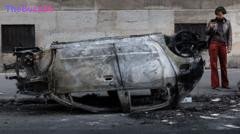
France is grappling with profound divisions in the wake of widespread riots that saw thousands of shops and businesses looted and damaged. While some residents expressed shock and dismay at the destruction, others voiced frustration, questioning who is truly to blame and what lessons should be learned from the unrest. The violence, which erupted on a Saturday, has ignited a fierce debate among politicians and the public, highlighting a palpable sense of disillusionment with the current political landscape.
The exact perpetrators and motivations behind the riots remain a subject of intense speculation. While much of the looting appeared opportunistic, with stolen goods quickly appearing for sale online, the organized nature of some of the violence has raised concerns. French intelligence reports have pointed to the involvement of far-left anarchist groups, citing their distinctive symbols spray-painted on damaged buildings. These groups, along with student unions and political movements aligned with the radical left, are accused by some officials of manipulating student protests for their own electoral gains, particularly in the lead-up to the 2027 presidential elections. However, these accusations are vehemently denied by the implicated political movements.
Amidst the chaos, political leaders are engaged in a high-stakes blame game, with the upcoming presidential election looming. President Emmanuel Macron’s government faces accusations of failing to maintain order, while opposition figures, including prominent presidential hopefuls, are leveraging the situation to criticize the administration and position themselves as alternatives. Some have even suggested drastic measures, such as temporary social media blackouts, to curb the spread of incitement and the “TikTokisation” of violence, a phenomenon where riot footage is widely shared, potentially inspiring impressionable individuals. The widespread dissatisfaction with democracy, echoed across several European nations, suggests a deeper societal malaise fueled by economic anxieties, declining public services, and a sense of powerlessness among citizens.
The events have underscored a growing chasm between peaceful protesters expressing legitimate grievances and those intent on causing destruction. Many citizens feel unheard and abandoned by a political class perceived as more focused on electoral maneuvering than addressing the root causes of public frustration. The riots serve as a stark reminder of the simmering discontent and the complex challenges facing France as it navigates a turbulent political and social climate.
Key Takeaways
- Widespread riots in France have led to significant damage and looting, sparking a national debate on accountability and underlying causes.
- Political factions are engaged in a blame game, with accusations of manipulation and strategic exploitation of the unrest for electoral advantage.
- The riots highlight a broader trend of public disillusionment with democratic systems and political leadership across Europe, fueled by economic and social frustrations.
Editor’s Analysis & Impact
The recent riots in France expose a volatile mix of opportunistic crime and politically charged unrest, deeply intertwined with the nation’s upcoming presidential election. The finger-pointing among political parties, from the far-left to the far-right, reveals a scramble to capitalize on public anger and insecurity. The government’s response, criticized for being slow and insufficient, further erodes trust. The “TikTokisation” of violence and the broader European trend of youth-led protests against economic hardship and perceived democratic failures suggest these are not isolated incidents but symptoms of deeper societal fractures. The long-term implications include a potential shift in the political landscape, increased polarization, and a continued challenge for authorities to balance public safety with civil liberties.
Frequently Asked Questions
Q: What were the main triggers for the recent riots in France?
A: While the immediate trigger for the widespread looting and violence appeared to be opportunistic, underlying factors include deep-seated public frustration with economic conditions, declining public services, a sense of powerlessness, and political disillusionment. The events also became entangled with political maneuvering ahead of the upcoming presidential elections.
Q: Who is being blamed for the violence and looting?
A: Accusations are being leveled against various groups. Some officials point to far-left anarchist and ultra-left groups for orchestrating violence, potentially manipulating student protests. Others criticize the government for perceived failures in maintaining order and security. Opposition politicians are also blaming each other and the current administration.
Q: What is the 'TikTokisation' of violence?
A: The term 'TikTokisation' of violence refers to the phenomenon where footage of riots and violent protests is widely shared on social media platforms like TikTok. This rapid dissemination can amplify the impact of such events, potentially inspiring or inciting further unrest, particularly among younger, impressionable audiences.
AI Disclosure: This article is based on verified data and official reports. Our Team and AI have cross-referenced every financial detail with primary sources to ensure total accuracy.
More from this Category