Apocalyptic Haze Grips Southeast Asia: Indonesian Wildfires Fuel Widespread Health Crisis
A pervasive, rust-colored smog has descended upon Indonesian Borneo, transforming the landscape into what many describe as an apocalyptic scene. For residents like Dianyra Eka Nastiti, a mother of three in Palangkaraya, the visual dread is compounded by a profound fear for her children’s health. Her infant, previously hospitalized for bronchopneumonia, often experiences rattling in her chest at night, a constant reminder of the toxic air they breathe.
Palangkaraya stands at the forefront of a months-long environmental catastrophe that has blanketed vast swathes of Southeast Asia in a noxious haze. Since the beginning of the year, wildfires have ravaged approximately 1.9 million hectares across Indonesia—an area comparable to the entire landmass of Fiji. A staggering one million hectares are estimated to have burned in September alone. This toxic fallout, originating from smoldering forests, swamps, and peatlands, has created a dense cloud of microparticles and carbon monoxide that has drifted as far as Singapore, Malaysia, and the Philippines.
By mid-October, Indonesia’s Health Ministry had documented over 277,000 cases of chronic coughs and acute respiratory infections, with more than 62,000 affecting infants and toddlers under five. The pollutants, including tiny microparticles, can penetrate deep into the lungs and bloodstream, leading to inflammation, chronic lung diseases, and an increased risk of premature death. Children, older adults, and pregnant women are particularly susceptible to these dangers. While official advice suggests staying indoors, for many like Nastiti and Lola Macitri, a 37-year-old from Ramang, this is an impossible luxury, as daily necessities and livelihoods demand venturing outside.
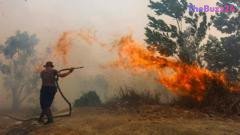
The Indonesian government faces mounting public pressure to intensify its efforts. Authorities report deploying over 60,000 personnel, utilizing aerial waterbombing, and even experimental weather modification, claiming an 80% success rate in extinguishing new fires. However, the challenges on the ground are immense. Firefighters like Juni and Fauzi Rahman battle relentless blazes, particularly stubborn peat fires that burn deep underground, requiring vast amounts of water and prolonged effort. A “Super El Nino” has exacerbated drought conditions, making water scarce and delaying the critical rainfall needed to douse these infernos. Compounding the crisis, fires are now emerging in areas previously untouched by such devastation.
As the crisis persists, residents and responders alike express a desperate hope for heavy rain to bring an end to the suffocating haze. The head of the Palangkaraya Health Office, Riduan, voiced the collective sentiment, stating that while extraordinary human efforts continue, the ultimate hope rests on nature’s intervention to finally extinguish the flames and clear the air.
Key Takeaways
- Massive wildfires in Indonesia have burned nearly 2 million hectares, creating a toxic haze that has spread across Southeast Asia.
- The haze has led to a severe public health crisis, with hundreds of thousands suffering from respiratory illnesses, disproportionately affecting infants and young children.
- Firefighters face immense challenges in extinguishing deep-seated peat fires, exacerbated by drought conditions from a Super El Nino, while residents struggle to maintain livelihoods amidst the hazardous air.
Editor’s Analysis & Impact
This ongoing environmental catastrophe in Indonesia carries profound implications beyond immediate health concerns. Economically, the disruption to daily life, agriculture, and tourism in affected regions is substantial, leading to significant financial losses for individuals and the broader economy. Environmentally, the burning peatlands release vast quantities of greenhouse gases, contributing significantly to global carbon emissions and accelerating climate change, creating a dangerous feedback loop. The “Super El Nino” highlights the increasing vulnerability of the region to extreme weather events. Long-term, this crisis underscores the urgent need for sustainable land management practices, stronger enforcement against illegal burning, and enhanced regional cooperation on disaster response and climate mitigation strategies to prevent future recurrences and protect public health and the environment.
Frequently Asked Questions
Q: What is causing the widespread haze in Southeast Asia?
A: The haze is primarily caused by extensive wildfires in Indonesia, particularly in peatland areas of Borneo. These fires are often started for land clearing but are exacerbated by prolonged drought conditions, intensified by a "Super El Nino" phenomenon, which makes them difficult to extinguish.
Q: What are the main health risks associated with the toxic haze?
A: The haze contains dangerous pollutants like tiny microparticles, carbon monoxide, and carbon dioxide. These can penetrate deep into the lungs and bloodstream, leading to acute respiratory infections, chronic lung diseases, inflammation, and an increased risk of premature death. Children, older adults, and pregnant women are particularly vulnerable.
Q: Why are these peatland fires so difficult to put out?
A: Peatland fires are notoriously challenging to extinguish because they burn deep underground, often smoldering for months. They require immense amounts of water to be injected deep into the peat layer, which is scarce during drought conditions. This makes traditional firefighting methods less effective and prolongs the crisis.
AI Disclosure: This article is based on verified data and official reports. Our Team and AI have cross-referenced every financial detail with primary sources to ensure total accuracy.
More from this Category