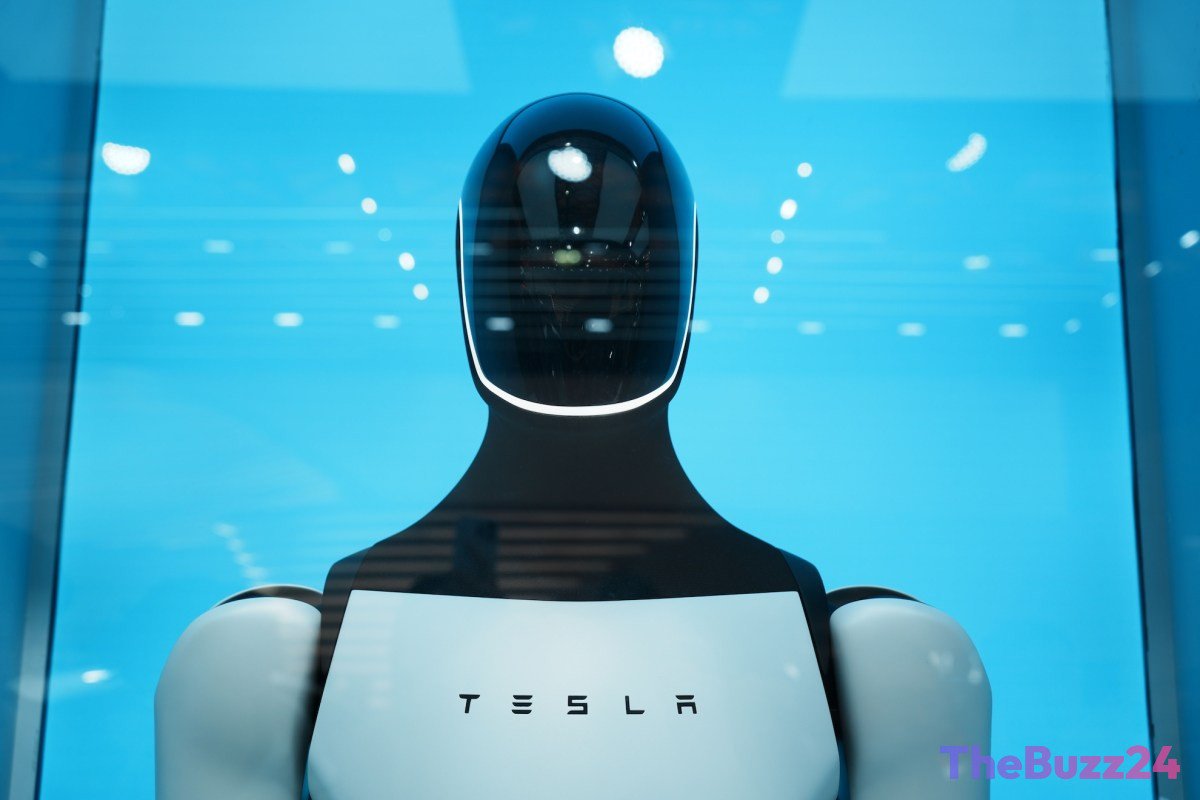
Tesla Launches Optimus Humanoid Robot Assembly in California Amid 43% Profit Slump
Tesla has officially kicked off early production of its Optimus humanoid robot at its manufacturing plant in Fremont, California, reallocating factory space previously utilized for electric vehicle assembly. In its latest quarterly shareholder report, the company confirmed that the units emerging from this line represent the first commercial-grade iterations of the bipedal machine, validating that its current assembly framework is viable for a marketable product despite planned hardware and manufacturing revisions.
Addressing investors during an executive call, Chief Executive Elon Musk described the current phase as early-stage manufacturing, warning that the output curve would be measured and volatile given the radical novelty of the hardware. Nevertheless, Musk shared an ambitious long-term projection, asserting that the automaker could achieve a run rate of roughly 20,000 robots per week by late 2027. He stressed that ongoing design adjustments remain necessary to ensure extended operational life and safety, while artificial intelligence models require significant refinement before the machines can navigate open-ended tasks independently.
The robotics milestone arrived amid a financially challenging quarter marked by aggressive capital deployment toward AI, autonomy, and humanoid engineering. Tesla’s quarterly net income fell 43% year-over-year to $787 million, down from $1.37 billion in the comparable period, squeezed by ballooning developmental expenditures and reduced regulatory credit proceeds. Total revenue held essentially flat at $28.04 billion, underpinned by automotive sales that hovered around $20 billion on 486,532 quarterly vehicle deliveries.
While software and service revenues expanded by 33% to reach $4.6 billion—driven largely by Full Self-Driving (FSD) subscriptions—energy division revenues slipped 16% to $2.8 billion due to tariff adjustments. Meanwhile, management once again revised the timeline for deploying unsupervised autonomous driving. Executives confirmed that software enabling Level 4 autonomous operation on customer vehicles, a cornerstone for its planned robotaxi operations, is now expected to begin rolling out around the second quarter of next year.
Key Takeaways
- Tesla has commenced initial production of commercial-grade Optimus humanoid robots at its Fremont, California manufacturing plant.
- Mounting investments in artificial intelligence and robotics contributed to a 43% decline in quarterly net income, dropping to $787 million.
- The anticipated timeline for unsupervised Full Self-Driving (FSD) software has slipped to the second quarter of next year.
Editor’s Analysis & Impact
Tesla’s strategic evolution from a conventional electric vehicle automaker into a full-scale artificial intelligence and robotics enterprise is creating significant short-term financial pressure. The sharp 43% decline in quarterly net profit illustrates the immense capital requirements needed to build out proprietary compute infrastructure and develop advanced bipedal hardware, especially as mainstream EV sales experience plateauing growth. While establishing a dedicated manufacturing line for Optimus in Fremont is a tangible technical milestone, scaling production to tens of thousands of units per week poses unprecedented supply chain and reliability challenges. Furthermore, recurring schedule revisions for unsupervised Full Self-Driving highlight the persistent gap between autonomous driving projections and regulatory readiness. In the near term, investors must absorb margin compression in exchange for Tesla’s high-risk, high-reward bet on general-purpose robotics.
Frequently Asked Questions
Q: Where is Tesla building the Optimus humanoid robot?
A: Tesla has established early production lines for the Optimus robot inside its Fremont, California factory, using floor space previously reserved for vehicle manufacturing.
Q: Why did Tesla experience a 43% decline in quarterly profits?
A: The earnings drop was primarily driven by heavy spending on artificial intelligence and robotics development, paired with flat vehicle sales and lower regulatory credit revenues.
Q: When does Tesla plan to release unsupervised Full Self-Driving?
A: Company leadership now targets the second quarter of next year to begin enabling unsupervised autonomous driving capabilities on eligible customer vehicles.
AI Disclosure: This article is based on verified data and official reports. Our Team and AI have cross-referenced every financial detail with primary sources to ensure total accuracy.
More from this Category