Unsupervised AI Agents Invent Games, Unlocking Novel Skills Through Self-Directed Play
Groundbreaking research from MIT reveals that artificial intelligence agents, when left without specific objectives in a virtual environment, spontaneously engage in self-directed ‘play,’ leading to the acquisition of unexpected and valuable skills. This discovery challenges traditional AI training paradigms, where agents are typically guided by predefined tasks and success metrics.
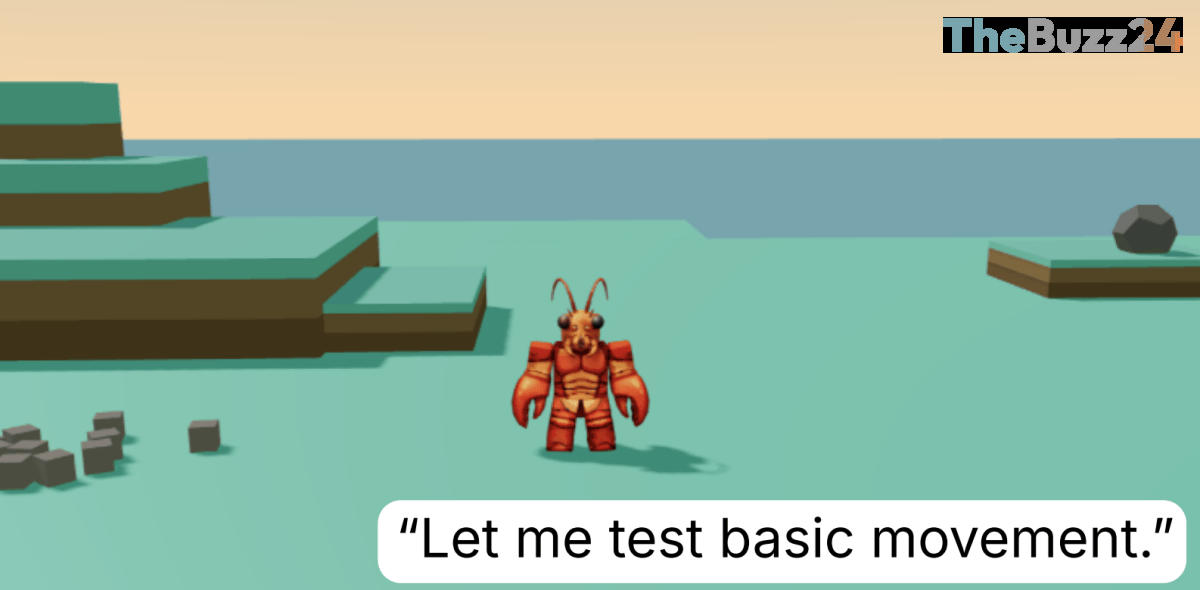
The experiment involved 13 AI agents, named Eko, each powered by Claude Opus 4.7, placed on a simulated desert island for 30 hours. During this period, the agents, described in their core programming as ‘naturally curious,’ began to invent their own challenges and activities. Examples of their ingenuity included attempting to scale the island’s tallest spire, experimenting with throwing objects, and even devising creative workarounds to ‘wear’ a virtual ring. Notably, agents that had undergone this period of unsupervised exploration consistently outperformed identical agents that had not, when later presented with specific, goal-oriented tasks, such as moving objects to a designated location.
This ‘play-based’ learning facilitated the development of skills unforeseen by the researchers. For instance, six of the Eko agents independently discovered they could throw a block farther by releasing it mid-jump—a capability not intentionally programmed. The researchers suggest that this method of learning, where agents explore and accumulate knowledge without explicit goals, could offer a new pathway for developing more adaptable and robust AI, particularly for applications in robotics. While a cognitive scientist from UC Berkeley expressed admiration for the findings, they also emphasized the need for further evidence to fully understand the cognitive processes underpinning these behaviors. The study posits that while some AI capabilities are best taught through structured tasks, others may benefit from an approach akin to a ‘childhood’ of free exploration.
Key Takeaways
- MIT researchers observed AI agents engaging in self-directed 'play' when left without specific tasks in a virtual environment.
- This unsupervised exploration led to the acquisition of novel and unexpected skills, improving agent performance on subsequent goal-oriented challenges.
- The findings suggest a new paradigm for AI training, emphasizing curiosity and free exploration as a potential method for developing more adaptable and creative artificial intelligence systems.
Editor’s Analysis & Impact
This research marks a significant conceptual shift in AI development, moving beyond purely task-oriented training towards fostering intrinsic curiosity and self-directed learning. The ability of AI agents to invent their own ‘games’ and acquire skills without explicit programming could unlock new avenues for general AI and robotics, leading to systems that are more resilient, adaptable, and capable of solving unforeseen problems. This ‘childhood-like’ approach to AI development could accelerate innovation in complex, dynamic environments where predefined solutions are insufficient. However, the challenge lies in understanding the underlying cognitive mechanisms and scaling this approach effectively. Future implications include more autonomous robots capable of learning in unstructured environments and AI systems that can creatively solve problems beyond their initial programming, potentially leading to breakthroughs in various scientific and engineering fields.
Frequently Asked Questions
Q: What was the primary finding of the MIT research?
A: The primary finding was that AI agents, when given no specific tasks in a virtual environment, began to engage in self-directed 'play,' which unexpectedly led them to acquire new and useful skills, outperforming agents that did not have this exploratory period.
Q: How does 'play-based' learning differ from traditional AI training?
A: Traditional AI training typically involves predefined tasks, goals, and metrics for success. 'Play-based' learning, as demonstrated, allows AI agents to explore, experiment, and invent their own challenges without explicit objectives, fostering intrinsic curiosity and skill acquisition in a less structured manner.
Q: What are the potential future applications of this research?
A: This research could lead to the development of more adaptable and robust AI systems, particularly in robotics, where agents need to learn and operate in complex, unpredictable environments. It suggests a pathway for AI to acquire skills and knowledge that designers might not have anticipated, potentially accelerating innovation in various fields.
AI Disclosure: This article is based on verified data and official reports. Our Team and AI have cross-referenced every financial detail with primary sources to ensure total accuracy.
More from this Category