Nvidia-Backed Microducks Quack Up Viral Sensation, Eyeing Holiday Toy Dominance
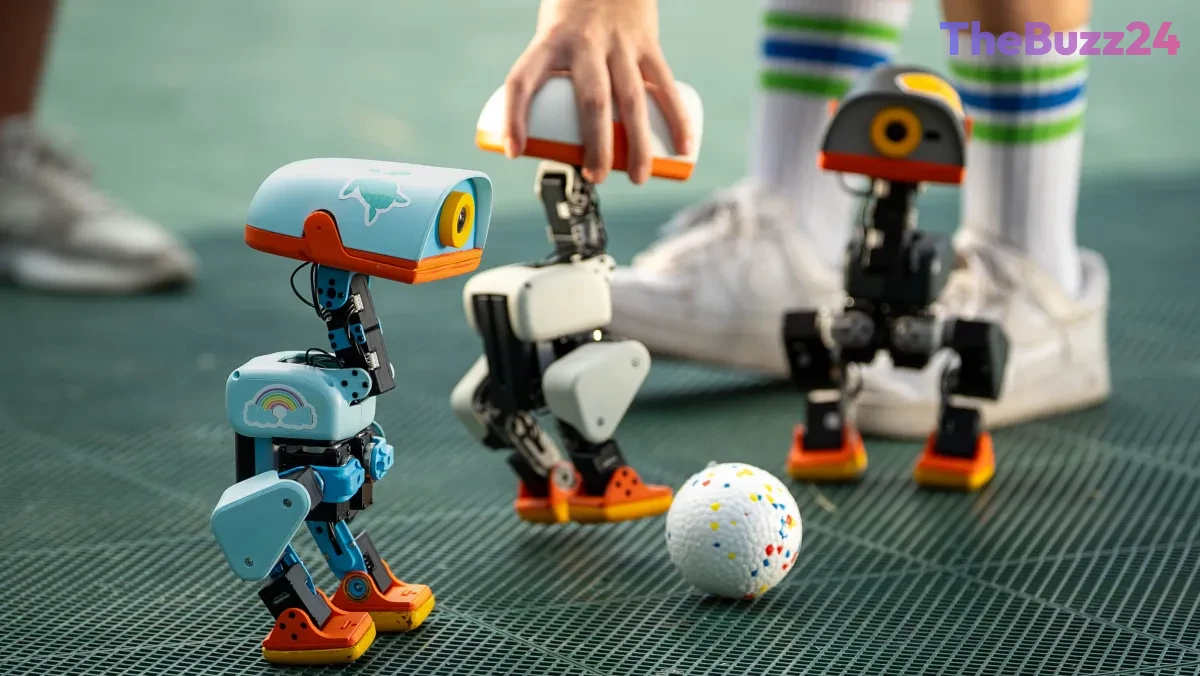
A recent demonstration by Nvidia CEO Jensen Huang at the company’s GTC Berlin conference captivated audiences, featuring a group of charming Microduck robots. The small, waddling devices, which emit R2-D2-like sounds, showcased an array of voice-commanded tricks, including sitting, “napping,” and performing somersaults. The endearing display quickly went viral across social media platforms, sparking an immediate surge in demand, with preorders for the Microducks reportedly exceeding 20,000 units within a day.
These innovative robots are the brainchild of Pollen Robotics, a company that was acquired by Hugging Face. Subsequently, Hugging Face itself became part of the Nvidia ecosystem following its acquisition by the GPU giant in September, positioning Microducks firmly under the Nvidia umbrella. The open-source nature of the Microducks is a key feature, allowing for community engagement and development. Their initial capabilities, such as walking, sitting, and standing, were developed using Nvidia’s advanced technology stack, leveraging simulations to train their basic functionalities.
With deliveries anticipated before the Christmas season, the Microducks are poised to become a significant contender in the holiday toy market. Industry observers suggest they could emerge as one of the year’s best-selling robots, appealing not only to children but also to adults, as promotional materials indicate a broader demographic interest. A unique aspect of the Microducks is the ability for owners to train their robots with new tricks and subsequently share these custom behaviors with a wider community, fostering an interactive and evolving user experience.
Key Takeaways
- Nvidia CEO Jensen Huang's viral demonstration of Microduck robots at GTC Berlin led to over 20,000 preorders.
- Microducks are open-source, AI-powered robots developed by Pollen Robotics, now part of Nvidia through its acquisition of Hugging Face.
- Anticipated for holiday delivery, these robots are expected to be a popular gift, appealing to both children and adults, with customizable training options.
Editor’s Analysis & Impact
The rapid viral success and preorder volume of Microducks highlight a growing consumer appetite for sophisticated, yet accessible, AI-powered robotics. For Nvidia, this venture signifies a strategic expansion beyond its core GPU business into consumer-facing AI applications, leveraging its robust technology stack for real-world products. The open-source model adopted by Pollen Robotics and Hugging Face, now under Nvidia, could foster a vibrant developer community, accelerating innovation and user engagement. This move could also set a precedent for how advanced AI training, typically used in industrial or research settings, can be democratized for consumer products, potentially shaping the future of interactive toys and personal robotics. The holiday season will be a crucial test for Microducks’ market penetration and broader appeal.
Frequently Asked Questions
Q: What are Microducks?
A: Microducks are small, AI-powered, open-source robots capable of performing various tricks like sitting, walking, and somersaulting, often controlled by voice commands. They are designed to be interactive and user-trainable.
Q: Who developed Microducks?
A: Microducks were originally developed by Pollen Robotics. Following acquisitions, Pollen Robotics became part of Hugging Face, which was then acquired by Nvidia, making Microducks an Nvidia-backed product.
Q: What makes Microducks unique?
A: Their uniqueness stems from their open-source nature, allowing owners to train them with new tricks and share these with a community. They also leverage Nvidia's advanced AI technology for their core functionalities and are designed to appeal to a broad audience, from children to adults.
AI Disclosure: This article is based on verified data and official reports. Our Team and AI have cross-referenced every financial detail with primary sources to ensure total accuracy.
More from this Category