Kodiak Secures Landmark Commercial Deal to Deploy Autonomous Highway Trucks
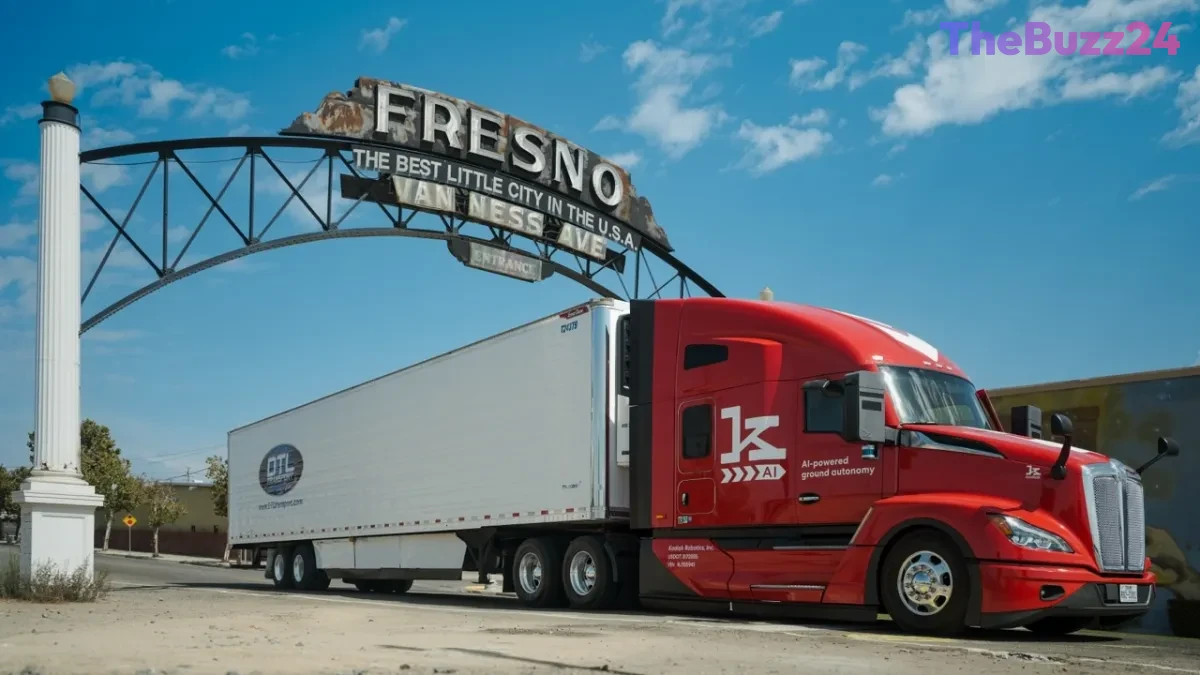
Kodiak has reached a significant milestone in the autonomous vehicle sector by signing its first binding commercial agreement to supply driverless trucks for public highway operations. The deal involves the delivery of 75 self-driving big rigs to DTL Transport, a California-based freight company specializing in the distribution of fresh produce and retail goods. Deliveries are scheduled to commence in 2028, marking a pivotal shift in how the company approaches its business model.
This contract represents a transition for Kodiak from a ‘trucking-as-a-service’ model, where the company manages its own fleet, toward a ‘driver-as-a-service’ framework. In this new arrangement, clients like DTL Transport will own and operate the vehicles, while Kodiak licenses its proprietary autonomous technology and charges a per-mile fee. This asset-light strategy is designed to scale operations more efficiently by focusing on software integration rather than fleet management.
The partnership follows successful pilot programs conducted in California, where Kodiak demonstrated the safety and reliability of its technology on major routes. While Kodiak currently operates autonomous trucks for various partners in Texas, the DTL Transport agreement is the first to focus specifically on public highway freight. The company is also preparing for a major operational shift in December, where it plans to remove human safety operators from its trucks during highway transit for specific routes, including a partnership with Ikea.
Financial projections suggest that the deal could provide a substantial revenue boost for Kodiak. Based on company estimates of annual recurring revenue per truck, the deployment of 75 units could generate over $11 million annually. This move is seen as a critical step for the company as it seeks to stabilize its market position and prove the long-term viability of its autonomous freight technology on a commercial scale.
Key Takeaways
- Kodiak signed a binding contract to deliver 75 autonomous trucks to DTL Transport by 2028.
- The company is shifting toward a 'driver-as-a-service' model, licensing technology rather than owning the fleet.
- Kodiak plans to begin fully driverless highway operations without human safety operators starting in December.
Editor’s Analysis & Impact
The transition to an ‘asset-light’ business model is a strategic necessity for Kodiak. By moving away from the capital-intensive nature of owning and maintaining a trucking fleet, the company can focus on its core competency: software development and AI integration. This shift mirrors broader trends in the autonomous vehicle industry, where firms are increasingly looking to become technology suppliers for established logistics providers rather than competing as carriers themselves. While the company has faced significant stock market volatility, this commercial contract provides a tangible benchmark for revenue growth and operational maturity. If Kodiak successfully executes the removal of human safety operators in December, it will likely trigger increased investor confidence and set a new standard for the commercial viability of autonomous long-haul trucking.
Frequently Asked Questions
Q: What is the difference between Kodiak's TaaS and DaaS models?
A: Under the Trucking-as-a-Service (TaaS) model, Kodiak owns and operates the trucks as a third-party carrier. Under the Driver-as-a-Service (DaaS) model, the client owns the trucks, and Kodiak licenses its autonomous technology to them for a per-mile fee.
Q: When will the autonomous trucks be delivered to DTL Transport?
A: The delivery of the 75 autonomous trucks to DTL Transport is scheduled to begin in 2028.
AI Disclosure: This article is based on verified data and official reports. Our Team and AI have cross-referenced every financial detail with primary sources to ensure total accuracy.
More from this Category