Amazon Shares Sink as Massive AI Investments Drive $42.4 Billion Cash Outflow
Amazon experienced a sharp market pullback after delivering third-quarter financial results that fell short of expectations, dragged down by an escalating capital spending spree on artificial intelligence infrastructure. Shares dropped more than 6% in extended trading following the disclosure of a staggering $42.4 billion negative free cash flow over the trailing twelve months. The aggressive cash drain underscores the immense cost of competing in the generative AI race, as capital expenditures for the quarter surged to $77.3 billion, more than doubling from the $35.1 billion reported during the same period last year.
Total revenue for the quarter reached $201.94 billion, narrowly missing expectations of $202.31 billion. The retail giant’s top-line performance was dampened by softer-than-expected gains across its core e-commerce and digital advertising divisions. Online store sales rose just 2% year over year to $68.47 billion, while advertising generated $19.64 billion, missing projected targets. Part of the deceleration stemmed from the strategic rescheduling of Amazon’s flagship Prime Day event, which was shifted into the second quarter in several key regions to avoid overlapping with summer sporting schedules.
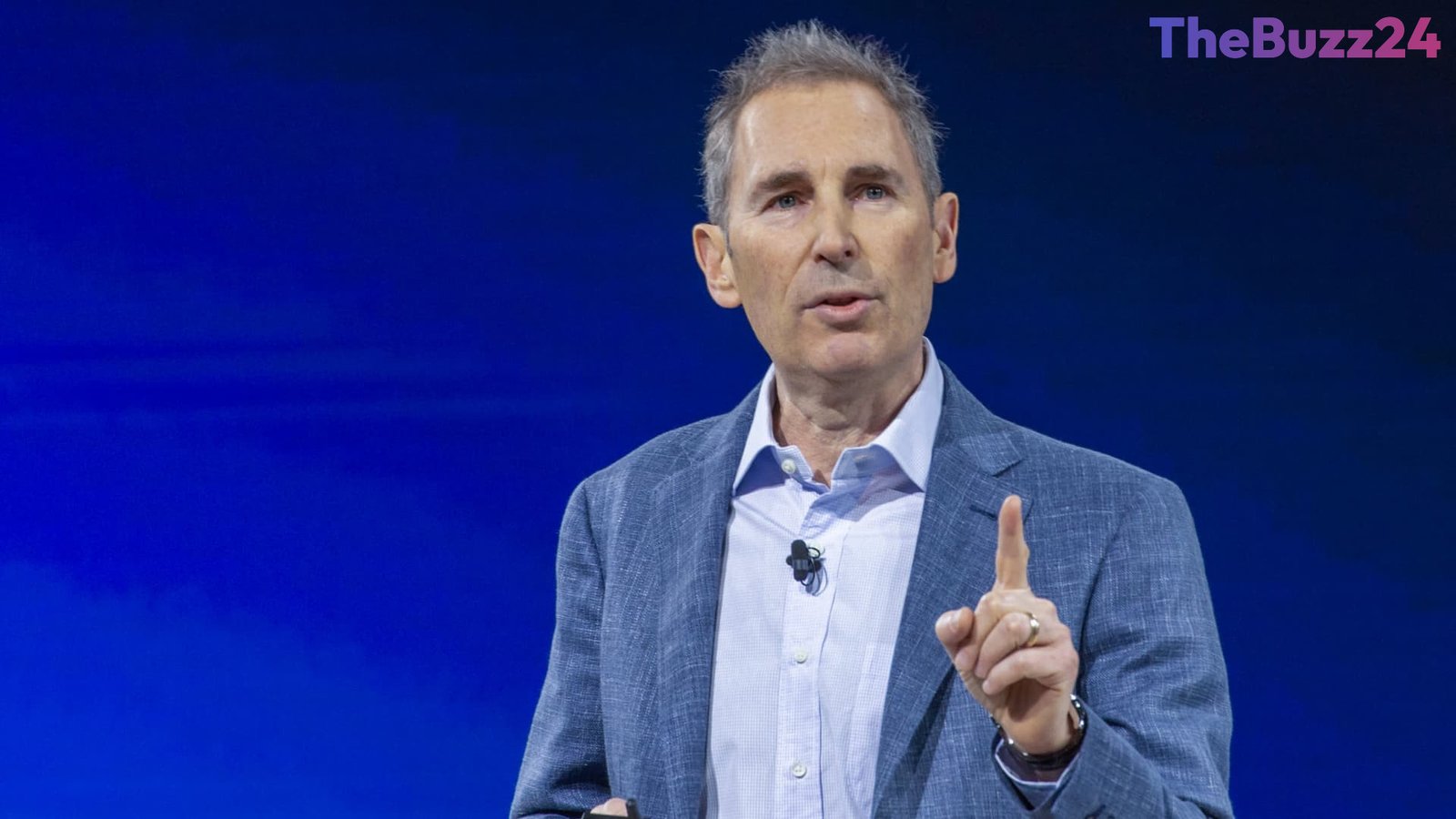
Despite the broader headwinds, Amazon Web Services (AWS) delivered a standout performance, reinforcing its critical role as the company’s primary growth engine. Cloud segment revenue surged 39% year over year to $45.98 billion, surpassing consensus forecasts. Chief Executive Officer Andy Jassy expressed strong optimism for the division, projecting sustained cloud expansion above 40% over the coming years and forecasting AWS to eventually scale into a $1 trillion business within the next five to ten years. Jassy also highlighted rapid triple-digit adoption for Amazon’s proprietary AI chips, noting plans to make its custom Trainium processors broadly available on the open market toward the end of 2027.
Looking ahead, Amazon held its 2026 capital expenditure guidance firm at $220 billion, with management signaling that infrastructure spending is poised to accelerate even further in 2027. For the critical fourth-quarter holiday period, the company expects net sales between $240 billion and $247 billion. While Wall Street continues to scrutinize the timetable for profitability on these unprecedented computing investments, leadership maintained that current infrastructure commitments provide a clear path toward significant long-term financial returns.
Key Takeaways
- Amazon posted a $42.4 billion negative free cash flow over the trailing 12 months, driven by quarterly capex ballooning to $77.3 billion for AI infrastructure.
- Amazon Web Services remained a major bright spot, generating $45.98 billion with 39% year-over-year revenue growth, beating market estimates.
- The company maintained its massive 2026 capital expenditure target of $220 billion and signaled even higher infrastructure investments slated for 2027.
Editor’s Analysis & Impact
Amazon’s latest earnings report highlights the widening divide between cloud infrastructure momentum and the capital reality of the ongoing AI arms race. While hyperscalers like Microsoft have started to signal modest discipline around capex expansion, Amazon is pushing ahead with unmatched spending commitments, maintaining a $220 billion budget for 2026 with further increases slated for 2027. This strategy shows unwavering conviction in the commercialization of proprietary hardware like Trainium and enterprise platforms like Bedrock. However, the resulting free cash flow deficit of $42.4 billion tests investor patience, especially as core e-commerce growth normalizes to single digits. Moving forward, Amazon must demonstrate that its soaring infrastructure costs translate directly into high-margin enterprise AI recurring revenue before broader macroeconomic pressures further squeeze retail operational margins.
Frequently Asked Questions
Q: Why did Amazon's free cash flow turn deeply negative?
A: The deficit of $42.4 billion was primarily driven by massive capital expenditures on property and equipment, specifically data centers and hardware required to support artificial intelligence and cloud workloads.
Q: How did Amazon Web Services perform during the quarter?
A: AWS outperformed expectations, delivering $45.98 billion in revenue, which represents a 39% increase compared to the same quarter last year.
Q: What is Amazon's capital spending outlook for the coming years?
A: Amazon held its 2026 capital expenditure forecast steady at $220 billion and indicated that spending will rise even further in 2027 as it expands its AI capacity.
AI Disclosure: This article is based on verified data and official reports. Our Team and AI have cross-referenced every financial detail with primary sources to ensure total accuracy.
More from this Category