Serbia’s Student-Backed Coalition Demands Broad Purge of Intelligence and Police Chiefs
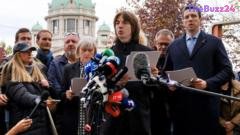
Fresh off a historic electoral victory over the long-ruling Serbian Progressive Party, Serbia’s newly empowered student-backed coalition has demanded immediate, sweeping resignations across the country’s security, intelligence, and judicial apparatus. Assembling across from the parliament building in Belgrade’s Pioneers’ Park, newly elected lawmakers urged the swift dismissal of senior officials, specifically targeting leadership within the national police force, the Security Intelligence Agency (BIA), and elite anti-terror divisions.
The political earthquake marks a dramatic reset for the Balkan nation, following months of mass public outrage ignited by the November 2024 railway canopy collapse in Novi Sad, which claimed 16 lives. In the wake of the tragedy, broad civic demonstrations coalesced into an organized political movement targeting entrenched systemic corruption. Rather than fielding career politicians, university student committees assembled an unorthodox slate of 141 lawmakers—comprising university professors, surgeons, economists, and artists—tasked with executing an exhaustive reform agenda.
Institutional reshuffling is already underway across public institutions. The general director of state broadcaster RTS, Manja Grčić, stepped down shortly after the election, while the incoming bloc has set its sights on leadership changes at telecommunications provider Telekom Srbija. The aggressive reform drive has drawn sharp criticism from figures tied to former president Aleksandar Vučić, including acting President Ana Brnabić, who accused the incoming coalition of seeking revolutionary retribution rather than upholding the rule of law. Reform leaders, including former central bank governor Dejan Šoškić, maintain that establishing media independence, enforcing strict anti-corruption measures, and passing a lustration law within six months are crucial to dismantling deep-seated patronage networks.
Beyond domestic reforms, the fledgling leadership must navigate a sensitive geopolitical posture. While the European Union has welcomed the reformist victory and pledged support for legal overhauls, the incoming government appears reluctant to radically alter Serbia’s broader foreign policy doctrine. Lawmakers have signaled an intent to maintain pragmatic ties with traditional partners such as Russia, shying away from economic sanctions. With December presidential elections looming and the defeated political establishment already vowing a swift comeback, the transitional administration faces a challenging window to anchor its authority and transform grassroots momentum into durable governance.
Key Takeaways
- Serbia's newly elected student-backed MPs have demanded immediate dismissals among top police, intelligence (BIA), and judiciary officials.
- The coalition of political outsiders, formed after the deadly Novi Sad railway collapse, plans to enact sweeping anti-corruption and lustration laws within six months.
- Despite EU backing for domestic reforms, the incoming administration plans to maintain a pragmatic foreign policy without abruptly breaking ties with Russia.
Editor’s Analysis & Impact
The unexpected electoral victory of the Student List dismantles years of centralized authority under Aleksandar Vučić, representing an unprecedented transition toward civic-led technocratic governance in the Western Balkans. However, the path forward carries substantial operational hurdles. Attempting to overhaul deeply rooted institutions—such as the state broadcaster, intelligence apparatus, and public enterprises—risks provoking institutional paralysis or bureaucratic resistance. Furthermore, the new coalition’s domestic focus and reluctance to alter foreign policy illustrate the structural constraints facing Serbia, particularly its energy reliance on Russia and complex EU accession path. With municipal and presidential contests ahead in December, the nascent government must rapidly convert public goodwill into tangible institutional stability before the political opposition mounts a coordinated resurgence.
Frequently Asked Questions
Q: What triggered the rise of Serbia's student-backed movement?
A: The movement was catalyzed by widespread public fury and protests following the November 2024 railway station canopy collapse in Novi Sad, which killed 16 people and sparked demands for systemic accountability and investigations into state corruption.
Q: What are the coalition's immediate priorities in office?
A: The incoming MPs plan to enact anti-corruption measures, introduce a lustration law to bar rights-violating officials from public office, reform the intelligence and police leadership, and restore independence to state-run media outlets within six months.
Q: Will Serbia's foreign policy shift toward the European Union?
A: While the EU has praised the new administration's focus on the rule of law and transparency, the coalition has placed foreign policy changes on the back burner, signaling that it will not immediately alter its non-alignment or sanction stance regarding Russia.
AI Disclosure: This article is based on verified data and official reports. Our Team and AI have cross-referenced every financial detail with primary sources to ensure total accuracy.
More from this Category