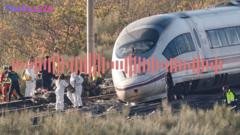
Grief Turns to Outrage in Spain Following Second Major High-Speed Rail Disaster
The devastating high-speed rail collision near Urda has plunged Spain into a state of profound mourning and intense political friction, marking the nation’s second catastrophic train disaster in less than a year. The horrific crash, which occurred on the heavily traveled Madrid-Seville line, claimed at least 69 lives and left dozens more injured when a stationary Iryo train was violently struck from behind by a Renfe service. Survivors have recounted harrowing scenes of chaos and destruction inside the derailed carriages, describing moments of utter confusion as passengers were thrown about by the sheer impact of the collision.
In the wake of the tragedy, local residents of Urda rallied swiftly to aid the survivors, transforming a nearby sports facility into an emergency triage center and offering food, blankets, and medical supplies to those affected. However, these poignant acts of solidarity have quickly been overshadowed by mounting public disbelief and anger. Leaked audio recordings from the control room have pointed toward potential human and technological errors in the moments leading up to the disaster. This latest catastrophe has compounded the trauma from a similar fatal collision in Adamuz just nine months prior, which had already taken 46 lives and sparked intense scrutiny over the safety of Europe’s largest high-speed rail network.
With national elections looming in exactly one month, the disaster has injected severe political tension into the campaign trail. The left-wing administration under Prime Minister Pedro Sánchez is facing mounting pressure from opposition parties and aggrieved citizens over the management and safety of the railway infrastructure. Protests have erupted outside government offices, and labor unions have voiced strong concerns, criticizing the premature leaking of internal control room audio and demanding that passenger safety be prioritized above travel expediency. As political leaders suspend campaign activities to address the crisis, the demand for transparent accountability has become the central issue for an electorate seeking urgent answers.
Key Takeaways
- At least 69 people were killed when a Renfe train collided with a stationary Iryo train on the Madrid-Seville high-speed line near Urda.
- Leaked control room audio suggests a combination of computer and human error contributed to the tragic accident, mirroring safety concerns from a previous crash in Adamuz.
- The disaster has severely impacted the political landscape, intensifying pressure on the government just one month before national elections.
Editor’s Analysis & Impact
The recurrence of fatal high-speed rail accidents on the same Spanish corridor poses a profound challenge to both national infrastructure management and political stability. Spain’s high-speed rail network has long been touted as a premier engineering achievement in Europe, but these successive tragedies expose deep vulnerabilities in operational safety protocols, communication systems, and regulatory oversight. From an economic and industrial standpoint, the fallout will likely trigger comprehensive audits, delayed infrastructure projects, and heightened operational costs as the rail sector moves to restore public trust. Politically, the disaster has weaponized infrastructure management ahead of the upcoming elections, ensuring that transport safety, institutional accountability, and systemic modernization remain at the forefront of the national agenda for the foreseeable future.
Frequently Asked Questions
Q: What caused the train crash near Urda?
A: Preliminary findings and leaked control room audio point to a combination of technological failures and human error in the minutes leading up to the collision between the Renfe and Iryo trains.
Q: How has the political landscape been affected by the disaster?
A: The tragedy has intensified political friction during an active election cycle, placing intense pressure on the ruling government and its handling of national railway safety.
Q: Have there been previous rail incidents on this line?
A: Yes, this disaster follows another fatal collision just nine months prior in the southern village of Adamuz along the same Madrid-Seville route, which resulted in 46 deaths.
AI Disclosure: This article is based on verified data and official reports. Our Team and AI have cross-referenced every financial detail with primary sources to ensure total accuracy.
More from this Category