James Webb Space Telescope Reveals Cosmic Sculpting in Ethereal Cat’s Head Nebula
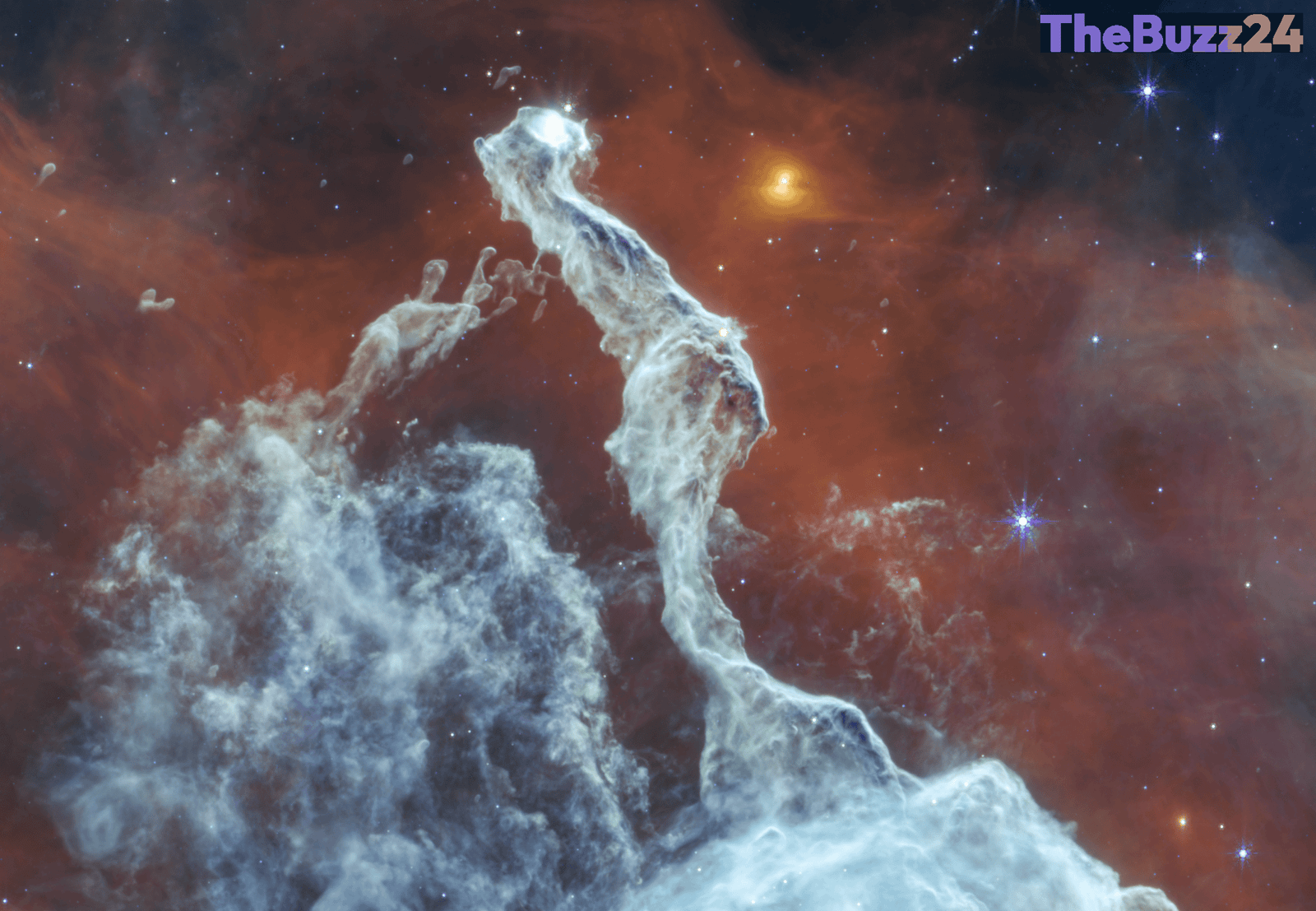
The James Webb Space Telescope (JWST) has once again delivered breathtaking imagery from the cosmos, recently unveiling intricate structures within the aptly named Cat’s Head Nebula. This stunning mid-infrared view, a collaborative effort from NASA, ESA, and CSA, showcases the dynamic processes shaping stellar nurseries across the universe. The detailed observations provide astronomers with unprecedented insights into the complex interplay between massive stars and their surrounding environments.
The distinctive feline-like silhouette of the nebula is not merely a cosmic coincidence but a testament to powerful stellar forces at play. Scientists believe this iconic shape has been meticulously sculpted over eons by the intense ultraviolet radiation and fierce winds emanating from colossal stars situated within the nearby Carina Nebula. As this energetic stellar feedback relentlessly erodes vast swathes of gas and dust, pockets of denser material within the nebula’s pillars exhibit a remarkable resilience, temporarily resisting the destructive cosmic winds and thus preserving the nebula’s unique form.
These latest observations from the JWST underscore its unparalleled capability to penetrate obscuring dust clouds and reveal hidden details in the infrared spectrum. By capturing such fine structures and the ongoing processes of cosmic erosion and formation, the telescope continues to advance our understanding of how stars are born, how they influence their galactic neighborhoods, and the ultimate fate of these magnificent celestial canvases. The image processing, notably by Joseph DePasquale of STScI, brings these distant wonders into sharp focus for both the scientific community and the public.
Key Takeaways
- The James Webb Space Telescope has captured highly detailed mid-infrared images of the Cat's Head Nebula.
- The nebula's distinctive shape is attributed to intense ultraviolet radiation and powerful stellar winds from massive stars in the Carina Nebula.
- These observations provide crucial insights into how stellar feedback mechanisms sculpt cosmic structures and influence star formation.
Editor’s Analysis & Impact
The continuous stream of high-resolution images from the James Webb Space Telescope is fundamentally reshaping our understanding of the universe. This latest capture of the Cat’s Head Nebula exemplifies JWST’s ability to reveal the intricate dance between nascent stars and their environments. Such detailed views are invaluable for refining theories of star formation, stellar evolution, and the lifecycle of nebulae. The mid-infrared capabilities allow astronomers to peer through cosmic dust, offering a clearer picture of processes previously obscured. This not only fuels scientific discovery but also inspires public interest in space exploration, potentially encouraging future generations into STEM fields. The ongoing data from JWST promises to unlock further secrets of the cosmos, pushing the boundaries of astrophysics.
Frequently Asked Questions
Q: What is the Cat's Head Nebula?
A: The Cat's Head Nebula is a celestial cloud of gas and dust located in space, known for its distinctive shape that resembles a feline head. It is a region where new stars are forming, and its appearance is sculpted by powerful stellar forces.
Q: How does the James Webb Space Telescope capture these images?
A: The James Webb Space Telescope (JWST) captures images using its advanced instruments that detect infrared light. Unlike visible light telescopes, JWST can penetrate through thick clouds of dust and gas, revealing details of distant objects and processes that would otherwise be hidden.
Q: What causes the unique shape of the Cat's Head Nebula?
A: The unique shape of the Cat's Head Nebula is primarily caused by intense ultraviolet radiation and strong stellar winds emitted by massive, hot stars located within the nearby Carina Nebula. These powerful forces erode and push away surrounding gas and dust, while denser pockets of material resist erosion, creating the nebula's characteristic features.
AI Disclosure: This article is based on verified data and official reports. Our Team and AI have cross-referenced every financial detail with primary sources to ensure total accuracy.
More from this Category