Spain’s Rail Catastrophe: Deadly Crash Rocks Government Ahead of Crucial Election
A devastating train collision in central Spain has claimed the lives of at least 69 people, shattering public confidence in the nation’s rail infrastructure and casting a dark shadow over Prime Minister Pedro Sánchez’s re-election prospects. The tragedy, which occurred on a high-speed line south of Madrid, echoes a similar fatal crash just nine months prior near Cordoba that resulted in 46 fatalities.
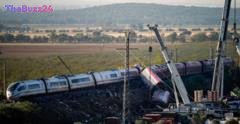
The latest disaster, with wreckage strewn across the tracks and down an embankment, has plunged victims’ families into profound grief. Beyond the personal devastation, the incident represents a national crisis, eroding trust in the country’s rail network and placing immense pressure on the Socialist-led government. This comes at a particularly precarious time, mere weeks before Sánchez called a snap general election.
In the immediate aftermath, the government has moved swiftly to manage the public narrative. Transport Minister Oscar Puente has pointed towards “human error” as the primary cause, aiming to deflect blame from the cabinet. While acknowledging the “huge pain and sadness” for the victims, Puente has defended the country’s high-speed signaling safety system, the LZB, asserting it is not outdated and is used in other European nations. He revealed that the system has experienced 170 failures this year, which he deemed “normal” and in line with the EU average. The critical issue, however, appears to be the protocol for when the system fails and manual control is initiated.
Minister Puente highlighted a series of human errors that led to the catastrophic outcome. Audio recordings suggest that at one point, a controller instructed a stalled train to proceed at high speed, even as another train was stationary ahead on the same line. Despite the impending collision being visible on control center screens and evident in audio communications, the advancing train was not ordered to halt. Puente stated his duty is to remain in his post to improve the system and restore public confidence, rather than resign.
However, public trust has been severely damaged, particularly following the previous rail incident. Analysts note that such events not only undermine faith in the railways but also in institutions generally, with the government often bearing the brunt of public blame. This latest crisis compounds existing challenges for Sánchez, including persistent allegations of corruption and public anger over housing costs, which had already diminished his re-election chances. The train disaster has further complicated his campaign, potentially shifting voter sentiment and making it significantly harder to secure a victory.
Key Takeaways
- A recent high-speed train collision in Spain has resulted in at least 69 fatalities, raising serious concerns about rail safety.
- The incident occurs just nine months after another fatal train crash, significantly eroding public trust in the national rail network and the current government.
- The disaster has intensified political pressure on Prime Minister Pedro Sánchez's administration, potentially impacting his chances in the upcoming snap general election.
Editor’s Analysis & Impact
This tragic train disaster in Spain has profound implications, not only for the victims and their families but also for the nation’s infrastructure confidence and its political landscape. The recurrence of such a severe accident so soon after the previous one suggests systemic issues that transcend simple ‘human error,’ potentially pointing to underinvestment or flawed safety protocols. For Prime Minister Sánchez, this crisis is a significant political liability, especially with a general election looming. It amplifies existing public discontent and could galvanize opposition parties, making his re-election bid considerably more challenging. The government’s handling of the narrative and its commitment to rectifying safety concerns will be crucial in regaining public trust.
Frequently Asked Questions
Q: What caused the train crash in Spain?
A: Initial reports and statements from the Transport Minister suggest a combination of system failures and human error. Specifically, a controller reportedly instructed a stalled train to proceed at high speed while another train was stationary ahead on the same line, despite the impending collision being apparent.
Q: How does this crash affect Prime Minister Pedro Sánchez's re-election chances?
A: The train disaster has significantly harmed the government's image and public trust, especially following a previous fatal crash. This crisis exacerbates existing public anger over issues like corruption and housing costs, making Sánchez's re-election campaign considerably more difficult and potentially boosting opposition parties.
Q: What is the LZB signaling system mentioned in the report?
A: The LZB (Linienzugbeeinflussung) is a high-speed signaling safety system used in Spain, also employed in Germany and Austria. While the Transport Minister defended its reliability, he acknowledged it has failed 170 times this year in Spain, with the critical issue arising when the system fails and control shifts to manual operation.
AI Disclosure: This article is based on verified data and official reports. Our Team and AI have cross-referenced every financial detail with primary sources to ensure total accuracy.
More from this Category