Uganda Completes Two-Decade Military Withdrawal from Somalia
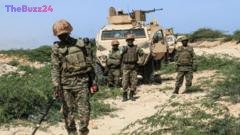
Uganda has officially begun the phased withdrawal of its military forces from Somalia, concluding a nearly 20-year deployment that began in 2007. The first contingent of troops has already returned home, with the remaining forces expected to follow suit by the end of 2027. This significant drawdown marks the end of Uganda’s direct military involvement in the Horn of Africa nation, transitioning security responsibilities entirely to Somali forces.
The initial deployment was part of the African Union Mission in Somalia (Amisom), established to support the Somali government against militant groups. Uganda was the first African nation to contribute troops to this mission. A contingent of 109 Uganda People’s Defence Forces (UPDF) soldiers recently departed Mogadishu, signaling the commencement of the withdrawal process, as announced by Ugandan Army Chief Gen Muhoozi Kainerugaba.
This withdrawal follows recent discussions between Somali President Sheikh Mohamud and Ugandan President Yoweri Museveni in Kampala. While President Mohamud reportedly sought an extension of Uganda’s military presence, President Museveni emphasized the need for Somali leaders and citizens to unite in combating the al-Shabab insurgency. Uganda’s forces have played a crucial role over the years, including driving al-Shabab from key urban centers and securing government installations.
The ongoing transition is part of the broader African Union Transition Mission in Somalia (Atmis), which aims to gradually hand over security duties. Atmis was succeeded by the African Union Support and Stabilisation Mission in Somalia (Aussom) in 2025, focusing on bolstering Somali security institutions. However, Aussom faces potential funding challenges as international support diminishes, necessitating a search for alternative financial resources.
Key Takeaways
- Uganda is withdrawing all its troops from Somalia after a 20-year military presence.
- The withdrawal is a phased process expected to conclude by the end of 2027.
- Security responsibilities will be fully transferred to Somali forces as international missions like Atmis and Aussom evolve.
Editor’s Analysis & Impact
Uganda’s withdrawal from Somalia signifies a major shift in regional security dynamics after two decades of intervention. While the departure aims to empower Somali forces, it raises questions about the capacity of local security institutions to independently manage the persistent threat from al-Shabab. The evolving nature of AU missions and potential funding gaps for successor missions like Aussom could create a security vacuum. This move underscores a broader trend of African nations reassessing long-term military commitments and highlights the critical need for sustainable, locally-led security solutions in conflict-affected regions.
Frequently Asked Questions
Q: Why is Uganda withdrawing its troops from Somalia?
A: Uganda is withdrawing its troops as part of a phased plan to hand over security responsibilities to Somali forces, concluding a nearly 20-year military engagement. This aligns with the broader objectives of African Union missions aimed at building Somalia's self-sufficiency in security.
Q: What role did Ugandan troops play in Somalia?
A: Ugandan troops were among the first deployed to Somalia in 2007 under the AU mission. They played a significant role in combating the al-Shabab insurgency, helping to drive the militants out of major towns like Mogadishu and securing key government infrastructure.
Q: What happens after the Ugandan withdrawal?
A: Following the withdrawal, Somalia is expected to assume full responsibility for its national security. The African Union's support mission (Aussom) will continue to focus on strengthening Somali security institutions, though its future funding remains a point of concern.
AI Disclosure: This article is based on verified data and official reports. Our Team and AI have cross-referenced every financial detail with primary sources to ensure total accuracy.
More from this Category